Professional Premium Aluminum Oxide Products Supplier

1 What Is Alumina Ceramic Chemical Catalyst Supports
1.1 Material Composition
Alumina ceramic catalyst supports consist of ≥99.6% aluminum oxide (Al2O3) in alpha-phase crystalline structure. Trace elements like silica or magnesia (<0.3%) modify textural properties. Unlike metallic alternatives, they provide non-reducible surfaces that prevent unwanted side reactions during catalytic cycles.
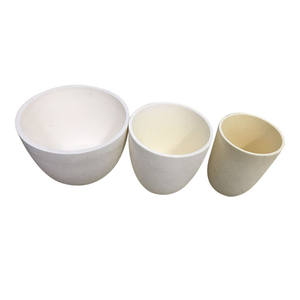
(Alumina Ceramic Chemical Catalyst Supports)
1.2 Superior Chemical Resistance
Alpha-phase alumina demonstrates near-total inertness against acids, alkalis, and solvents across pH 4-12 ranges. Its corrosion resistance stems from thermodynamic stability where Gibbs free energy of formation (ΔGf = -1,582 kJ/mol) prevents chemical degradation. This ensures catalyst longevity in aggressive environments like flue gas desulfurization.
1.3 Optimized Surface Properties
Manufacturers engineer alumina supports with tunable surface areas (5-300 m²/g) and pore distributions (0.5-100nm). The mesoporous architecture facilitates uniform dispersion of active metals like platinum or palladium through capillary action, while hydroxyl groups on the surface enable strong metal-support interactions (SMSI) that prevent catalyst leaching.
1.4 Mechanical Durability
With Vickers hardness ratings of 15-20 GPa and compressive strength exceeding 2,000 MPa, alumina substrates withstand high-pressure reactor environments. The fracture toughness (3-4 MPa·m1/2) resists attrition in fluidized bed applications, reducing particulate generation and maintaining consistent catalytic activity.
What Is Alumina Ceramic Chemical Catalyst Supports
2.1 Material Composition
Alumina ceramic catalyst supports consist of ≥99.6% aluminum oxide (Al2O3) in alpha-phase crystalline structure. Trace elements like silica or magnesia (<0.3%) modify textural properties. Unlike metallic alternatives, they provide non-reducible surfaces that prevent unwanted side reactions during catalytic cycles.
2.2 Structural Configuration
These supports feature engineered geometries including spheres, rings, honeycombs, and extrudates. Monolithic honeycomb structures provide up to 900 cells/cm2 with wall thicknesses of 0.05-0.2mm, optimizing geometric surface area while minimizing pressure drop in flow reactors. The open porosity typically ranges between 30-60%.
2.3 Functional Mechanism
As catalyst substrates, they immobilize active components through: 1) Physical adhesion within mesopores, 2) Chemical bonding with surface hydroxyl groups, and 3) Electronic interactions with Lewis acid sites. This creates three-phase boundaries where gas/liquid reactants interface with solid catalysts.
How Alumina Ceramic Chemical Catalyst Supports Was Produced?
3.1 Raw Material Processing
Production begins with Bayer-process alumina powder (<1μm particle size) mixed with pore-forming agents (methylcellulose, graphite) and binders. Precise control of powder granulometry determines final porosity. Slip-casting formulations require colloidal suspensions with zeta potentials >30mV for stability.
3.2 Forming Techniques
Shaping methods include: 1) Extrusion for honeycombs (pressure: 10-40 MPa), 2) Iso-static pressing for pellets (150-200 MPa), and 3) Slip-casting for complex geometries. Green machining achieves dimensional tolerances of ±0.05mm before sintering.
3.3 Thermal Treatment
Controlled sintering at 1,500-1,700°C transforms gamma-phase alumina to stable alpha-phase. The firing profile includes: 2°C/min ramp to 600°C (binder burnout), 5°C/min to peak temperature with 2-hour dwell, followed by controlled cooling. This develops the final microstructure with 0.5-5μm crystal domains.
3.4 Post-Processing
Critical finishing steps include: Surface activation through acid-washing to increase OH– density, precision grinding to achieve Ra<0.2μm surface finish, and quality verification using mercury porosimetry, XRD phase analysis, and crush strength testing.
What Are The Application Fields of Alumina Ceramic Chemical Catalyst Supports
4.1 Petrochemical Processing
In hydrocracking and hydrodesulfurization units, alumina supports enable sulfur removal below 10ppm in fuels. Their thermal shock resistance maintains catalyst integrity during reactor switchovers in continuous catalytic reforming (CCR) processes at 500-525°C.
4.2 Environmental Protection
Ceramic honeycombs with wash-coated catalysts achieve >95% VOC oxidation in regenerative thermal oxidizers (RTOs). In automotive applications, they withstand exhaust pulsations while reducing NOx emissions through selective catalytic reduction (SCR) systems.
4.3 Chemical Synthesis
Fixed-bed reactors utilize 3-6mm alumina pellets for hydrogenation and oxidation reactions. The chemical purity prevents catalyst poisoning during pharmaceutical intermediate synthesis. In Fischer-Tropsch processes, alumina’s hydrophobicity facilitates water removal from reaction sites.
4.4 Emerging Technologies
Alumina supports enable catalytic electrodes in fuel cells and electrolyzers. Their ionic conductivity at elevated temperatures facilitates solid oxide fuel cell (SOFC) operation. Recent applications include photocatalytic water treatment and carbon capture systems.
How To Choose A Good Alumina Ceramic Chemical Catalyst Supports
5.1 Performance Parameters
Select based on: Surface area (high for metal dispersion), pore size distribution (matched to reactant kinetics), and crush strength (>200N for pellets). For high-temperature applications, verify phase stability through manufacturer’s XRD reports showing >99% alpha-alumina content.
5.2 Geometric Specifications
Consider hydraulic diameter (affects pressure drop), shape factor (influences packing density), and geometric surface area. Monoliths should have thermal expansion matching reactor metallurgy (CTE: 8-9×10⁻⁶/K for stainless steel housings).
5.3 Chemical Compatibility
Verify resistance to process-specific chemicals: Low-soda alumina (<0.1% Na2O) for chlorine environments, silica-modified grades for phosphate resistance. Require leach test data for trace elements that could poison catalysts under operating conditions.
5.4 Supplier Qualifications
Evaluate manufacturers based on: ISO 9001 certification, batch traceability, statistical process control data, and customization capabilities. Reputable suppliers provide material test reports including mercury porosimetry, BET surface area, and acid-wash durability metrics.
What Does People Also Ask About Alumina Ceramic Chemical Catalyst Supports
6.1 Service Life Expectations
Properly specified alumina supports typically last 5-10 years in continuous operation. Degradation mechanisms include phase transition below 1,200°C is negligible, but chemical attack by strong acids/alkalis or thermal cycling fatigue can reduce lifespan. Regular activity monitoring is recommended.
6.2 Regeneration Capabilities
Supports withstand multiple regeneration cycles (oxidizing at 450°C for carbon burn-off, reducing at 300°C for sulfide removal). Regeneration limits depend on cumulative thermal exposure; typically 15-30 cycles before pore structure degradation affects performance.
6.3 Cost Comparison Alternatives
While cordierite or silicon carbide cost 20-40% less, alumina offers superior temperature capability and catalyst adhesion. Metallic supports provide better thermal conductivity but lack chemical resistance. Lifecycle cost analysis typically favors alumina in high-value processes.
6.4 Customization Options
Leading manufacturers offer: Pore size tuning (3-100nm), doping with rare-earth stabilizers, and complex geometries via CAD/CAM machining. Prototyping services can produce trial batches within 4-6 weeks for application testing.

(Alumina Ceramic Chemical Catalyst Supports)
Tags: alumina catalyst support, ceramic catalyst carrier, industrial catalyst substrate, activated alumina balls, ceramic honeycomb catalyst, alumina ceramic pellets, catalyst support material, porous ceramic support
Supplier
Alumina Technology Co., Ltd focus on the research and development, production and sales of aluminum oxide powder, aluminum oxide products, aluminum oxide crucible, etc., serving the electronics, ceramics, chemical and other industries. Since its establishment in 2005, the company has been committed to providing customers with the best products and services. If you are looking for high quality Alumina Ceramic Products , please feel free to contact us. ([email protected])
RELATED POSTS
5 Niche Applications of Alumina Ceramic Baking Dishes Beyond the Kitchen

Alumina Ceramic Baking Dishes: A Deep Dive into Performance, Types, and Kitchen Applications

Alumina Ceramic Baking Dishes: The Ultimate Guide to High-Performance, Oven-Safe Tableware
10 Things You Need to Know About Alumina Ceramic Baking Dishes (And More!)
How to Achieve Consistent Surface Profiles with Aluminium Oxide Blast Media