Professional Premium Aluminum Oxide Products Supplier


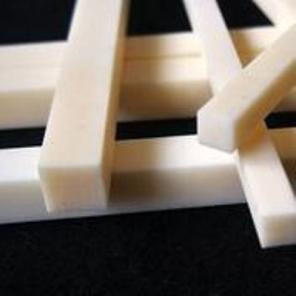
(Good Temperature Wear Resistance Al2o3 Alumina Ceramic Block )
1. Why High-Temperature Wear-Resistant Al2O3 Alumina Ceramic Blocks Exhibit Superior Characteristics
1.1 Molecular Structure Advantages
The exceptional properties of Al2O3 alumina ceramic blocks stem from their crystalline structure and chemical composition. Aluminum oxide forms a hexagonal close-packed lattice with strong covalent bonds between aluminum and oxygen atoms, creating an inherent resistance to deformation at elevated temperatures. These blocks maintain structural integrity up to 1750°C due to their high melting point and low thermal expansion coefficient. The dense crystalline matrix prevents crack propagation while the absence of metallic components eliminates oxidation risks. This combination delivers unmatched thermal stability where conventional metals would degrade.
1.2 Tribological Performance Mechanisms
Wear resistance originates from alumina’s exceptional hardness (9 on Mohs scale) and compressive strength exceeding 2,500 MPa. The homogeneous microstructure minimizes surface pores that typically initiate wear, while the chemically inert nature prevents corrosive interactions. During abrasive contact, alumina’s self-sharpening characteristic causes microscopic fracturing that maintains sharp edges rather than deforming, preserving wear resistance. This makes it ideal for applications involving sliding friction, particle impact, and erosive media where material loss must be minimized.
2. Defining High-Temperature Wear-Resistant Al2O3 Alumina Ceramic Blocks
2.1 Material Composition Specifications
High-performance alumina blocks contain 92-99.8% aluminum oxide (Al2O3), with purity directly correlating to service capabilities. Industrial-grade blocks (92-95% Al2O3) balance cost and performance, while high-purity formulations (99-99.8%) deliver maximum temperature resistance and mechanical strength. These technical ceramics differ fundamentally from traditional refractories through their near-zero porosity (<1%), achieved through specialized sintering. The resulting monolithic structure provides isotropic properties with uniform heat distribution and minimal thermal shock vulnerability.
2.2 Performance Benchmark Metrics
Authentic high-temperature wear-resistant alumina blocks must demonstrate: thermal shock resistance exceeding 20 rapid cooling cycles (800°C to room temperature), linear thermal expansion below 8×10⁻⁶/K, and Vickers hardness >15 GPa. Crucially, they maintain >90% of room-temperature strength at 1000°C. Electrical insulation properties (1012-1015 Ω·cm) remain stable across temperature ranges, enabling use in electrically hostile environments where conductive dusts or molten metals are present.
3. Manufacturing Process of High-Performance Alumina Ceramic Blocks
3.1 Powder Processing and Forming
Production begins with micronized α-alumina powder (0.1-1μm particle size) derived from calcined Bayer-process alumina. Manufacturers implement advanced purification techniques to reduce sodium oxide and silica contaminants below 0.1%. Binders and sintering aids like magnesium oxide are introduced before spray-drying into granules. Precision forming occurs through: 1) Dry pressing at 100-200 MPa for simple geometries, 2) Isostatic pressing (200-400 MPa) for complex shapes, or 3) Injection molding for intricate designs. Each method ensures uniform density distribution to prevent sintering deformations.
3.2 High-Temperature Sintering
The critical sintering phase occurs in high-temperature kilns at 1600-1800°C for 24-48 hours. During this process, controlled heating rates (50-100°C/hour) prevent thermal gradients, while hold temperatures facilitate diffusion bonding between particles. Final-stage hot isostatic pressing (HIP) at 1400°C under 100 MPa argon pressure eliminates residual porosity, achieving densities >99% of theoretical. This yields water absorption rates <0.02% and pore sizes below 1μm - critical for wear resistance. Post-sintering, diamond grinding achieves precise dimensional tolerances (±0.1mm) and surface finishes down to Ra 0.1μm.
4. Industrial Applications of Alumina Ceramic Blocks
4.1 High-Temperature Processing Environments
In thermal processing industries, alumina blocks serve as furnace linings, kiln furniture, and burner nozzles where temperatures exceed 1500°C. Their non-reactive nature makes them ideal for semiconductor crystal growth chambers, preventing silicon contamination. Glass manufacturing utilizes them as tank blocks and stirrers that resist both molten glass corrosion (pH 8-10) and thermal cycling stresses. In metal heat treatment, they function as fixture plates that maintain dimensional stability while preventing carburization or scale adhesion on workpiece surfaces.
4.2 Wear-Intensive Applications
Mining and mineral processing operations employ alumina blocks as pipeline liners, cyclone separators, and chute linings where abrasive slurries cause rapid steel erosion. Power generation plants use them in fly-ash handling systems and burner quarls subjected to erosive particulates at 850°C+. Petrochemical facilities install them as catalyst support grids in reformers operating at 800°C with high-velocity gases. The blocks’ electrically insulating properties enable use in electrostatic precipitators and high-voltage bushing applications where conductivity would cause catastrophic failure.
5. Selection Criteria for High-Performance Alumina Blocks
5.1 Material Property Evaluation
Selecting optimal alumina blocks requires verifying four key parameters: 1) Al2O3 content (≥95% for temperatures >1400°C), 2) Bulk density (≥3.7 g/cm³ indicates proper sintering), 3) Flexural strength (>300 MPa at operating temperature), and 4) Fracture toughness (>3.5 MPa·m½). For thermal cycling applications, confirm thermal expansion coefficient match with adjacent materials. Request manufacturer test certificates showing actual values rather than theoretical specifications, as processing variations significantly impact performance.
5.2 Design and Manufacturing Quality
Inspect dimensional tolerances (±0.5% maximum deviation) and surface finish requirements for your application. Verify the manufacturer implements quality control procedures like ultrasonic scanning for internal flaws. For critical applications, specify HIP-treated blocks with guaranteed porosity below 0.5%. Consider mechanical attachment options – blocks should feature precision-machined grooves or bolt holes for secure installation without point stresses. For large assemblies, ensure availability of custom shapes to minimize joints where erosion initiates.
6. Frequently Asked Questions About Alumina Ceramic Blocks
6.1 Performance Limitations and Solutions
Q: What temperature causes alumina block failure? A: While pure Al2O3 melts at 2054°C, practical limits are 1650-1750°C for long-term use. Above this, creep deformation occurs. Solution: For extreme temperatures, consider stabilized zirconia composites. Q: Can alumina withstand thermal shock? A: Standard grades tolerate ΔT~200°C; specialized formulations handle >500°C gradients through microcrack engineering. Q: Are they impact-resistant? A: Alumina has lower impact resistance than metals. Mitigation: Use thicker sections or rubber-backed installations where impact is expected.
6.2 Maintenance and Installation Considerations
Q: How are large alumina block assemblies joined? A: Use high-temperature ceramic adhesives (1500°C-rated) with expansion-matched compositions. Avoid cementitious mortars that shrink differently. Q: Can machined features be added post-production? A: Diamond tooling allows modifications, but avoid thin webs (<3mm) and sharp internal corners that create stress concentrators. Q: What causes premature failure? A: Three primary causes: 1) Improper thermal gradient management, 2) Point loading from uneven supports, or 3) Chemical attack from strong fluorides or caustic alkalis above pH 12. Conduct failure analysis through microscopy to identify root causes.
Tags: Al2O3 ceramic block, alumina wear block, high temperature ceramic, alumina ceramic brick, alumina refractory, ceramic wear liner, alumina block supplier, industrial alumina block

(Good Temperature Wear Resistance Al2o3 Alumina Ceramic Block )
Supplier
Alumina Technology Co., Ltd focus on the research and development, production and sales of aluminum oxide powder, aluminum oxide products, aluminum oxide crucible, etc., serving the electronics, ceramics, chemical and other industries. Since its establishment in 2005, the company has been committed to providing customers with the best products and services.
RELATED POSTS
5 Niche Applications of Alumina Ceramic Baking Dishes Beyond the Kitchen
Alumina Ceramic Baking Dishes: A Deep Dive into Performance, Types, and Kitchen Applications
What Is an Alumina Ceramic Baking Dish and Why Should You Use One?
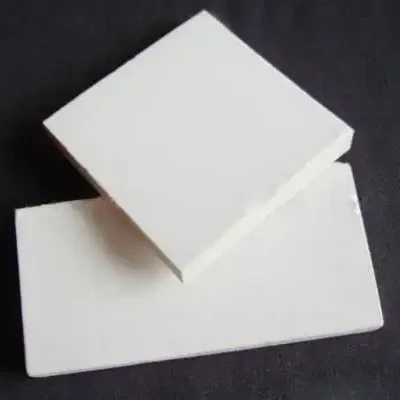
Development of high-purity ceramic material Alumina Plate
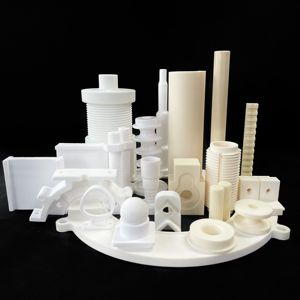
High Purity 99% Alumina Ceramic Blocks and Protective Tiles for Industrial Structural Applications