Professional Premium Aluminum Oxide Products Supplier

PRODUCT PARAMETERS
Description
Overview of Alumina Ceramic Shaft
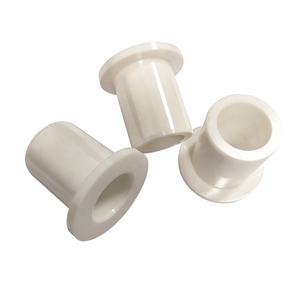
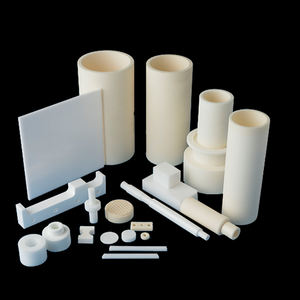
Alumina ceramic shafts are mainly composed of Al₂O₃. Alumina ceramic shaft is a kind of alumina ceramic parts that have extremely high hardness, good wear resistance, and can operate stably in friction environments. They are widely used in industrial machinery, electronic equipment, aerospace and other fields, providing strong support for the stable operation of equipment.
Features of Alumina Ceramic Shaft
High Hardness: With a hardness level of 9, several times higher than that of general metal materials, alumina ceramic shafts can resist scratches from external objects, thereby extending their service life.
Excellent Wear Resistance: the alumina ceramic shaft has excellent wear resistance, which can reduce wear during high-speed operation and improve the efficiency of equipment.
Superior Corrosion Resistance: Alumina ceramic shafts can withstand harsh environments, such as acids and alkalis, without corrosion or deformation.
Outstanding Insulation Performance: Widely used in electronic and electrical equipment to prevent safety hazards like electric leakage and fire.
Low Density: Lighter than metal, alumina ceramic shafts also exhibit good high-temperature resistance, operating stably in environments up to 1650°C.
Good Thermal Conductivity: With a thermal conductivity of 20 to 32W/MK, they can quickly dissipate heat and maintain stable equipment operation.
Chemical Stability: Acid and alkali resistance, as well as corrosion resistance, make alumina ceramic shafts suitable for the chemical industry.
Biological Inertness: Harmless to the human body and possessing good food compatibility.
Medium to Ultra-High Mechanical Strength: With a compressive strength of 2000 to 4000 MPa and a flexural strength of 280 to 350 MPa, they are not easily deformed under force.
High Hardness: 95% alumina has a hardness of about 89 HRA, while 99% and 99.5% alumina have a hardness of about 91 HRA.
Specifications Table of Alumina Ceramic Shaft
| Specification | Details |
| Material | Alumina, with purity levels of 95%, 96%, 99%, 99.5%, 99.7% etc. |
| Appearance | White, smooth surface, no visible defects |
| Diameter | Usually ranges from 1 mm to 50 mm or even hundreds of millimeters, with some special requirements allowing for larger diameters |
| Length | Generally 10 mm to 1000 mm, can also be customized to longer lengths |
| Hardness | 8-9 Mohs hardness, with 99% alumina ceramic shafts having a hardness of about 91 HRA and 95% alumina ceramic shafts about 89 HRA |
| Density | 3.6-3.92 g/cm³, such as 95% alumina ceramic shafts at 3.7 g/cm³ and 99.7% alumina ceramic shafts at 3.92 g/cm³ |
| Compressive Strength | ≥2000 MPa, like 95% alumina ceramic shafts at ≥2000 MPa and 99% alumina ceramic shafts at ≥2500 MPa |
| Bending Strength | ≥280 MPa, for example, 95% alumina ceramic shafts at ≥280 MPa and 99% alumina ceramic shafts at ≥300 MPa |
| Thermal Conductivity | 20-32 W/m·K, such as 95% alumina ceramic shafts at 20 W/m·K and 99% alumina ceramic shafts at 30 W/m·K |
| Coefficient of Thermal Expansion | 7-8×10⁻⁶/℃, for instance, 95% alumina ceramic shafts at 7.5×10⁻⁶/℃ and 99% alumina ceramic shafts at 7.8×10⁻⁶/℃ |
| Maximum Operating Temperature | 1500°C-1750°C, such as 95% alumina ceramic shafts at 1500°C and 99% alumina ceramic shafts at 1750°C |
| Volume Resistivity at 20℃ | ≥1×10¹⁴ Ω·cm |
| Dielectric Strength | ≥15 KV/mm, for example, 95% alumina ceramic shafts at ≥15 KV/mm and 99% alumina ceramic shafts at ≥20 KV/mm |
| Dielectric Constant at Room Temperature | 9-11.5, such as 95% alumina ceramic shafts at 11 and 99% alumina ceramic shafts at 10 |
| Linear Dimensional Accuracy | Depending on the product’s specific shape and process requirements, generally cylindrical degrees can reach 0.003 mm, coaxiality 0.002 mm |
| Surface Roughness | Can reach Ra0.02-0.04 μm |
Applications of Alumina Ceramic Shaft
Machinery Manufacturing Industry: Used to manufacture bearings, transmission shafts, pump parts, and valve accessories. Their high hardness and wear resistance reduce maintenance costs and downtime, extending equipment life and reducing failure rates. They also provide high-precision and high-efficiency cutting performance for the metal processing industry.
Electronics and Electrical Field: Widely used in the manufacture of high-frequency electronic components, microwave devices, ceramic parts of semiconductor processing equipment, and electronic components such as temperature and pressure sensors to meet the needs of special working environments like high temperature and high frequency.
Chemical Industry: Used to manufacture corrosion-resistant chemical equipment parts, such as reactors and purifiers, as well as chemical filler balls and inorganic microfiltration membranes. Their inertness and chemical stability ensure they do not react with the chemicals they contact, maintaining the integrity of the chemical process.
Medical Devices Field: Used to prepare products such as artificial joints due to their good biocompatibility and wear resistance.
Aerospace Field: Used to manufacture thermal protection systems and engine components of spacecraft, leveraging their high-temperature performance and corrosion resistance.
Company Profile
Alumina Technology Co., Ltd.! We focus on the research and development, production and sales of alumina products, serving the electronics, ceramics, chemical and other industries. Since its establishment in 2005, the company has been committed to providing customers with the best products and services, and has become a leader in the industry through continuous technological innovation and strict quality management.
Our products includes but not limited to Alumina Boat, Alumina Crucible, Alumina Dish, Alumina Foam Filter, Alumina Plate, Alumina Rod, Alumina Bar, Alumina Balls, Filter Alumina, Nano Alumina Powder, Spherical Alumina Powder, ect. please feel free to contact us.(nanotrun@yahoo.com)
Payment Methods
T/T, Western Union, Paypal, Credit Card etc.
Shipment Methods
By air, by sea, by express, as customers request.

5 FAQs of Alumina Ceramic Shaft
Q1: Why is it difficult to process alumina ceramic shafts?
The difficulty in processing alumina ceramic shafts is mainly due to their high hardness, brittleness, and anisotropy. Their hardness, second only to diamond, makes it challenging to cut with traditional tools, which wear out quickly. The material’s brittleness leads to chipping, cracking, or even breaking during processing, especially in thin-walled, complex structures or small-hole processing. The anisotropy of material mechanical properties, caused by the directional grain growth during sintering, can lead to uneven stress and internal microcracks or pores, reducing material strength and processing yield.
Q2: How to solve the brittleness problem in the processing of alumina ceramic shafts?
Use diamond tools or CBN grinding wheels for grinding and cutting. Employ ultrasonic-assisted processing to reduce cutting force and minimize edge chipping. Optimize processing parameters, such as reducing feed speed and increasing rotation speed, to reduce stress concentration.
Q3: Why is the processing cost of alumina ceramic shafts so high?
On the one hand, the processing of alumina ceramic shafts is difficult and requires expensive tools such as diamond tools or CBN grinding wheels, and these tools wear out quickly; on the other hand, the equipment required for precision processing, such as five-axis grinders and ultrafast lasers, has high investment and complex maintenance, leading to higher processing costs.
Q4: What is the difference between alumina ceramic shafts of different purities?
99% alumina ceramic shafts are typically used for small-diameter shafts, catering mostly to mid-end customers with higher purity and performance. In contrast, 95% of alumina ceramic shafts are more commonly used for large-diameter shafts, serving mid- and low-end customers with relatively lower costs.
Q5: How to prevent surface spots on alumina ceramic shafts?
During compression molding, select high-quality raw materials with low iron content and perform magnetic separation to remove iron when necessary. Pay attention to the grinding process and check if the ball mill’s lining bricks have fallen off, repairing them promptly. During granulation, add magnetic separation when conveying slurry and use hot air furnaces and hot air filters to prevent rust from entering the material in the hot air system. Perform magnetic separation on granulated powder before final product packaging. Line all conveying pipelines with polyurethane whenever possible.
REQUEST A QUOTE
RELATED PRODUCTS
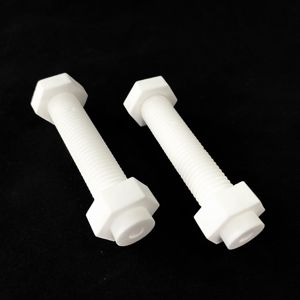
99.5% Industrial Grade CC-2 Ready to Press Granulated Alumina for Special Ceramic Tube Nozzle Crucible

Good Cold Isostatic Pressing 99% 99.5% Al2O3 Alumina Ceramic Piston Rod Shafts

Heat Resistant / 99% Alumina Ceramic Tube with Holes Al2O3 Pipe
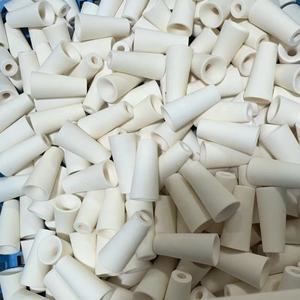
Mirror Polished OD5mm 99% Alumina Ceramic Shaft Rod
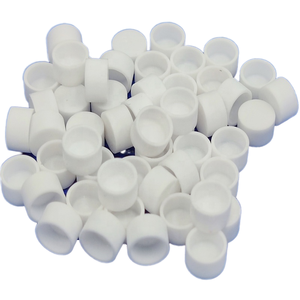
Alumina Zirconia Ceramic Plate Rods for Wire Wound Resistor Resistance Resistors Boat Welding and Cutting
