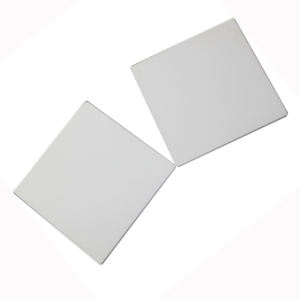
Professional Premium Aluminum Oxide Products Supplier


(95% Alumina Block Heat Resistance Al2O3 Ceramic Grinding Plate)
1. Why 95% Alumina Block Heat Resistance Al2O3 Ceramic Grinding Plate Has Good Characteristics
95% alumina ceramic grinding plates exhibit exceptional performance due to the inherent properties of aluminum oxide (Al2O3). The high alumina concentration creates a dense crystalline structure with Vickers hardness exceeding 1500 HV, providing superior wear resistance during abrasive processes. These plates maintain dimensional stability at temperatures up to 1650°C due to minimal thermal expansion (coefficient: 8.1×10⁻⁶/K), preventing warping or cracking under thermal stress. The material’s chemical inertness ensures resistance to acids, alkalis, and solvents, while its dielectric strength (approximately 15 kV/mm) makes it suitable for specialized electrical applications. These characteristics collectively enable consistent grinding precision, extended service life, and reduced contamination risks compared to metallic alternatives.
2. What Is 95% Alumina Block Heat Resistance Al2O3 Ceramic Grinding Plate
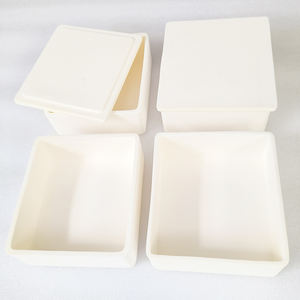
A 95% alumina block Al2O3 ceramic grinding plate is a precision-engineered component composed of 95% aluminum oxide powder sintered at ultra-high temperatures. Unlike standard ceramics, this high-purity formulation creates a non-porous microstructure with density ≥3.6 g/cm³, making it impervious to liquid absorption. These plates typically feature surface flatness within 0.01mm tolerance and Ra surface roughness values below 0.4μm after precision grinding. The material’s homogeneous composition ensures uniform thermal conductivity (≈30 W/m·K) and compressive strength exceeding 2000 MPa. Such properties make it indispensable for applications demanding dimensional stability under thermal cycling, such as semiconductor processing fixtures or high-temperature furnace components. Its versatility extends beyond industrial grinding; similar alumina compositions power specialized kitchenware like alumina ceramic baking dishes, leveraging identical thermal stability principles.
3. How 95% Alumina Block Heat Resistance Al2O3 Ceramic Grinding Plate Was Produced
The manufacturing of 95% alumina grinding plates involves advanced ceramic processing techniques. Production begins with spray-dried alumina powder containing precisely 95% α-Al2O3 content, mixed with sintering aids like magnesia. This mixture undergoes dry-pressing or isostatic pressing at 100-300 MPa to form green bodies. The plates are then sintered in tunnel kilns at 1600-1800°C for 24-48 hours, achieving near-theoretical density through diffusion bonding. Critical post-processing includes diamond grinding with CNC surface grinders to achieve flatness within ±0.005mm and surface finishes down to 0.1μm Ra. Quality verification employs coordinate measuring machines (CMM) and ultrasonic flaw detection to ensure structural integrity. This rigorous process yields components with flexural strength >300 MPa and fracture toughness of 3.5-4 MPa·m1/2, essential for high-stress grinding applications.
4. What Are The Application Fields of 95% Alumina Block Heat Resistance Al2O3 Ceramic Grinding Plate
These specialized grinding plates serve critical functions across multiple industries due to their thermal and mechanical stability. In precision optics, they facilitate lens grinding with sub-micron accuracy under coolant-free conditions. Semiconductor manufacturers utilize them as wafer chucks in chemical-mechanical planarization (CMP) systems, leveraging their electrical insulation and chemical resistance. The pharmaceutical industry employs them for particle size reduction in high-purity active pharmaceutical ingredients (APIs), where metallic contamination is unacceptable. Additionally, their thermal shock resistance makes them ideal for furnace furniture in heat treatment processes up to 1500°C. Beyond industrial grinding, the material’s versatility is demonstrated in niche applications like specialized alumina ceramic baking dishes used in laboratory sample preparation, highlighting the cross-industry utility of high-purity alumina components.
5. How To Choose A Good 95% Alumina Block Heat Resistance Al2O3 Ceramic Grinding Plate
Selecting optimal alumina grinding plates requires evaluating technical specifications against application parameters. Prioritize alumina content (≥94.5%) verified through XRF analysis to ensure thermal stability. Confirm density values exceed 3.65 g/cm³ via Archimedes method testing, indicating low porosity. Surface flatness should be ≤0.01mm/100mm, measurable with optical flats, while surface roughness (Ra) must be specified for your grinding process—typically 0.2-0.4μm for fine finishing. Verify thermal shock resistance by requesting manufacturer data on quenching cycles survived (e.g., 800°C to 20°C water). For high-wear applications, assess hardness through Vickers or Knoop testing (target: ≥1500 HV10). Crucially, inspect edge chamfer quality (minimum 0.3mm) to prevent chipping. Note that selection criteria for alumina components vary by application; for instance, alumina ceramic baking dishes require different edge treatments despite similar material composition.
6. What Does People Also Ask About 95% Alumina Block Heat Resistance Al2O3 Ceramic Grinding Plate
6.1 How does thermal conductivity affect grinding performance?
Alumina’s moderate thermal conductivity (≈30 W/m·K) prevents localized overheating during grinding operations, reducing thermal gradients that could cause workpiece distortion. This property is equally vital in thermal applications like specialized alumina ceramic baking dishes used in precision heating processes.
6.2 Can these plates withstand acidic/alkaline cleaning?
Yes, 95% alumina exhibits exceptional chemical inertness, resisting all common acids (except hydrofluoric) and alkalis up to pH 14, making steam cleaning or chemical sterilization viable.
6.3 What causes edge chipping and how to prevent it?
Chipping typically results from impact or improper handling. Always specify plates with ≥0.5mm chamfered edges and store them separated by protective padding.
6.4 How does alumina purity affect wear resistance?
Higher alumina content directly correlates with increased hardness and reduced porosity. Plates below 93% purity exhibit significantly higher wear rates in abrasive environments.
Tags: alumina grinding plate, Al2O3 ceramic plate, 95% alumina block, heat resistant ceramic, ceramic grinding surface, industrial alumina plate, precision grinding plate, high-temperature ceramic

(95% Alumina Block Heat Resistance Al2O3 Ceramic Grinding Plate)
Supplier
Alumina Technology Co., Ltd focus on the research and development, production and sales of aluminum oxide powder, aluminum oxide products, aluminum oxide crucible, etc., serving the electronics, ceramics, chemical and other industries. Since its establishment in 2005, the company has been committed to providing customers with the best products and services.
RELATED POSTS
Square 99% Al2O3 Alumina Ceramic Plates with Holes: Industrial Applications and Benefits
How Is Alumina Ceramic Used Beyond the Kitchen—Like in High-Temperature Lab Crucibles?
Alumina Ceramic Baking Dishes Are the Secret Weapon of Modern Kitchens—Here’s Why
Alumina Ceramic Baking Dishes: The Ultimate Guide to Performance, Safety, and Versatility
Differences Between Alumina Spherical Powder And Nano Alumina Powder: From Particle Size And Morphology To Application Scenarios