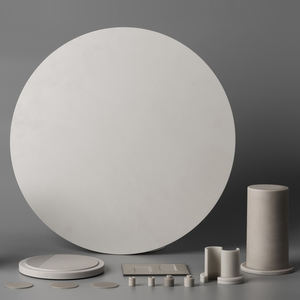
Professional Premium Aluminum Oxide Products Supplier

1 Why Alumina Ceramic Crucible Has Good Characteristics
1.1 High Melting Point and Thermal Stability
Alumina ceramic crucibles possess a unique combination of properties that make them indispensable in various scientific and industrial applications. These include a high melting point (around 2072°C), excellent thermal stability (resistance to thermal shock), chemical inertness (resistance to acids, alkalis, and solvents), high hardness, and good mechanical strength. Additionally, alumina is an electrical insulator, which can be advantageous in certain heating applications. The high purity of alumina ensures minimal contamination of the substances being processed within the crucible. These properties collectively make alumina crucibles suitable for use in demanding environments where high temperatures, corrosive substances, and mechanical stresses are present. The durability and reliability of alumina crucibles contribute to their widespread use in research, development, and manufacturing processes.
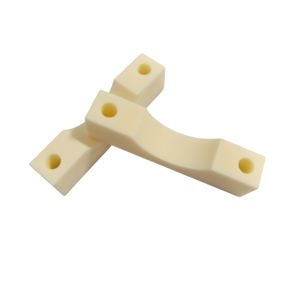
(Alumina Ceramic Crucible)
1.2 Chemical Inertness and Resistance to Corrosion
Another key characteristic of alumina ceramic crucibles is their chemical inertness. Alumina is highly resistant to attack by most acids, alkalis, and organic solvents, making it suitable for containing a wide variety of materials without fear of contamination or reaction. This is particularly important when working with sensitive or reactive substances where even trace amounts of impurities can affect the outcome of a process. The resistance to corrosion also ensures that the crucible itself does not degrade or break down during use, extending its lifespan and maintaining the purity of the contained substance. This chemical stability is a critical factor in applications such as materials research, chemical synthesis, and high-purity metal processing, where maintaining the integrity of the materials is paramount. Alumina crucibles provide a reliable and chemically clean environment for various high-temperature reactions and processes.
1.3 High Hardness and Mechanical Strength
Alumina ceramic is a very hard and mechanically strong material, contributing to the durability and reliability of alumina ceramic crucibles. The high hardness of alumina means that it is resistant to abrasion and wear, allowing the crucible to withstand repeated handling and use without significant degradation. This is especially important in industrial settings where crucibles may be subjected to rough handling or mechanical stress. The mechanical strength of alumina ensures that the crucible can support the weight of its contents without breaking or deforming, even at high temperatures. This combination of hardness and strength makes alumina crucibles a robust choice for demanding applications. Furthermore, the dimensional stability of alumina at high temperatures helps to maintain the accuracy and consistency of processes performed within the crucible.
2 What Is Alumina Ceramic Crucible
2.1 Definition and Composition
An alumina ceramic crucible is a container made from alumina (aluminum oxide, Al₂O₃), a high-purity ceramic material known for its exceptional thermal and chemical properties. These crucibles are designed to hold substances during high-temperature heating, melting, or calcination processes. The alumina used in these crucibles is typically of a high purity grade (ranging from 95% to 99.9%), which ensures minimal contamination of the substances being heated within. The manufacturing process involves shaping alumina powder into the desired crucible form, followed by sintering at high temperatures to densify the material and impart its characteristic strength and resistance. The specific composition and manufacturing techniques can vary depending on the intended application, with some crucibles containing small amounts of additives to enhance certain properties such as thermal shock resistance or mechanical strength.
2.2 Key Properties and Characteristics
Alumina ceramic crucibles possess a unique combination of properties that make them indispensable in various scientific and industrial applications. These include a high melting point (around 2072°C), excellent thermal stability (resistance to thermal shock), chemical inertness (resistance to acids, alkalis, and solvents), high hardness, and good mechanical strength. Additionally, alumina is an electrical insulator, which can be advantageous in certain heating applications. The high purity of alumina ensures minimal contamination of the substances being processed within the crucible. These properties collectively make alumina crucibles suitable for use in demanding environments where high temperatures, corrosive substances, and mechanical stresses are present. The durability and reliability of alumina crucibles contribute to their widespread use in research, development, and manufacturing processes.
2.3 Common Types and Shapes
Alumina ceramic crucibles are available in a variety of types and shapes to suit different applications and experimental setups. Common shapes include cylindrical, conical, and dish-shaped crucibles. Cylindrical crucibles are often used for general-purpose heating and melting, while conical crucibles are useful for pouring molten materials. Dish-shaped crucibles are suitable for evaporating liquids or calcining powders. The size of the crucible can range from a few milliliters to several liters, depending on the volume of material to be processed. Some crucibles are designed with lids or covers to contain volatile substances or to maintain a controlled atmosphere during heating. Specialty crucibles may also be manufactured with specific features such as spouts for pouring or graduations for measuring. The choice of crucible type and shape depends on the specific requirements of the application, including the type of material being processed, the temperature range, and the desired outcome.
3 How Alumina Ceramic Crucible Was Produced?
3.1 Raw Material Preparation
The production of alumina ceramic crucibles begins with the careful selection and preparation of the raw materials. High-purity alumina powder (Al₂O₃) is the primary ingredient, typically sourced from the Bayer process, which refines bauxite ore into alumina. The purity of the alumina powder is crucial, as impurities can compromise the crucible’s performance at high temperatures and its resistance to chemical attack. The alumina powder is often subjected to further processing, such as milling or sieving, to ensure a uniform particle size distribution. This is important for achieving a dense and homogeneous ceramic structure during the sintering process. In some cases, small amounts of additives, such as magnesia or silica, may be added to the alumina powder to enhance certain properties, such as thermal shock resistance or grain growth control. The exact composition of the raw material mixture is carefully controlled to meet the specific requirements of the intended application.
3.2 Shaping and Forming Techniques
Once the raw materials are prepared, the next step is to shape the alumina powder into the desired crucible form. Several shaping techniques can be used, including slip casting, pressing, and extrusion. Slip casting involves creating a suspension of alumina powder in a liquid medium (slip) and pouring it into a mold. The liquid is gradually absorbed by the mold, leaving behind a solid layer of alumina. Pressing involves compacting the alumina powder in a die using mechanical pressure. This technique is suitable for producing crucibles with simple shapes and high densities. Extrusion involves forcing the alumina paste through a die to create a continuous shape, which is then cut to the desired length. This method is commonly used for producing tubular or rod-shaped crucibles. The choice of shaping technique depends on the desired shape, size, and density of the crucible, as well as the production volume.
3.3 Sintering and Finishing Processes
After shaping, the green (unfired) alumina crucible undergoes a sintering process to densify the material and impart its characteristic strength and hardness. Sintering involves heating the crucible to a high temperature (typically between 1500°C and 1700°C) in a controlled atmosphere. During sintering, the alumina particles bond together through solid-state diffusion, reducing the porosity and increasing the density of the material. The sintering temperature and atmosphere are carefully controlled to prevent excessive grain growth or undesirable phase transformations. After sintering, the crucible may undergo finishing processes to improve its surface quality and dimensional accuracy. These processes can include grinding, polishing, or machining. In some cases, a protective coating may be applied to the crucible surface to enhance its resistance to chemical attack or to prevent sticking. The final product is a high-quality alumina ceramic crucible ready for use in demanding applications.
4 What Are The Application Fields of Alumina Ceramic Crucible
4.1 Laboratory Research and Development
Alumina ceramic crucibles are widely used in laboratory research and development (R&D) settings due to their high purity, chemical inertness, and ability to withstand high temperatures. They are essential tools for conducting various experiments and analyses, including sample preparation, thermal analysis, and materials synthesis. In sample preparation, alumina crucibles are used to heat, melt, or calcine samples prior to analysis by techniques such as X-ray diffraction (XRD), inductively coupled plasma mass spectrometry (ICP-MS), and scanning electron microscopy (SEM). Thermal analysis techniques, such as differential scanning calorimetry (DSC) and thermogravimetric analysis (TGA), rely on alumina crucibles to hold samples during heating and cooling cycles. In materials synthesis, alumina crucibles provide a clean and stable environment for reacting different materials at high temperatures to create new compounds or materials. The versatility and reliability of alumina crucibles make them indispensable tools for researchers in various scientific disciplines.
4.2 Industrial Production Processes
Alumina ceramic crucibles play a crucial role in various industrial production processes that require high-temperature heating or melting. In the metallurgy industry, they are used for melting metals and alloys, as well as for refining processes to remove impurities. In the ceramics industry, alumina crucibles are used for firing ceramic materials and for sintering processes to densify ceramic components. In the chemical industry, they are used for synthesizing chemicals at high temperatures and for calcining materials to produce oxides or other compounds. The high thermal stability and chemical resistance of alumina crucibles make them suitable for handling a wide range of materials and for withstanding the harsh conditions encountered in industrial environments. The durability and long lifespan of alumina crucibles contribute to their cost-effectiveness in industrial applications. Their ability to maintain the purity of the materials being processed is also critical in industries where product quality is paramount.
4.3 High-Temperature Material Processing
Alumina ceramic crucibles are essential components in high-temperature material processing applications, where materials are subjected to extreme heat for extended periods. This includes processes such as crystal growth, where single crystals are grown from a melt at high temperatures, and sintering, where powders are consolidated into solid materials by heating them to a temperature below their melting point. In these applications, the alumina crucible must be able to withstand the high temperatures without reacting with the material being processed or contaminating it. The thermal stability and chemical inertness of alumina make it an ideal material for these demanding environments. Furthermore, the high emissivity of alumina at high temperatures allows for efficient heat transfer, which is crucial for achieving uniform temperature distribution within the crucible. The reliability and performance of alumina crucibles are critical for ensuring the success of high-temperature material processing operations.
5 How To Choose A Good Alumina Ceramic Crucible
5.1 Material Purity and Composition
When selecting an alumina ceramic crucible, the purity and composition of the alumina material are paramount. High-purity alumina (typically 99% or higher) is generally preferred, as it minimizes the risk of contamination of the sample being heated or melted. Impurities can react with the sample at high temperatures, altering its composition or properties. The manufacturer should provide specifications regarding the alumina purity and the presence of any additives. Additives may be included to enhance specific properties, such as thermal shock resistance or mechanical strength. However, it is important to ensure that these additives are compatible with the intended application and do not introduce any undesirable effects. A certificate of analysis from the manufacturer can provide valuable information about the chemical composition of the alumina and the levels of impurities. Choosing a crucible with appropriate material purity is essential for ensuring accurate and reliable results.
5.2 Size and Shape Considerations
The size and shape of the alumina ceramic crucible should be carefully considered based on the specific requirements of the application. The crucible should be large enough to accommodate the sample without overflowing or spilling, but not so large that it requires excessive heating or consumes unnecessary energy. The shape of the crucible can also influence its performance. For example, crucibles with a narrow base may be suitable for heating small samples, while crucibles with a wide base may be better for evaporating liquids. Crucibles with a spout may be convenient for pouring molten materials. The choice of shape should also consider the heating method being used. For example, crucibles with a flat bottom may be better for use on a hot plate, while crucibles with a rounded bottom may be better for use in a furnace. Selecting the appropriate size and shape can optimize the heating process and improve the overall efficiency of the experiment or process.
5.3 Thermal and Chemical Resistance
The thermal and chemical resistance of the alumina ceramic crucible are critical factors to consider, especially when working at high temperatures or with corrosive materials. The crucible should be able to withstand the maximum temperature required for the application without deforming, cracking, or melting. It should also be resistant to chemical attack from the sample being heated or melted, as well as from any gases or vapors present in the environment. The manufacturer should provide specifications regarding the maximum operating temperature and the chemical resistance of the crucible. It is important to select a crucible that is compatible with the specific chemicals and temperatures that will be used. In some cases, a protective coating may be applied to the crucible surface to enhance its chemical resistance. Choosing a crucible with adequate thermal and chemical resistance will ensure its longevity and prevent contamination of the sample.
6 What Does People Also Ask About Alumina Ceramic Crucible
6.1 What is the maximum temperature an alumina crucible can withstand?
The maximum temperature an alumina crucible can withstand depends on the purity and specific formulation of the alumina ceramic. Generally, alumina crucibles can be used at temperatures up to 1750°C (3182°F) in continuous operation and can withstand short-term exposure to even higher temperatures, approaching the melting point of alumina (around 2072°C or 3762°F). However, it’s crucial to consult the manufacturer’s specifications for the specific crucible being used, as variations in composition and manufacturing processes can affect its thermal stability. Factors such as the heating rate, atmosphere, and load on the crucible can also influence its maximum operating temperature. Exceeding the recommended temperature can lead to deformation, cracking, or even melting of the crucible, potentially contaminating the sample and damaging equipment. Always prioritize safety and adhere to the manufacturer’s guidelines.
6.2 How do I clean an alumina ceramic crucible?
Cleaning an alumina ceramic crucible requires care to avoid damaging the surface. Start by removing any loose debris with a soft brush or cloth. For most residues, soaking the crucible in a mild detergent solution followed by gentle scrubbing with a non-abrasive sponge is sufficient. Stubborn residues may require more aggressive cleaning methods, such as soaking in a diluted acid solution (e.g., hydrochloric acid) or using an ultrasonic cleaner. However, always exercise caution when using strong chemicals and ensure proper ventilation and personal protective equipment. Avoid using abrasive cleaners or metal tools, as these can scratch the surface of the crucible and reduce its performance. After cleaning, rinse the crucible thoroughly with distilled water and dry it completely before reuse. Proper cleaning practices extend the lifespan of the crucible and prevent cross-contamination of samples.
6.3 Are alumina crucibles resistant to thermal shock?
Alumina crucibles exhibit moderate resistance to thermal shock, but they are not completely immune to it. Thermal shock occurs when a material is subjected to rapid temperature changes, causing stress that can lead to cracking or fracture. The thermal shock resistance of alumina depends on factors such as the purity, density, and grain size of the ceramic. Crucibles with a higher density and smaller grain size generally exhibit better thermal shock resistance. To minimize the risk of thermal shock, it is recommended to heat and cool alumina crucibles gradually. Avoid sudden temperature changes, such as placing a hot crucible on a cold surface or quenching it in water. Preheating the crucible before use can also help to reduce thermal stress. If the application involves frequent or rapid temperature changes, consider using crucibles made from materials with superior thermal shock resistance, such as fused silica or silicon carbide. Understanding the thermal shock limitations of alumina crucibles is essential for ensuring their safe and reliable use.
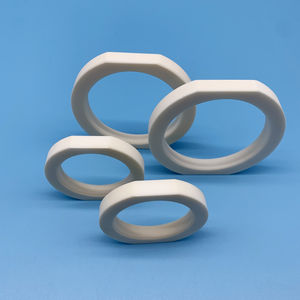
(Alumina Ceramic Crucible)
Tags: alumina ceramic, ceramic crucible, alumina crucible, high temperature crucible, laboratory crucible, material processing, ceramic material, alumina properties
Supplier
Alumina Technology Co., Ltd focus on the research and development, production and sales of aluminum oxide powder, aluminum oxide products, aluminum oxide crucible, etc., serving the electronics, ceramics, chemical and other industries. Since its establishment in 2005, the company has been committed to providing customers with the best products and services. If you are looking for high quality Alumina Ceramic Products , please feel free to contact us. (nanotrun@yahoo.com)
RELATED POSTS
Can Alumina Ceramic Baking Dishes Be Used in High-Temperature Laboratory Applications?
Alumina Ceramic Baking Dishes Are Revolutionizing High-Temperature Laboratory Crucibles
What Is an Alumina Ceramic Baking Dish and Why Is It Gaining Popularity in Modern Kitchens?
Discover the Versatility of Alumina Ceramic Baking Dishes and More
7 Key Differences Between Alumina Ceramic Baking Dishes and Other High-Temperature Ceramic Cookware