Professional Premium Aluminum Oxide Products Supplier

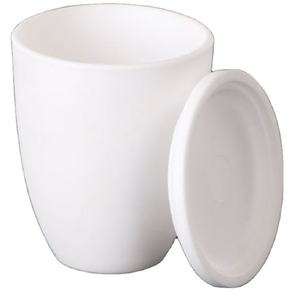
Today, we’ll explore one of the most popular choices—alumina crucible—and see how it stacks up against competitors like quartz, graphite, and platinum. If you work in the laboratory or industrial field and require the use of high temperatures, then you must be aware that crucibles are indispensable during operations. Crucibles are used to hold materials during melting, reaction, or heat treatment. However, selecting the right crucible is far from easy. Improper selection can lead to experimental failure, product damage, or even pose a hazard.
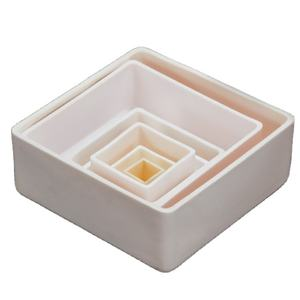
Aluminum oxide, known simply as alumina, is a ceramic prized for its excellent overall performance. The material is finely textured and hard, but what truly sets it apart is its incredible versatility. It handles very high temperatures with ease, maintaining its shape and strength long after other materials have softened. It also shows a strong resistance to chemical attack. Alumina isn’t ideal for extended use with highly corrosive acids or strong alkalis, but it performs reliably with many molten materials and gases. Ultimately, it’s the thermal performance that truly sets it apart: the crucibles can run continuously at temperatures up to 1700°C and handle even higher peaks for short periods. This balance makes it a reliable, go-to choice for countless applications, from analyzing minerals to sintering advanced ceramics.
In terms of chemical properties, alumina exhibits commendable inertness. It exhibits strong resistance to erosion from many molten metals, slag, and corrosive gases. Although prolonged exposure to high-concentration acids (such as hydrofluoric acid and phosphoric acid) or strong alkalis (such as molten sodium hydroxide) can degrade it, it can withstand a wide range of other chemical environments. This chemical robustness, coupled with excellent electrical insulation properties, makes it the preferred choice for countless applications. It can be found in various fields, from classical silicate analysis and ash determination in analytical chemistry to sintering and single-crystal growth of advanced technical ceramics in materials science. The balance between its performance and cost-effectiveness ensures its position as a reliable and commonly used solution in both conventional and advanced environments.

Now, let’s put alumina side-by-side with other common crucible materials.
First, consider quartz crucibles, which are made from fused silica. They are of very high purity and transparency.
They are the clear champions of purity and visibility. Their transparency is a unique advantage for watching reactions. They also resist acids beautifully. However, quartz has a critical weakness: it doesn’t like rapid temperature changes and can crack from thermal shock. Its useful temperature ceiling is also lower than alumina’s. So, for very high-temperature work or processes requiring heating and cooling cycles, alumina is often the tougher choice.
Next, we have graphite crucibles. They occupy an important position in the field of metal casting. Graphite has excellent thermal conductivity, enabling rapid and efficient melting of metals such as gold, silver, and aluminum, and also exhibits good thermal shock resistance. These are the workhorses of metal foundries. There’s a big catch: graphite loves to react with oxygen. Use it in an ordinary air atmosphere, and it will burn away rapidly. It requires a protective, oxygen-free environment. Furthermore, carbon from graphite can contaminate or react with certain materials. Therefore, graphite is an ideal choice for melting specific metals, but for general processes conducted in air or in situations where carbon contamination needs to be avoided, alumina has more advantages.
Then there’s the premium option: platinum and its alloys. Platinum crucibles are the ultimate performers in many ways. Known for their ability to withstand extreme heat, near-total chemical inertness, and exceptional durability, these materials are the benchmark for the most precise analytical tasks. Yet their prohibitive cost limits them to specialized uses, while routine applications seek more affordable alternatives. Finally, despite their robustness, they remain vulnerable to specific threats like certain molten metals and phosphorus compounds. For most labs and industries, alumina provides a fantastic balance of performance and affordability that platinum cannot match.
Alumina vs. Other Specialized Ceramics (Magnesia, Zirconia)
Specialized ceramics fill specific niches. Magnesia (MgO) crucibles exhibit outstanding resistance to basic and alkaline environments. Still, they are notoriously hygroscopic, readily absorbing moisture from the air, which can lead to hydration and structural degradation during heating. Zirconia (ZrO₂) stabilized with yttria or magnesia demonstrates phenomenal fracture toughness and perhaps the best thermal shock resistance of all oxide ceramics. Still, it is more expensive, heavier, and can undergo phase transformations if not properly stabilized.
Special ceramics also serve critical roles in niche markets. Take magnesium oxide (MgO) crucibles, for instance. While they perform very well in alkaline environments, their significant drawback is hygroscopicity—they tend to absorb moisture from the air. This absorbed moisture can lead to hydration and, upon heating, may cause structural weakening or damage. When stabilized with yttria or magnesia, zirconia (ZrO₂) gains exceptional fracture toughness and arguably the best thermal shock resistance of any oxide ceramic. Of course, these advantages come with compromises: the material is notably more expensive and denser than many alternatives. That said, perhaps the most critical factor to manage is stabilization itself—if not done correctly, it can lead to an undesirable phase transformation. While it may not outperform these materials in their specific domains of excellence, its well-rounded profile makes it the ideal generalist.
Other materials like magnesia or zirconia have their own niches. Magnesia excels in basic or alkaline environments but suffers in moist air. Zirconia is phenomenal for extreme thermal shock resistance. Yet, these are often more specialized and expensive than alumina, which remains the ideal generalist.
So, how do you choose? Think about your main priorities.
An alumina crucible; It’s your best bet for high-temperature work in air, for processes involving multiple steps, or when you need good chemical resistance without the platinum price tag.
Look beyond alumina when you need supreme optical clarity (choose quartz), you are melting common metals in a controlled furnace (graphite is efficient), or you are doing ultra-high-purity analysis with no budget constraints (platinum is king).
In summary, no single crucible material is perfect for every job. The key is to understand the trade-offs. Graphite conducts heat but burns. Quartz is pure but fragile. Platinum is nearly perfect but prohibitively expensive. Alumina crucibles earn their widespread popularity by offering a remarkable and balanced combination of high-temperature strength, decent chemical resistance, good thermal shock tolerance, and reasonable cost. For the vast majority of applications that do not have any extreme requirements, this balanced characteristic makes alumina the most suitable choice. This crucible allows you to focus on your process without worrying about the container being damaged.
Supplier
Alumina Technology Co., Ltd focus on the research and development, production, and sales of aluminum oxide powder, aluminum oxide products, aluminum oxide crucible, etc., serving the electronics, ceramics, chemical, and other industries. Since its establishment in 2005, the company has been committed to providing customers with the best products and services. If you are looking for high quality aluminum crucible, please feel free to contact us.
RELATED POSTS
Development of high-purity ceramic material Alumina Plate
Alumina Ceramic Baking Dishes: A Deep Dive into Performance, Types, and Kitchen Applications
5 Niche Applications of Alumina Ceramic Baking Dishes Beyond the Kitchen
Alumina Ceramic Baking Dishes Are the Oven’s Secret Superhero—Here’s Why
How to Use and Care for Your Alumina Ceramic Baking Dish Without Cracking or Staining?