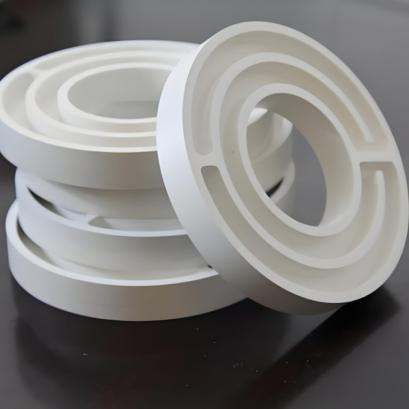
Professional Premium Aluminum Oxide Products Supplier


(Custom High Heat Resistant Alumina Ceramics Structural Parts Al2O3 Machining Parts Block Components 99% Alumina Ceramic)
1. Why 99% Alumina Ceramic Structural Parts Excel in High-Heat Applications
1.1 Exceptional Thermal Stability
99% alumina ceramics maintain structural integrity at temperatures up to 1750°C due to their ultra-high purity composition. The crystalline Al2O3 structure prevents deformation under thermal stress, outperforming metals and polymers. With thermal conductivity rates of 20-30 W/mK, these components distribute heat evenly while resisting thermal shock during rapid temperature fluctuations. This makes them indispensable for furnace linings and semiconductor processing equipment.
1.2 Superior Mechanical Properties
With Vickers hardness exceeding 1500 HV, alumina ceramics exhibit exceptional wear resistance in abrasive environments. Their compressive strength (2,000-3,000 MPa) allows use in load-bearing applications like industrial rollers or cutting tools. The material’s stiffness (Young’s modulus of 300-400 GPa) prevents deflection under pressure, while maintaining dimensional stability across temperature ranges. These properties are detailed in performance tests of high-temperature resistant alumina components.
1.3 Chemical and Electrical Resistance
The ionic bonding in 99% Al2O3 creates near-impervious resistance to acids, alkalis, and molten metals. This chemical inertness prevents corrosion in chemical processing reactors. Dielectric strength (15-20 kV/mm) and volume resistivity (1014 Ω·cm) enable reliable electrical insulation in spark plugs and sensor housings. These combined properties make alumina ceramics ideal for harsh-environment applications where metals fail.
2. Defining Custom High-Heat Alumina Ceramic Components
2.1 Material Composition Standards
99% alumina ceramics contain ≥99% aluminum oxide (Al2O3), with trace elements like SiO2 and MgO carefully controlled below 1%. This purity level distinguishes them from 95% alumina grades, delivering superior thermal and mechanical properties. The material achieves density levels of 3.8-3.9 g/cm³ after sintering, creating non-porous structures that prevent gas permeation and material degradation.
2.2 Component Variations and Forms
Custom structural parts include:
– Machined blocks: Precision-ground to tolerances ≤±0.01mm
– Perforated plates: Engineered for gas flow/distribution in thermal systems
– Insulating tiles: Thin-section components for thermal barriers
– Complex geometries: CNC-machined contours for specialized equipment
These components often feature in high-temperature alumina perforated blocks and plates for industrial processes.
3. Manufacturing Process for Precision Alumina Components
3.1 Powder Processing and Forming
High-purity alumina powder undergoes spray-drying to achieve uniform particle distribution. Advanced forming techniques include:
– Dry pressing: For simple geometries with 50-100 MPa pressure
– Isostatic pressing: For complex shapes using hydrostatic pressure
– Injection molding: For intricate components with tight tolerances
Green bodies are machined to near-net shape before sintering to compensate for shrinkage.
3.2 High-Temperature Sintering
Components fire at 1600-1800°C in tunnel kilns, where controlled heating rates prevent internal stresses. The sintering process densifies the material through diffusion bonding, achieving >99% theoretical density. Cooling protocols are critical to develop the optimal alpha-alumina crystalline structure that delivers maximum thermal resistance and mechanical strength.
3.3 Precision Machining
Diamond grinding tools achieve surface finishes down to Ra 0.2μm on sintered components. CNC machining centers execute complex geometries with ±5μm dimensional accuracy. Laser drilling creates perforations as small as 0.1mm diameter in tiles and plates. This post-sinter machining ensures components meet exact specifications for high-precision applications.
4. Industrial Applications of High-Temperature Alumina Components
4.1 Thermal Processing Equipment
99% alumina ceramics serve as:
– Kiln furniture: Saggers, setters, and rollers for ceramic firing
– Heat exchanger components: Perforated plates for regenerative burners
– Thermocouple protection tubes: In steelmaking and glass furnaces
– Semiconductor wafer supports: During CVD and diffusion processes
Their thermal stability maintains dimensional accuracy despite repeated thermal cycling.
4.2 Specialized Industrial Machinery
Alumina components enhance performance in:
– Textile guides: Wear-resistant thread carriers
– Pump seals: Corrosion-resistant faces in chemical transfer
– Cutting tool inserts: For high-speed machining of hardened metals
– Laser tube components: Cavity resonators and beam guides
The material’s hardness and smooth surface finish reduce friction and wear.
4.3 Cross-Industry Applications
Beyond industrial uses, these ceramics serve in:
– Medical implants: Biocompatible joint components
– Food processing: Non-contaminating wear parts
– Research equipment: Crucibles for material analysis
– Consumer products: As demonstrated in alumina ceramic baking dishes
Proper maintenance extends service life, as outlined in alumina ceramic care guides.
5. Selection Criteria for High-Performance Alumina Components
5.1 Material Specification Analysis
Verify certificates confirming:
– Al2O3 content ≥99%
– Density >3.85 g/cm³
– Average grain size <4μm
- Flexural strength >300 MPa
These parameters directly impact thermal shock resistance and longevity. Request material test reports to validate claims, especially for critical applications.
5.2 Manufacturing Quality Assessment
Evaluate suppliers based on:
– Sintering temperature controls
– Post-machining surface integrity
– Dimensional inspection reports
– Batch-to-batch consistency
Reputable manufacturers provide documentation of process controls and quality assurance protocols, similar to those for precision alumina blocks.
6. Addressing Common Queries About Alumina Ceramic Components
6.1 Performance and Longevity Concerns
Q: How does 99% alumina compare to zirconia in thermal applications?
A: While zirconia has higher fracture toughness, 99% alumina offers superior thermal conductivity (25-30 W/mK vs. 2-3 W/mK) and lower thermal expansion, making it preferable for rapid temperature cycling.
Q: What causes alumina components to fail prematurely?
A: Three primary factors:
1. Impact damage from mechanical shock
2. Thermal shock from uneven heating/cooling
3. Improper installation creating stress points
Following proper handling procedures minimizes these risks.
6.2 Design and Sourcing Considerations
Q: What tolerances are achievable with machined alumina?
A: Standard machining holds ±0.1mm, while precision grinding achieves ±0.01mm. Critical dimensions may require lapping for sub-micron accuracy.
Q: How do I specify custom alumina components?
A: Provide:
– Operating temperature range
– Mechanical load requirements
– Chemical exposure details
– Dimensional drawings with critical tolerances
– Surface finish requirements
Manufacturers optimize grain structure and processing based on these parameters.
Tags: alumina ceramic components, high temperature alumina, Al2O3 machining parts, 99% alumina blocks, custom ceramic parts, alumina structural ceramics, high heat resistant ceramics, precision alumina components

(Custom High Heat Resistant Alumina Ceramics Structural Parts Al2O3 Machining Parts Block Components 99% Alumina Ceramic)
Supplier
Alumina Technology Co., Ltd focus on the research and development, production and sales of aluminum oxide powder, aluminum oxide products, aluminum oxide crucible, etc., serving the electronics, ceramics, chemical and other industries. Since its establishment in 2005, the company has been committed to providing customers with the best products and services.
RELATED POSTS

Alumina Ceramic Baking Dishes Are Revolutionizing High-Temperature Laboratory Sample Preparation
5 Niche Applications of Alumina Ceramic Baking Dishes Beyond the Kitchen
Revolutionize Your Industry: Spherical Aluminum Oxide Powder Emerges as the Game-Changer in Global Advanced Manufacturing
Alumina Ceramic Baking Dishes: The Ultimate Guide to Durability, Versatility, and Style
High Purity 99% Al2O3 Ceramic Blocks and Bricks: Essential Properties and Industrial Applications