Professional Premium Aluminum Oxide Products Supplier


(Customized High Precision Al2O3 Ceramic Block Part Non-Magnetic and High Strength 95% 99% Alumina Direct From )
Customized High Precision Al2O3 Ceramic Block Parts: Non-Magnetic and High Strength 95% 99% Alumina
1. Why Customized High Precision Al2O3 Ceramic Block Parts Offer Superior Characteristics
Customized high-precision Al₂O₃ ceramic blocks deliver exceptional performance due to their material composition and manufacturing precision. With 95%-99% alumina content, these components achieve Vickers hardness exceeding 15 GPa and compressive strength over 2,000 MPa, outperforming most engineering metals. The non-magnetic nature eliminates electromagnetic interference in sensitive applications like MRI equipment or semiconductor manufacturing. Their crystalline structure provides exceptional thermal stability, maintaining dimensional integrity from -250°C to 1,600°C. Unlike metals, these ceramics demonstrate zero corrosion susceptibility even in aggressive chemical environments. The ultra-low porosity (<0.5% in 99% grade) prevents gas permeation and maintains vacuum integrity. These properties make them indispensable where steel fails, particularly in extreme environments. The same material science enabling these blocks also benefits alumina ceramic baking dishes with exceptional thermal shock resistance.
2. Defining Customized High Precision Al2O3 Ceramic Block Components
Customized high-precision Al₂O₃ ceramic blocks are advanced engineering components manufactured from aluminum oxide powders with controlled purity levels (95%-99%). These technical ceramics undergo precision forming and sintering to achieve tight tolerances (typically ±0.1% or better). The 95% alumina composition provides cost-effective mechanical stability, while 99% grade offers superior density (>3.9 g/cm³) for maximum wear resistance. Unlike generic ceramic tiles, these blocks undergo diamond grinding and lapping to achieve surface finishes down to Ra 0.1μm and geometric accuracies within microns. Their crystalline structure delivers dielectric strength >15 kV/mm, making them ideal electrical insulators. The non-porous surface prevents bacterial growth in medical applications. These components are custom-engineered to replace metal parts in scenarios requiring non-magnetic properties, extreme temperature resistance, or superior hardness. The material versatility extends from industrial blocks to specialized alumina ceramic baking dishes where thermal uniformity matters.
3. Manufacturing Process of Precision Al2O3 Ceramic Blocks
3.1 Material Preparation and Forming
Production begins with high-purity α-alumina powder (99.5%-99.9%) blended with sintering aids. The mixture undergoes spray drying to achieve uniform granule size distribution critical for compaction. Advanced forming techniques include:
– Dry pressing: Automated uniaxial pressing at 100-200 MPa for simple geometries
– Isostatic pressing: CIP/HIP at 200-300 MPa for complex shapes
– Injection molding: For intricate features with ±0.3% dimensional tolerance
3.2 Sintering and Finishing
Green bodies undergo controlled sintering in tunnel kilns at 1600°C-1800°C, achieving >98% theoretical density. Precision machining via diamond grinding achieves tolerances of ±5μm. Laser drilling creates micro-holes down to 50μm diameter. Final surface treatments include ultrasonic polishing for optical-grade finishes or laser texturing for specific friction coefficients. Quality verification employs CMM scanning and ultrasonic thickness testing. This meticulous process ensures the same material integrity found in alumina ceramic baking dishes but engineered for industrial precision.
4. Industrial Applications of High-Alumina Ceramic Blocks
Precision Al₂O₃ ceramic blocks serve critical functions across industries due to their unique properties:
– Semiconductor: Wafer handling arms, plasma etch components
– Medical: MRI components, surgical tool guides, implant testing fixtures
– Energy: Insulating bushings in high-voltage systems, fuel cell stack plates
– Automotive: Sensor housings, laser ignition ceramics, turbocharger components
– Industrial: Wear plates, precision alignment fixtures, metrology equipment
In electronics, their dielectric properties prevent signal interference in test sockets. The non-magnetic characteristics enable use in electron microscopy and particle accelerators. Medical applications leverage their biocompatibility and sterilizability. The same thermal management properties that benefit alumina ceramic baking dishes make these blocks ideal for furnace fixtures and thermocouple protection tubes.
5. Selection Criteria for High-Performance Alumina Blocks
Choosing optimal Al₂O₃ ceramic blocks requires technical evaluation of seven parameters:
1. Alumina Purity: 95% for mechanical applications, 99%+ for corrosive/ultra-high vacuum
2. Surface Finish: Specify Ra value based on sealing or friction requirements
3. Tolerance Class
4. Thermal Properties: Verify CTE (8.1×10⁻⁶/K) matches adjacent materials
5. Certification: Require material test reports for density and hardness
6. Design Validation: Request FEA stress analysis for critical components
7. Supplier Capabilities: Verify in-house machining and metrology equipment
For specialized applications, consider custom grain structure modifications or post-sintering hot isostatic pressing (HIP) to eliminate residual porosity. Prototyping with 3D-printed ceramic molds allows functional testing before production.
6. Technical FAQs: Alumina Ceramic Block Applications
6.1 How does alumina purity affect performance?
Higher alumina content (99% vs 95%) increases density by 3-5%, improving mechanical strength by 20-30% and thermal conductivity by 15-20%. The 99% grade reduces porosity by 50%, enhancing chemical resistance.
6.2 What dimensional tolerances are achievable?
Standard precision blocks maintain ±0.01mm tolerances. Advanced grinding achieves ±0.002mm for gauge blocks. Complex geometries may require diamond wire cutting with ±0.05mm positional accuracy.
6.3 Can these blocks withstand thermal cycling?
Properly sintered alumina survives 500+ thermal cycles between 20°C-800°C without cracking. The thermal shock resistance (ΔTc ≈ 200°C) exceeds most ceramics, similar to the durability in alumina ceramic baking dishes.
6.4 How do they compare to zirconia or silicon carbide?
Alumina offers superior cost efficiency and electrical insulation. Zirconia provides higher fracture toughness (9-10 MPa·m½ vs 3-4), while silicon carbide excels in thermal conductivity (120 W/mK vs 30).
Tags: alumina ceramic block, Al2O3 ceramic parts, high-precision ceramic, 99% alumina, non-magnetic ceramic, technical ceramic components, custom ceramic machining, industrial alumina parts, high-strength ceramic, alumina block manufacturer

(Customized High Precision Al2O3 Ceramic Block Part Non-Magnetic and High Strength 95% 99% Alumina Direct From )
Supplier
Alumina Technology Co., Ltd focus on the research and development, production and sales of aluminum oxide powder, aluminum oxide products, aluminum oxide crucible, etc., serving the electronics, ceramics, chemical and other industries. Since its establishment in 2005, the company has been committed to providing customers with the best products and services.
RELATED POSTS
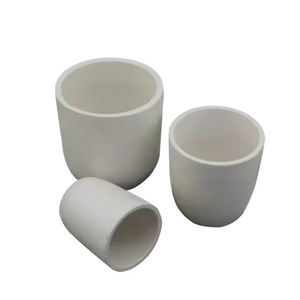
Industrial 95% Al2O3 Alumina Ceramic Insulation Plates, Sheets, and Spacer Blocks: Key Applications and Benefits
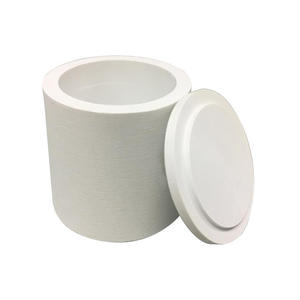
Alumina Ceramic Baking Dishes: A Deep Dive into Performance, Types, and Kitchen Applications
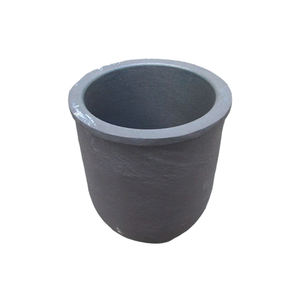
How to Choose the Right Alumina Ceramic Baking Dish for Your Kitchen
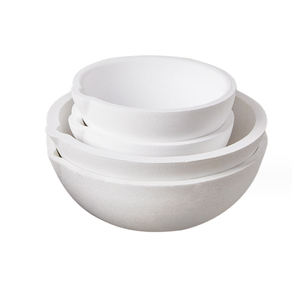
Alumina Ceramic Baking Dishes Offer Superior Heat Resistance and Durability for Modern Kitchens

Transforming Industries: The Game-Changing Power of Nano Alumina Powder in Catalysis, Ceramics, and Coatings