Professional Premium Aluminum Oxide Products Supplier


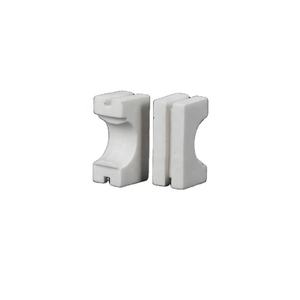
(Customized Al2O3 Ceramic Mechanical Parts Wear Resisting Ivory White Alumina Ceramic Blocks)
Why Customized Al2O3 Ceramic Mechanical Parts Wear Resisting Ivory White Alumina Ceramic Blocks Have Good Characteristics
1.1 Inherent Material Superiority
Customized Al₂O₃ ceramic mechanical parts exhibit exceptional characteristics due to alumina’s intrinsic properties. With a Mohs hardness of 9 and compressive strength exceeding 2,000 MPa, these ivory-white blocks deliver superior wear resistance compared to metals or polymers. Their crystalline structure provides excellent dimensional stability under thermal stress, maintaining precision in demanding environments. The ivory-white coloration indicates high purity (95-99.8% Al₂O₃), minimizing impurities that could compromise performance. These ceramics demonstrate outstanding corrosion resistance against acids, alkalis, and solvents, ensuring longevity in chemically aggressive applications.
1.2 Tailored Performance Enhancements
Customization optimizes these alumina blocks for specific operational demands. Through controlled density adjustments (3.6-3.9 g/cm³) and surface finishing (Ra ≤0.4μm), manufacturers achieve precise friction coefficients and wear patterns. The homogeneous microstructure prevents particle shedding, maintaining contaminant-free operation in sensitive environments. Electrical insulation properties (1014-1015 Ω·cm) remain stable even at temperatures exceeding 1,600°C, making them ideal for high-temperature furnace applications. Bio-inertness and non-toxicity further expand their suitability for food processing and medical equipment.
What Are Customized Al2O3 Ceramic Mechanical Parts Wear Resisting Ivory White Alumina Ceramic Blocks
2.1 Composition and Physical Properties
These specialized components are precision-engineered alumina (Al₂O₃) blocks containing 95-99.8% aluminum oxide. The distinctive ivory-white appearance results from high-purity raw materials and controlled sintering processes. Typical densities range from 3.7 to 3.98 g/cm³, with water absorption below 0.02%. Key mechanical specifications include Vickers hardness of 15-18 GPa, fracture toughness of 3.5-4 MPa·m½, and flexural strength of 300-400 MPa. These properties create an optimal balance between wear resistance and structural integrity for demanding mechanical applications.
2.2 Customization Capabilities
Unlike standard ceramic blocks, customized versions feature tailored geometries and performance characteristics. Manufacturers employ advanced techniques to produce complex shapes with precision holes, slots, and contours to exact client specifications. Special-shaped alumina components can incorporate threaded inserts, stepped profiles, and compound angles while maintaining material homogeneity. Customization extends to surface treatments like precision lapping (achieving ±0.001mm tolerances) or polished finishes for specific friction requirements. This adaptability allows integration into existing machinery as wear liners, guides, seals, or bearing components without system redesign.
How Customized Al2O3 Ceramic Mechanical Parts Wear Resisting Ivory White Alumina Ceramic Blocks Are Produced
3.1 Advanced Forming Techniques
Production begins with high-purity α-alumina powder mixed with binders. Custom shapes are formed through isostatic pressing (150-200 MPa) for uniform density, injection molding for complex geometries, or extrusion for elongated profiles. For components requiring precision features like holes or channels, CNC machining of green-state ceramics precedes sintering. This stage achieves dimensional accuracies within 0.3% of target specifications while accommodating unique client requirements through adjustable mold designs and machining parameters.
3.2 Precision Sintering and Finishing
Components undergo controlled sintering at 1600-1800°C in tunnel kilns, where alumina particles fuse into dense crystalline structures. The cooling phase is meticulously managed to prevent thermal stresses. Post-sintering, precision grinding with diamond tools achieves tolerances down to ±0.001mm. Critical surfaces undergo lapping/polishing to desired roughness (typically Ra 0.1-0.4μm). Final quality verification includes dye-penetration testing for microcracks, coordinate measurements for dimensional compliance, and hardness testing. This rigorous process ensures each custom-sized alumina block meets exacting performance standards.
What Are The Application Fields of Customized Al2O3 Ceramic Mechanical Parts Wear Resisting Ivory White Alumina Ceramic Blocks
4.1 Industrial Machinery and Automation
These ceramic blocks serve as wear plates in high-abrasion zones of conveyor systems, extending service life 3-5 times longer than steel equivalents. In packaging machinery, they function as precision guides and cam followers, maintaining dimensional stability in humid environments. Semiconductor manufacturing utilizes ultra-pure alumina components as wafer handling elements, leveraging their electrical insulation and contamination-free properties. Custom blocks also act as bearing sleeves in corrosive chemical pumps, withstanding aggressive media like concentrated acids where metals fail.
4.2 High-Temperature and Specialized Environments
In thermal processing, custom alumina furnace components function as kiln furniture, radiant tubes, and thermocouple sheaths up to 1750°C. Aerospace applications include rocket engine insulation blocks and guidance system components. Food processing leverages their FDA-compliance as wear-resistant chutes and cutter guides. Medical technology utilizes bio-inert alumina blocks in imaging equipment and surgical tooling. Energy sector applications include insulating spacers in high-voltage equipment and wear-resistant components in mining operations, demonstrating exceptional versatility across extreme operational environments.
How To Choose A Good Customized Al2O3 Ceramic Mechanical Parts Wear Resisting Ivory White Alumina Ceramic Blocks
5.1 Material Specification Criteria
Select alumina grade based on operational demands: 95% Al₂O₃ offers cost efficiency for general wear applications, while 99.8% grade provides maximum corrosion resistance for chemical environments. Verify density (>3.85 g/cm³ for severe wear) and porosity (<5%) through manufacturer test reports. Require documentation of mechanical properties including flexural strength (>350 MPa) and fracture toughness (>4 MPa·m½). For thermal applications, confirm continuous service temperature ratings and thermal shock resistance data. Insist on material certification showing impurity levels below 0.1% for critical processes.
5.2 Manufacturing Quality Assessment
Evaluate the producer’s capabilities in dimensional control, requesting evidence of tolerance achievement (typically ±0.1% or better). Assess their customization expertise through case studies of similar complex projects. Verify quality control processes including ultrasonic inspection for internal flaws and surface roughness measurements. For precision-hole components, request concentricity and perpendicularity certifications. Review finishing standards – critical wear surfaces should have appropriate roughness (Ra 0.2-0.8μm depending on application). Finally, confirm the manufacturer’s testing capabilities for wear resistance (ASTM G65) and corrosion resistance (ASTM C267).
What People Also Ask About Customized Al2O3 Ceramic Mechanical Parts Wear Resisting Ivory White Alumina Ceramic Blocks
6.1 Performance and Longevity Queries
Common questions focus on comparative wear rates: alumina blocks typically exhibit 10-100x lower wear volume than tool steel in abrasive environments. Regarding temperature limits, standard grades operate continuously at 1,600°C, while specialized formulations withstand 1,750°C. Users often inquire about impact resistance – alumina’s brittleness requires proper installation with compressive loading, though fracture toughness can be enhanced through grain-size engineering. For electrical applications, many ask about dielectric strength, which ranges from 15-35 kV/mm depending on purity and density.
6.2 Customization and Integration Concerns
Frequent queries address dimensional limitations: standard blocks extend to 500x500mm, but segmented designs accommodate larger areas. Many inquire about post-machining feasibility – while diamond grinding is possible, it’s cost-effective only for simple adjustments. Common installation questions focus on mounting techniques: epoxy bonding combined with mechanical retention is recommended for large ceramic plates. Users also ask about lead times, which typically range from 4-8 weeks depending on complexity, with expedited options available for standard profiles.
Tags: Alumina Ceramic Blocks, Al2O3 Mechanical Parts, Wear Resistant Ceramics, Custom Alumina Components, High-Temperature Ceramics, Industrial Ceramic Parts, Alumina Wear Plates, Precision Ceramic Blocks

(Customized Al2O3 Ceramic Mechanical Parts Wear Resisting Ivory White Alumina Ceramic Blocks)
Supplier
Alumina Technology Co., Ltd focus on the research and development, production and sales of aluminum oxide powder, aluminum oxide products, aluminum oxide crucible, etc., serving the electronics, ceramics, chemical and other industries. Since its establishment in 2005, the company has been committed to providing customers with the best products and services. If you are looking for high quality Alumina Ceramic Products , please feel free to contact us. (nanotrun@yahoo.com)
RELATED POSTS
Aluminum oxide crucible: the cornerstone of advanced ceramics and chemical processing

How to Use and Care for Your Alumina Ceramic Baking Dish: A Practical Guide
Alumina Ceramic Baking Dishes: Performance, Types, and Practical Uses in the Kitchen
7 Things You Need to Know About Alumina Ceramic Baking Dishes and Kitchenware
Alumina Ceramic Baking Dishes Are Revolutionizing High-Temperature Laboratory Sample Preparation