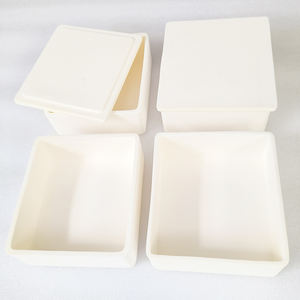
Professional Premium Aluminum Oxide Products Supplier


(High Abrasion Resistance Electronic Insulating Al2O3 Ceramic 99 Alumina Block/Plate)
1. Why High Abrasion Resistance Electronic Insulating Al2O3 Ceramic 99 Alumina Block/Plate Has Good Characteristics
1.1 Inherent Material Properties
99% alumina ceramic achieves exceptional characteristics through its atomic structure and composition. The high aluminum oxide purity creates strong ionic-covalent bonds that resist mechanical wear while preventing electron flow. This crystalline structure delivers a Mohs hardness of 9, second only to diamond, enabling outstanding abrasion resistance. The material’s density (≥3.8 g/cm³) and minimal porosity (≤0.1%) further enhance its durability against particulate erosion and surface degradation.
1.2 Performance Advantages
The combination of properties enables superior performance in demanding environments. Its dielectric strength exceeding 15 kV/mm maintains insulation integrity even at high temperatures (up to 1600°C). The low thermal expansion coefficient (8×10⁻⁶/K) ensures dimensional stability during thermal cycling, while chemical inertness prevents corrosion from acids and alkalis. These characteristics collectively create a material that withstands simultaneous mechanical, thermal, and electrical stresses – a capability unmatched by polymers or metals.
2. What Is High Abrasion Resistance Electronic Insulating Al2O3 Ceramic 99 Alumina Block/Plate
2.1 Material Composition
This specialized ceramic consists of 99% pure aluminum oxide (Al2O3) with precisely controlled sintering additives. Unlike lower-grade alumina (85-95% Al2O3), this premium formulation achieves near-theoretical density through advanced manufacturing. The resulting microstructure features uniform sub-micron crystal grains that maximize mechanical integrity while minimizing defect-related electron pathways. This composition yields a unique combination of extreme surface hardness (HV 1600) and volume resistivity >10¹⁴ Ω·cm.
2.2 Physical Form and Specifications
Manufactured as precision-ground blocks or plates, these components feature tolerances within ±0.1% of nominal dimensions. Standard thickness ranges from 1mm to 50mm, with surface finishes from as-fired (Ra 0.8-1.6μm) to precision-polished (Ra <0.1μm). The material exhibits flexural strength of 300-400 MPa and compressive strength exceeding 2000 MPa, enabling use in structural applications. While primarily produced in white or ivory, specialized formulations can incorporate trace elements for coloration without compromising key properties.
3. How High Abrasion Resistance Electronic Insulating Al2O3 Ceramic 99 Alumina Block/Plate Was Produced
3.1 Advanced Forming Techniques
Production begins with high-purity α-alumina powder (D50 = 0.5-1μm) blended with sintering aids. Manufacturers employ either dry pressing (for simple geometries) or isostatic pressing (for complex shapes) at pressures exceeding 100 MPa. This initial compaction creates “green” bodies with uniform density distribution. For specialized applications, tape casting produces ultra-thin substrates (down to 0.1mm), while injection molding enables intricate geometries. Each method maintains precise dimensional control before sintering.
3.2 Precision Sintering and Finishing
Sintering occurs in high-temperature kilns at 1600-1800°C using carefully controlled heating/cooling profiles. This transforms porous compacts into dense ceramics through diffusion-based densification. Post-sintering, diamond grinding achieves micron-level tolerances, while lapping/polishing creates optical-grade surfaces where required. Quality verification includes ultrasonic flaw detection, dielectric testing, and microstructural analysis. The entire process ensures minimal impurities (<0.5% SiO2, MgO, CaO) that could compromise performance.
4. What Are The Application Fields of High Abrasion Resistance Electronic Insulating Al2O3 Ceramic 99 Alumina Block/Plate
4.1 Electronics and Industrial Equipment
In electronics, these ceramics serve as insulating substrates for high-power semiconductor devices and RF microwave windows. The material’s thermal conductivity (30 W/mK) efficiently dissipates heat while maintaining electrical isolation. Industrial applications include wear-resistant liners for pneumatic conveying systems, precision gauge blocks for metrology, and plasma-resistant components in semiconductor fabrication. Their chemical inertness makes them ideal for pump seals and valve components handling corrosive media.
4.2 Specialized and Emerging Applications
Beyond traditional industries, these plates function as radiation-transparent windows in medical imaging and particle accelerators. The material’s biocompatibility enables surgical implant components, while its ultra-smooth surfaces serve in high-vacuum applications. In specialized kitchenware, alumina ceramics provide non-reactive, thermally stable cooking surfaces. For comprehensive insights into culinary applications, explore our analysis of performance and kitchen applications and discover why they’re considered a kitchen game-changer.
5. How To Choose A Good High Abrasion Resistance Electronic Insulating Al2O3 Ceramic 99 Alumina Block/Plate
5.1 Critical Performance Parameters
Prioritize verifiable material certifications including purity (≥99%), density (≥3.85 g/cm³), and surface roughness specifications. For electronic applications, confirm volume resistivity (>10¹⁴ Ω·cm) and dielectric strength values. Mechanical applications require flexural strength data (>350 MPa) and fracture toughness (KIC ≥4 MPa·m½). Request manufacturer test reports for thermal shock resistance (ΔT > 200°C) and wear rate measurements (ASTM G65 testing).
5.2 Manufacturing Quality Indicators
Evaluate dimensional tolerances – premium suppliers achieve ±0.05mm on ground surfaces. Inspect edge quality for chipping and surface integrity for microcracks. Reputable manufacturers provide detailed microstructural analysis showing grain size <3μm with uniform distribution. For critical applications, specify HIP (Hot Isostatic Pressing) post-treatment to eliminate residual porosity. Consider specialized finishes: polished surfaces for sealing applications, or textured surfaces for adhesive bonding. Proper maintenance extends service life; learn best practices in our guide to safely using and maintaining alumina ceramics.
6. What Does People Also Ask About High Abrasion Resistance Electronic Insulating Al2O3 Ceramic 99 Alumina Block/Plate
6.1 Material Performance Questions
Q: How does 99% alumina compare to zirconia or silicon carbide?
A: While zirconia offers higher toughness, alumina provides superior electrical insulation and cost-effectiveness. Compared to silicon carbide, alumina has better dielectric properties but lower thermal conductivity. For extreme wear applications, alumina outperforms most metals with 10-100x longer service life.
Q: Can it withstand thermal cycling?
A: Yes, properly manufactured 99% alumina withstands thermal shocks exceeding 250°C differential due to controlled microcrack networks that dissipate stress. Thermal cycling resistance makes it suitable for applications like semiconductor processing equipment.
6.2 Application-Specific Queries
Q: Is it suitable for food contact applications?
A: FDA-compliant formulations exist, particularly valuable for industrial food processing. The material’s non-porous structure prevents bacterial growth, while its inertness avoids flavor transfer. Discover more about food-grade applications in our article on key advantages of alumina ceramic bakeware.
Q: What joining methods work with alumina plates?
A: Diffusion bonding creates hermetic seals for vacuum applications, while specialized glass frits enable electrical feedthroughs. Mechanical fastening requires specialized designs to accommodate alumina’s low tensile strength. Adhesive bonding requires surface activation treatments for optimal results.
Tags: alumina ceramic, Al2O3 ceramic plate, 99 alumina block, electronic insulator, wear-resistant ceramic, high purity alumina, ceramic substrate, industrial ceramic, alumina components, ceramic insulators

(High Abrasion Resistance Electronic Insulating Al2O3 Ceramic 99 Alumina Block/Plate)
Supplier
Alumina Technology Co., Ltd focus on the research and development, production and sales of aluminum oxide powder, aluminum oxide products, aluminum oxide crucible, etc., serving the electronics, ceramics, chemical and other industries. Since its establishment in 2005, the company has been committed to providing customers with the best products and services.
RELATED POSTS
7 Key Differences Between Alumina Ceramic Baking Dishes and Traditional Cookware
Choose the Right Alumina Ceramic Baking Dish for Your Kitchen

How to Use and Care for Your Alumina Ceramic Baking Dish: A Practical Step-by-Step Guide
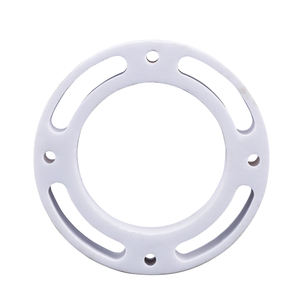
Custom-Sized Wearable Al₂O₃ Ceramic Insulating Plates, Sheets, and Blocks
Alumina Ceramic Baking Dishes: The Ultimate Guide to Durability, Safety, and Versatility in the Kitchen