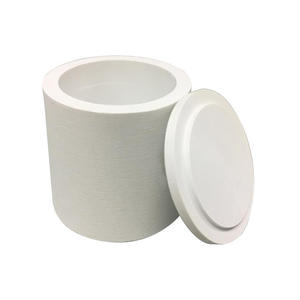
Professional Premium Aluminum Oxide Products Supplier


(High Purity 99% Alumina Ceramic Block Al2o3 Ceramic Brick Chunk)
1. Why High Purity 99% Alumina Ceramic Block Has Exceptional Characteristics
1.1 Superior Mechanical and Thermal Properties
High-purity 99% alumina ceramic blocks exhibit outstanding mechanical strength, with typical hardness ratings of 9 on the Mohs scale and compressive strength exceeding 2,000 MPa. This results from their dense crystalline structure and minimal impurity content (<1%). The high thermal stability allows continuous operation at 1,600°C without deformation, while the low thermal expansion coefficient (8.1×10⁻⁶/K) ensures dimensional stability during rapid temperature fluctuations. These properties stem from strong ionic bonds between aluminum and oxygen atoms, creating a rigid lattice structure resistant to deformation. The material’s exceptional thermal shock resistance makes it suitable for extreme environments where conventional materials fail.
1.2 Enhanced Chemical and Electrical Resistance
The near-perfect Al₂O₃ composition provides exceptional chemical inertness, resisting corrosion from acids, alkalis, and molten metals. This purity level reduces glass phase content at grain boundaries, minimizing potential reaction sites. Electrically, these blocks serve as excellent insulators with volume resistivity >1014 Ω·cm at room temperature, maintaining insulation properties up to 1,000°C. The high dielectric strength (15-25 kV/mm) prevents electrical breakdown in high-voltage applications. These characteristics make 99% alumina blocks preferable to lower-purity alternatives (85-95% Al₂O₃), which contain silica and other fluxing agents that compromise performance in aggressive environments.
2. Understanding High Purity 99% Alumina Ceramic Block
High purity 99% alumina ceramic blocks (Al₂O₃ ceramic bricks/chunks) are advanced technical ceramics composed of ≥99% aluminum oxide crystals. These monolithic components feature a dense, fine-grained microstructure with typical density values of 3.89-3.95 g/cm³ and porosity below 0.1%. The blocks are manufactured in standardized dimensions (common thicknesses: 5-50mm) or custom geometries for specific industrial applications. Unlike traditional ceramics, these high-alumina compositions contain minimal sintering aids or binders, resulting in superior performance characteristics. The material’s exceptional purity distinguishes it from lower-grade alumina ceramics, which typically contain 85-95% Al₂O₃ and exhibit compromised thermal and chemical resistance. These blocks serve as critical components in industries requiring extreme durability under thermal, mechanical, or chemical stress.
3. Production Process of High Purity 99% Alumina Ceramic Blocks
3.1 Raw Material Processing and Forming
Production begins with high-purity α-alumina powder (particle size: 0.1-1.0μm) blended with specialized binders (<1% total additives). The mixture undergoes spray drying to form free-flowing granules, ensuring uniform compaction. Forming techniques include:
• Dry Pressing: Uniaxial or isostatic pressing at 100-300 MPa forms simple shapes
• Injection Molding: For complex geometries with tight tolerances (±0.1%)
• Slip Casting: Used for large or hollow configurations
The green bodies maintain precise dimensional control with shrinkage allowances of 15-20% for subsequent sintering stages.
3.2 Sintering and Finishing
Sintering occurs in high-temperature kilns (1,600-1,800°C) with precisely controlled atmosphere profiles. The process involves:
1. Binder burnout at 400-600°C
2. Intermediate sintering at 1,200°C
3. Final densification at peak temperatures
This achieves near-theoretical density through diffusion-controlled grain growth. Post-sintering, components undergo precision grinding with diamond tools to achieve surface finishes down to Ra 0.2μm and dimensional tolerances within ±0.1%. Strict quality control includes XRF composition analysis, ultrasonic flaw detection, and mechanical testing to ensure performance consistency across production batches.
4. Application Fields of High Purity 99% Alumina Ceramic Blocks
4.1 Industrial and Energy Applications
In industrial settings, alumina ceramic blocks serve as wear-resistant liners in mining equipment, extending service life 3-5 times longer than steel alternatives. They function as thermal barrier components in furnace construction, withstanding temperatures exceeding 1,700°C. The energy sector utilizes them as electrical insulators in high-voltage switchgear, crucibles for silicon crystal growth, and plasma chamber liners in semiconductor manufacturing. Their non-porous structure prevents gas permeation in vacuum systems, while their radio frequency transparency makes them ideal for microwave processing windows.
4.2 Advanced Technology and Medical Applications
These ceramic blocks serve as precision substrates in microelectronics, providing stable dielectric platforms for circuits with minimal signal loss. In medical technology, they’re used in X-ray tube components and radiation therapy equipment due to their radiolucency and electrical insulation properties. The material’s biocompatibility (ISO 10993 certified) enables surgical implant applications. Additionally, they function as catalyst supports in chemical processing due to their high surface area stability at elevated temperatures. The material’s versatility extends to specialized applications like laser components and aerospace instrumentation where dimensional stability under thermal cycling is critical.
5. How To Choose Quality High Purity 99% Alumina Ceramic Blocks
5.1 Material and Performance Specifications
Verify critical specifications including alumina content (≥99%), bulk density (≥3.90 g/cm³), and porosity (<0.5%). Request certified test reports for flexural strength (>350 MPa) and thermal shock resistance (minimum 20 cycles between 800°C-RT without failure). For electrical applications, confirm dielectric strength (>15 kV/mm) and volume resistivity (>1014 Ω·cm). Surface roughness should be specified according to application needs – precision components require Ra ≤0.4μm. Crucially, demand material traceability with batch-specific documentation to ensure consistent performance.
5.2 Manufacturing Quality and Compliance
Select manufacturers with ISO 9001-certified production facilities and material-specific expertise. Evaluate their process controls: high-temperature sintering should occur in computer-controlled kilns with ±5°C uniformity. Inspection capabilities should include coordinate measuring machines (CMM) for dimensional verification and ultrasonic testing for defect detection. Ensure compliance with relevant industry standards:
• ASTM F2883 for medical applications
• IEC 60672 for electrical insulation
• DIN 40680 for chemical resistance
Examine edge quality under magnification – chamfered edges should show no microchipping, indicating proper handling and grinding processes.
6. People Also Ask About High Purity Alumina Ceramic Blocks
6.1 Technical Performance Questions
Q: How does surface finish impact performance?
A: Surface roughness directly affects wear resistance – polished surfaces (Ra 0.1-0.4μm) reduce friction in bearing applications, while textured finishes enhance adhesive bonding in structural components.
Q: What temperature limits apply during use?
A: Continuous service temperatures reach 1,650°C in oxidizing atmospheres, with short-term peaks to 1,750°C. Avoid thermal shocks exceeding 300°C/minute to prevent microcracking.
6.2 Application and Handling Questions
Q: Can these blocks be machined after sintering?
A: Post-sintering machining requires diamond tools and specialized processes. Complex features should be formed during green machining to avoid costly diamond grinding operations.
Q: How does purity affect chemical resistance?
A: Each 1% purity increase enhances acid/alkali resistance exponentially. 99% alumina withstands concentrated acids (excluding HF) at boiling temperatures, while 95% grades show significant degradation.
Tags: alumina ceramic block, Al2O3 ceramic brick, high purity alumina, 99% alumina ceramic, alumina ceramic chunk, industrial alumina ceramic, technical ceramic block, alumina refractory brick

(High Purity 99% Alumina Ceramic Block Al2o3 Ceramic Brick Chunk)
Supplier
Alumina Technology Co., Ltd focus on the research and development, production and sales of aluminum oxide powder, aluminum oxide products, aluminum oxide crucible, etc., serving the electronics, ceramics, chemical and other industries. Since its establishment in 2005, the company has been committed to providing customers with the best products and services.
RELATED POSTS
Choose the Right Alumina Ceramic Baking Dish for Your Kitchen
Alumina Ceramic Baking Dishes Are the Oven Heroes You Never Knew You Needed
How to Use and Care for an Alumina Ceramic Baking Dish: A Step-by-Step Guide
5 Niche Applications of Alumina Ceramic Baking Dishes Beyond the Kitchen
7 Key Differences Between Alumina Ceramic Baking Dishes and Traditional Cookware You Need to Know