Professional Premium Aluminum Oxide Products Supplier


PRODUCT PARAMETERS
Description
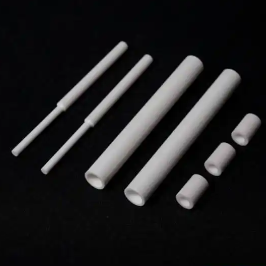
Overview of Alumina Ceramic Plunger
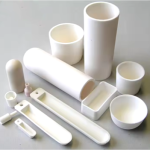
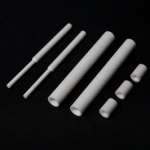
Alumina Ceramic Plunger is a kind of ceramic product made of alumina (Al₂O₃) as the main raw material, through isostatic pressure molding, high temperature sintering and other processes, with high hardness, high abrasion resistance, high corrosion resistance, high temperature resistance and a series of excellent performance, it is the ideal alternative to similar metal pump plunger, widely used in various industrial fields.
Features of Alumina Ceramic Plunger
High hardness: The Vickers hardness of alumina ceramic plunger can reach about 15.7Gpa, second only to diamond, which can effectively resist the abrasion of all kinds of hard particles, and its service life is 10-20 times longer than that of metal plunger.
High abrasion resistance: Alumina ceramic plungers have excellent abrasion resistance and very low wear rate, even under high load and high speed working conditions, they can maintain good working condition and reduce the frequency of maintenance and replacement of equipment.
High corrosion resistance: Alumina ceramic plunger has strong chemical stability, can be used in a variety of strong acids, alkalis and other corrosive media, not easy to be corroded, thus ensuring the normal operation and service life of the equipment.
High temperature resistance: can be used in environments up to 1650 ℃, will not occur oxidation, deformation and other phenomena, to meet the requirements of high-temperature working environment.
High insulation: Alumina ceramic plungers have excellent electrical insulation properties, high insulation resistance and small dielectric constant, and can be used in various electrical equipment to play the role of insulation and protection.
Low friction coefficient: Alumina ceramic plungers have smooth surface and low friction coefficient, which can reduce the friction between the plunger and the cylinder liner, reduce the energy loss, improve the working efficiency of the equipment, and also help to extend the service life of the equipment.
High dimensional accuracy: Alumina ceramic plunger adopts high-precision machining process, which can ensure the dimensional accuracy and shape accuracy of the plunger, the tolerance is controlled within a very small range, and the matching gap with the cylinder liner is small, with good sealing performance, effectively preventing the liquid leakage.
Specifications table of Alumina Ceramic Plunger
| Parameter | Unit | Typical Range | Description |
|---|---|---|---|
| Outer Diameter | mm | 5 – 200 | The external diameter of the plunger, which determines its fit within the cylinder. |
| Inner Diameter | mm | 1 – 150 | The internal diameter (if hollow), which can affect fluid flow and weight. |
| Length | mm | 10 – 500 | The overall length of the plunger, which impacts its reach and application compatibility. |
| Straightness | mm | ≤0.05 | The maximum deviation from a straight line along the plunger’s length, ensuring smooth operation. |
| Cylindricity | mm | ≤0.05 | Measures how closely the plunger’s shape conforms to a perfect cylinder, affecting fit and performance. |
| Roundness | mm | ≤0.03 | Indicates the deviation from a perfect circular cross-section, crucial for sealing and wear resistance. |
| Surface Roughness | Ra | 0.025 – 0.63 | Defines the texture of the plunger’s surface, with lower values indicating smoother surfaces for reduced friction. |
| Alumina Content | % | 92 – 99.9 | The percentage of alumina in the ceramic material, higher values typically mean better hardness and wear resistance. |
| Hardness | GPa | 15.7 (approx.) | The material’s resistance to deformation, measured on the Vickers hardness scale. |
| Density | g/cm³ | 3.5 – 3.9 | The mass per unit volume of the ceramic material, affecting weight and strength. |
| Maximum Operating Temperature | °C | 1650 | The highest temperature the plunger can withstand without degradation. |
| Corrosion Resistance | – | Excellent | Resistance to chemical attack from acids, bases, and other corrosive media. |
| Wear Resistance | – | High | Ability to withstand friction and wear over extended periods. |
| Electrical Insulation | – | High | The plunger’s ability to resist electrical current, useful in applications requiring insulation. |
| Friction Coefficient | – | Low | Indicates the level of friction between the plunger and its mating parts, lower values are preferable. |
| Tolerance | mm | ±0.01 – ±0.1 | The acceptable deviation from the nominal dimensions, ensuring precision fit and performance. |
| Finish | – | Polished, Coated | Surface finish options, with polished surfaces for better wear resistance and coated surfaces for specific applications. |
Applications of Alumina Ceramic Plunger
Petrochemical industry: Alumina Ceramic Plunger is used as key parts in various pumps and valves, such as metering pumps, high pressure plunger pumps, etc. It is used to convey and control various corrosive liquids, such as acid, alkali, salt solutions, etc., which can effectively improve the reliability and service life of the equipments and reduce the cost of maintenance of the equipments.
Mechanical Engineering: Alumina ceramic plungers are used in plunger pumps in hydraulic systems, such as construction machinery, ships and other equipment in the hydraulic system, to provide strong power support to ensure the normal operation of equipment and work efficiency.
Food and beverage industry: Alumina ceramic plungers can be used in food processing equipment, filling machinery and fluid conveying systems, such as beverage filling machines, soy sauce filling equipment, etc., its good wear resistance, corrosion resistance and hygiene performance, to ensure food safety and quality, while extending the service life of the equipment.
Medical device industry: Alumina ceramic plungers are used in fluid control and seals in medical devices, such as syringes, infusion sets, surgical equipment, etc. Its high biocompatibility and strong corrosion resistance can ensure the safety and reliability of medical devices and reduce the adverse effects on the human body.
Electronic industry: Alumina ceramic plungers are used as insulating parts and wear-resistant parts in electronic equipment, such as parts in semiconductor manufacturing equipment, electrodes in electron beam bombardment equipment, etc., which can ensure the normal operation and stable performance of electronic equipment.
Company Profile
Alumina Technology Co., Ltd.! We focus on the research and development, production and sales of alumina products, serving the electronics, ceramics, chemical and other industries. Since its establishment in 2005, the company has been committed to providing customers with the best products and services, and has become a leader in the industry through continuous technological innovation and strict quality management.
Our products includes but not limited to Alumina Boat, Alumina Crucible, Alumina Dish, Alumina Foam Filter, Alumina Plate, Alumina Rod, Alumina Bar, Alumina Balls, Filter Alumina, Nano Alumina Powder, Spherical Alumina Powder, ect. please feel free to contact us.(nanotrun@yahoo.com)
Payment Methods
T/T, Western Union, Paypal, Credit Card etc.
Shipment Methods
By air, by sea, by express, as customers request.

5 FAQs of Alumina Ceramic Plunger
Q1: What are the advantages of Alumina Ceramic Plungers over metal plungers?
Alumina ceramic plungers are much better than metal plungers in terms of hardness, wear resistance, corrosion resistance, high temperature resistance, etc. They have longer service life and higher reliability, which can effectively reduce the maintenance cost and downtime of the equipment.
Q2: Can Alumina Ceramic Plungers be used in high temperature environments?
Yes, Alumina Ceramic Plungers can be used in environments up to 1650°C. They have good high-temperature stability and oxidation resistance, and will not deform, soften, or oxidize at high temperatures, making them suitable for use in a variety of high-temperature operating environments.
Q3: How to choose the right alumina ceramic plunger?
It is necessary to select the right alumina ceramic plunger with the right material, specification and accuracy level according to the specific application scenario and working conditions, including the corrosiveness of the medium, temperature, pressure, flow rate, etc., as well as the installation size and precision requirements of the equipment, to ensure its best performance and service life.
Q4: Do alumina ceramic plungers require lubrication?
Due to its low coefficient of friction and good self-lubricating properties, there is no need to add additional lubricant in general, which not only reduces the cost of lubricant and pollution to the environment, but also avoids the risk of equipment failure due to lubricant leakage, etc. However, under some special conditions, such as very high loads or speeds, a small amount of lubricant can be added to further reduce the coefficient of friction.
Q5: How can the service life of an alumina ceramic plunger be extended?
Proper installation and use of alumina ceramic plungers is the key to extending their service life, including ensuring installation accuracy, avoiding collisions and impacts, and controlling operating conditions within allowable limits. In addition, regular maintenance and inspection of the equipment to identify and address potential problems in a timely manner will also help extend the life of the plunger.
REQUEST A QUOTE
RELATED PRODUCTS
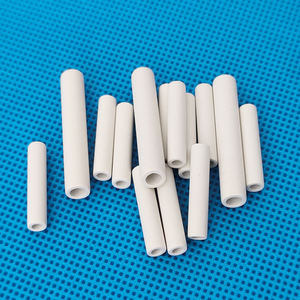
Custom 95% 99% Aluminum Oxide Rod Alumina Ceramic Plunger Tube Piston for Pump
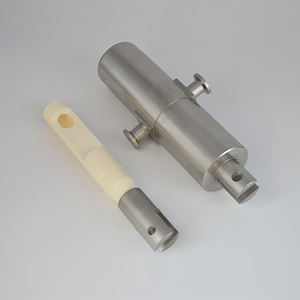
Supply Wear-resitance 99 Alumina Al2o3 Ceramic Plunger/rod/pillar Customized
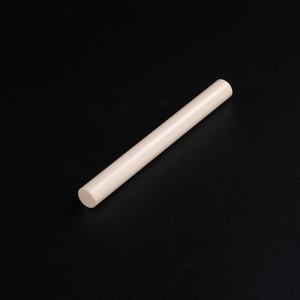
Industrial Use Alumina Ceramic Plunger and Sleeve Customizable
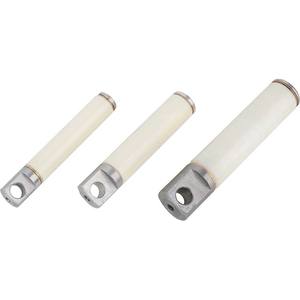
Ceramic High Pressure 99% Alumina Ceramic Plunger 15946 Ceramic Piston
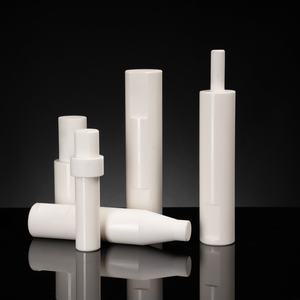
95% 99% Alumina Ceramic Piston Plunger With Metal