Professional Premium Aluminum Oxide Products Supplier

Alumina Ceramic Ring

Alumina Ceramic Structural Ceramics Textile Machine Parts Ceramic Yarn Guide Cylinder Wire Guide For Weaving Machinery Textile
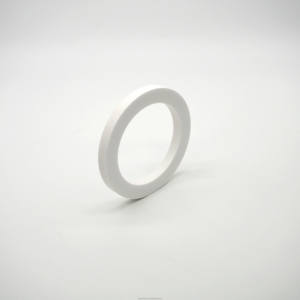
99% Insulated High Precision Board Abrasion Resistant Alumina Ceramic Sheet Wear Plates

Custom Alumina Ceramic Tube Structural Parts Abrasion Resistant and High Temperature Resistant Insulation
High Purity 95%-99% Alumina Ceramic Tube Diameter Parts
Industrial 99 Alumina Ceramic Roller Cylinder Heat Resistant Ceramic Part with Cutting Processing Service Ceramic Rod
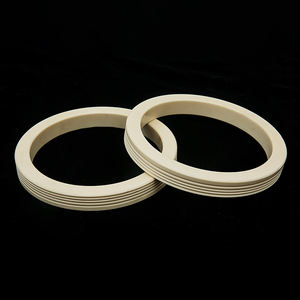
High-Temperature Wear Resistant Alumina Ceramic Spark Plug Al2O3 Industrial Ceramic Rod for Pump Cutting Service Included

Glazed 95% Alumina Rod Glazed Ignition Tube Al2O3 Insulation Ceramic Rod
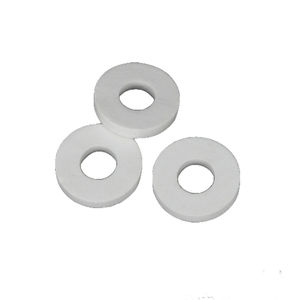
1800c 99 Alumina Ceramic Tube Alumina Ceramic Bearing and Bushing Shaft Sleeve
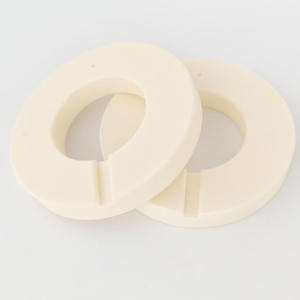
Shenxing Ceramic New Energy Ceramic 95% Alumina Ceramic Solid Rod
Ceramic Insulation 99 Alumina Porous Tubes Thermocouple Insulators / Alumina Ceramic Rods
Factory Direct Fine Textile Ceramics Porcelain Alumina Rods Industrial Ceramic Parts
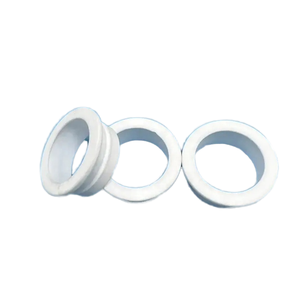
Alumina Ceramic Pipe /ceramic Tube/ Rod
Overview of Alumina ceramic rings
Alumina ceramic rings are cylindrical components made from high-purity aluminum oxide (Al₂O₃) powders, sintered at high temperatures (1,600–1,800°C) to form dense, durable structures. Renowned for their exceptional resistance to heat, chemicals, and wear, these rings are critical in demanding industrial, electronic, and mechanical applications where traditional metal or polymer components fail.
Features of Alumina ceramic rings
- High-Temperature Stability
- Withstands continuous use at temperatures up to 1,600°C in air, making them ideal for environments with extreme heat (e.g., furnaces, aerospace engines).
- Low thermal expansion ensures dimensional stability across wide temperature ranges.
- Superior Chemical Resistance
- Resistant to most acids, alkalis, molten metals, and corrosive gases, making them suitable for harsh chemical processing, marine, or nuclear environments where metal rings might corrode or degrade.
- Exceptional Mechanical Properties
- High hardness (8–9 on the Mohs scale), second only to diamond, enabling excellent wear resistance in dynamic applications like bearings or seals.
- High compressive strength (up to 3,000 MPa) but moderate tensile strength (mitigated by design 优化,e.g., stress-relieving profiles).
- Electrical Insulation
- Excellent dielectric properties (high resistivity, low dielectric loss), widely used as insulating rings in electrical devices, transformers, or high-voltage systems.
- Precision & Customization
- Manufactured to tight tolerances (±0.01 mm) via processes like isostatic pressing, injection molding, or 3D printing, with customizable dimensions (from micro-rings <1 mm to large rings ≥500 mm in diameter).
- Surface finishes can be polished to ultra-smooth levels (Ra ≤0.1 μm) for sealing or low-friction applications.
- Low Thermal Conductivity
- Acts as a thermal barrier, useful in applications requiring heat isolation (e.g., furnace components, thermal management systems).
Applications of Alumina ceramic rings
- Mechanical Seals: In pumps, valves, and rotating equipment to prevent leakage in high-temperature/corrosive fluids.
- Bearings & Bushings: For high-speed, low-friction motion in extreme environments (e.g., automotive turbochargers, industrial machinery).
- Electrical Insulators: In transformers, circuit breakers, or semiconductor tools to isolate conductive components.
- Medical & Dental: In precision instruments or implant coatings due to biocompatibility and corrosion resistance (for low-alumina grades, e.g., 90–95% Al₂O₃).
Production Method of Alumina Ceramic Rings
Basic Material Mixing: High-purity alumina powder (90-- 99.9% Al 2O3) is mixed with additives to improve sintering and mechanical buildings.
- Forming:
- Dry Pressing/Isostatic Pressing (CIP/WIP): For simple to medium-complex shapes, using molds and uniform pressure to form green compacts.
- Injection Molding: Suitable for intricate designs, mixing powder with organic binders, then molding and debinding.
- Sintering: Green compacts are heated to 1,600–1,800°C in kilns to achieve dense microstructure (≥98% theoretical density), with precise control of heating rates to avoid defects.
- Post-Processing: Machined via grinding/polishing to meet tight tolerances (±0.01 mm) and surface finishes (Ra ≤0.1 μm). Quality checks include density testing and dimensional inspection.
This process ensures alumina rings exhibit high thermal, chemical, and wear resistance for applications like seals, bearings, and insulators.

Company Profile
Alumina Technology Co., Ltd.! We focus on the research and development, production and sales of alumina products, serving the electronics, ceramics, chemical and other industries. Since its establishment in 2005, the company has been committed to providing customers with the best products and services, and has become a leader in the industry through continuous technological innovation and strict quality management.
Our products includes but not limited to Alumina Boat, Alumina Crucible, Alumina Dish, Alumina Foam Filter, Alumina Plate, Alumina Rod, Alumina Bar, Alumina Balls, Filter Alumina, Nano Alumina Powder, Spherical Alumina Powder, ect. please feel free to contact us.(nanotrun@yahoo.com)
Payment Methods
T/T, Western Union, Paypal, Credit Card etc.
Shipment Methods
By air, by sea, by express, as customers request.

5FAQS of Alumina Ceramic Ring
1. What are the key advantages of alumina ceramic rings?
They offer excellent high-temperature resistance (up to 1,600°C), chemical corrosion resistance, and electrical insulation, with high hardness (8–9 Mohs) for wear-resistant applications like seals, bearings, or insulators.
2. Where are alumina ceramic rings commonly used?
Typical applications include mechanical seals in pumps, insulating rings in electrical devices, bearing components in high-temperature environments (e.g., aerospace), and valve seats in chemical processing.
3. How are complex-shaped ceramic rings manufactured?
Forming methods like injection molding (for intricate designs) or isostatic pressing (for uniform density) are used, followed by sintering at 1,600–1,800°C. Post-processing (grinding/polishing) ensures precise dimensions (tolerances ≤±0.01 mm).
4. Can alumina ceramic rings withstand harsh environments?
Yes—they resist acids, alkalis, and molten metals, making them suitable for high-vacuum, or abrasive conditions where metal rings might degrade or fail.
5. What is the typical dimensional range for alumina ceramic rings?
Sizes vary from micro-rings (mm-scale) for electronics to large rings (up to 500 mm diameter) for industrial use, with customizable wall thickness and surface finishes (e.g., smooth Ra ≤0.1 μm for sealing).