Professional Premium Aluminum Oxide Products Supplier

PRODUCT PARAMETERS
Description
Overview of high alumina ceramic crucible for lab
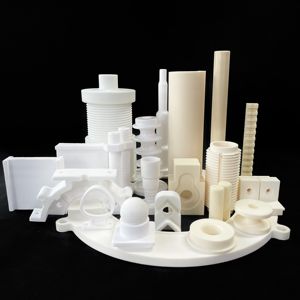
high alumina ceramic crucible for lab is manufactured from high-purity aluminum oxide (Al₂O₃, 95%-99.8%), offering exceptional mechanical strength and thermal stability. These components are precision-engineered to meet strict tolerances, ensuring reliable performance in demanding environments. With a maximum operating temperature of 1800°C, they are widely used across industries including semiconductor, automotive, chemical processing, and medical equipment. Available in various shapes (rods, tubes, plates, washers) and surface finishes to suit specific application requirements.
Key Features of high alumina ceramic crucible for lab
Extreme Temperature Resistance – Withstands continuous operation up to 1800°C
Superior Mechanical Properties – High hardness (Mohs 9) and compressive strength
Excellent Wear & Corrosion Resistance – Outlasts metals in abrasive environments
Electrical Insulation – High dielectric strength for electronic applications
Chemical Inertness – Resistant to acids, alkalis and molten metals
Precision Manufacturing – Tight tolerances (±0.01mm) for critical applications

(high alumina ceramic crucible for lab)
Specification of high alumina ceramic crucible for lab
High alumina ceramic crucibles serve demanding lab applications. They withstand extreme temperatures and harsh chemicals. These crucibles contain 96% to 99.7% aluminum oxide (Al2O3). This high purity gives them key advantages. Their maximum use temperature reaches 1700°C to 1800°C. Short-term exposure can go higher. This makes them ideal for high-temperature melting. They work well for fusions, ashing, and calcination.
Chemical resistance is another major strength. High alumina ceramic resists attack from most acids. It also resists strong alkalis and molten salts well. This stability is crucial for sample integrity. It prevents contamination during processing. You get reliable results.
The material is very hard and dense. Density is typically above 3.6 g/cm³. This high density minimizes porosity. Low porosity is essential. It stops liquids or molten materials from soaking in. This keeps your samples pure. It also makes cleaning easier between uses. Crucible walls are smooth. This also helps prevent material sticking.
Thermal shock resistance is good. Crucibles handle rapid heating and cooling cycles reasonably. Avoid extreme, sudden temperature changes. This helps prevent cracking. Mechanical strength is high. Crucibles resist chipping and abrasion during normal handling.
Common sizes range from small (a few milliliters) to large (several hundred milliliters). Shapes are usually cylindrical or low-form. Some have pouring spouts. Crucibles come with lids. Lids fit well to contain samples and prevent contamination. They are inert. Crucibles won’t react with most materials processed inside them.
These properties make high alumina crucibles essential tools. They are used in chemistry, materials science, metallurgy, and geology labs. They are perfect for sample preparation requiring high heat and chemical purity.

(high alumina ceramic crucible for lab)
Applications of high alumina ceramic crucible for lab
High alumina ceramic crucibles are essential tools in many labs. They handle extreme heat well. These crucibles work reliably above 1700°C. This makes them perfect for melting metals. People melt iron, copper, aluminum, and alloys in them. They are also vital for preparing samples. Scientists fuse powders into glass beads for XRF analysis using these crucibles. The crucibles don’t react with the hot chemicals during fusion.
Chemical resistance is another big advantage. Strong acids and alkalis don’t easily attack high alumina ceramic. This property is crucial for chemical synthesis. Researchers use these crucibles for reactions involving aggressive substances. They also work well for calcination. This is the process of heating materials to high temperatures to remove volatile components. People calcine catalysts, ceramics, and other powders in them.
Thermal analysis labs rely on these crucibles too. Techniques like TGA and DTA need inert containers. High alumina ceramic provides that inertness. It doesn’t interfere with weight or heat measurements during testing. The material stays stable under repeated heating and cooling cycles. This gives consistent results over time.
Specialty applications also exist. These crucibles are used in growing crystals. They serve as containers for molten salts or metals during crystal growth. The glass industry uses them for testing raw materials and new glaze recipes. Metallurgists study slag behavior using high alumina crucibles. Their resistance to thermal shock is important here. Sudden temperature changes won’t usually crack a good crucible. They resist wear and erosion from abrasive materials inside. This durability means they last longer than cheaper options. You need fewer replacements.

Company Profile
Alumina Technology Co., Ltd,. We focus on the research and development, production and sales of alumina products, serving the electronics, ceramics, chemical and other industries. Since its establishment in 2005, the company has been committed to providing customers with the best products and services, and has become a leader in the industry through continuous technological innovation and strict quality management.
Our products includes but not limited to Alumina Boat, Alumina Crucible, Alumina Dish, Alumina Foam Filter, Alumina Plate, Alumina Rod, Alumina Bar, Alumina Balls, Filter Alumina, Nano Alumina Powder, Spherical Alumina Powder, ect. please feel free to contact us.(nanotrun@yahoo.com)

Payment Methods
T/T, Western Union, Paypal, Credit Card etc.
Shipment Methods
By air, by sea, by express, as customers request.
5 FAQs of high alumina ceramic crucible for lab
What’s the maximum temperature these crucibles handle?
High alumina crucibles withstand intense heat. They resist temperatures up to 1700°C continuously. Short bursts might reach 1800°C. This makes them perfect for melting metals or firing ceramics. Always check the specific grade’s rating first.
Can I use them with strong acids or alkalis?
These crucibles fight chemical attack well. They handle most acids and alkalis reliably. Hydrofluoric acid and concentrated phosphoric acid are exceptions. Avoid these. Check chemical compatibility charts for your specific experiment.
How do I clean them after use?
Cleaning is straightforward. Use hot soapy water and a soft brush first. Stubborn residue might need soaking. For very tough buildup, heat the empty crucible carefully. Thermal shock can crack it. Never use abrasive cleaners or metal tools.
Why choose alumina over other ceramics?
Alumina offers key advantages. It handles higher temperatures than porcelain. It resists thermal shock better than pure zirconia. Its chemical resistance is excellent for most lab work. It provides a good balance of performance and cost.
What sizes and shapes are typical?
Many sizes exist. Common capacities range from 5ml to 500ml. Shapes include tall form, low form, and wide form. Tall form is good for evaporation. Low form suits melting. Pick the shape matching your application best.

(high alumina ceramic crucible for lab)
REQUEST A QUOTE
RELATED PRODUCTS

cnc insulation 99 95 alumina ceramics insulation Irregular structural parts ceramics alumina block
Alumina Zirconia SIC Porous Ceramic Reticulated Foam Filter for Metal Foundry
Ceramic Fiber Non-Standard Parts Alumina Ceramic Fiber Shaped Parts Aluminum Silicate Shaped Products
Factory Direct High 99% Alumina Ceramic Crucible for Laboratory Metal Smelting Aluminum Oxide Ceramic Parts Cutting
Alumina Textile Ceramics High Hardness Wear-Resisting Ceramic Parts