Professional Premium Aluminum Oxide Products Supplier


PRODUCT PARAMETERS
Description
Overview of Alumina Ceramic Standard Parts
Alumina ceramic standard parts are ceramic materials with high-purity alumina (Al₂O₃) as the main component, and the alumina content is generally above 95%. It has excellent properties, such as high strength, high hardness, high wear resistance, high insulation, high temperature resistance and good chemical stability. The manufacturing process mainly includes raw material preparation, molding, sintering and post-processing steps. The sintering temperature is usually between 1400℃ and 1700℃ to enhance its density and mechanical properties.
Features of Alumina Ceramic Standard Parts
Alumina ceramic standard parts have many remarkable characteristics. In terms of mechanical properties, alumina ceramic standard parts have high hardness, second only to diamond and silicon carbide, with a Mohs hardness of up to 9, excellent wear resistance, and are suitable for bearings, cutting tools, etc.; high compressive strength, up to 2000-4000MPa, better than most metals, high rigidity, elastic modulus of 300-400GPa, but high brittleness and weak impact resistance.
In terms of thermal properties, alumina ceramic standard parts have a high melting point of about 2072℃, a low thermal expansion coefficient of about 7×10⁻⁶/℃, good thermal stability, better thermal shock resistance than ordinary ceramics, and medium thermal conductivity of about 30 W/(m·K), suitable for high-temperature heat dissipation components.
In terms of electrical properties, the high insulation of alumina ceramic standard parts makes them widely used in electronic insulation substrates. The room temperature resistivity is greater than 10¹⁴Ω·cm, the dielectric strength is 10-25kV/mm, the dielectric constant is low, ε is about 9-10, and the high-frequency signal transmission loss is small.
In terms of chemical stability, alumina ceramic standard parts are corrosion-resistant and resistant to acid, alkali, and molten metal erosion. Except for hydrofluoric acid and hot concentrated alkali, they are suitable for chemical reactor linings. They are resistant to oxidation, do not react with oxygen at high temperatures, and can be used in inert environments.
In addition, alumina ceramic standard parts also have good optical properties, such as high transparency, high gloss and excellent wear resistance, and can be used for optical windows, lamp reflectors, etc. Alumina ceramic standard parts are also biocompatible, and high-purity ones can be used for artificial joints, dental implants, etc.
Specifications Table of Alumina Ceramic Standard Parts
| Property | Specification |
| Material Composition | High-purity alumina (Al₂O₃) with a typical purity of 95% to 99.9% |
| Density | 3.95 to 4.02 g/cm³ |
| Hardness | Mohs hardness: 9; Vickers hardness: 1800-2200 HV |
| Tensile Strength | 100-200 MPa |
| Compressive Strength | 2000-4000 MPa |
| Flexural Strength | 300-500 MPa |
| Elastic Modulus | 300-400 GPa |
| Thermal Properties | – Melting point: 2072°C<br>- Thermal expansion coefficient: 7×10⁻⁶/°C (room temperature to 1000°C)<br>- Thermal conductivity: 30 W/(m·K) at room temperature<br>- Specific heat capacity: 0.88 kJ/(kg·K) |
| Electrical Properties | – Insulation resistance: >10¹⁴ Ω·cm at room temperature<br>- Dielectric constant (ε): 9-10 at 1 MHz<br>- Dielectric strength: 10-25 kV/mm |
| Chemical Stability | – Highly resistant to acids, bases, and most chemicals (except hydrofluoric acid and hot concentrated alkalis)<br>- Excellent oxidation resistance at high temperatures |
| Optical Properties | – High transparency (for transparent alumina ceramics)<br>- High gloss surface finish (for polished parts) |
| Surface Finish | – Roughness: <0.1 µm (for polished surfaces)<br>- Coating options: Available for specific applications (e.g., PVD coatings) |
| Dimensional Accuracy | – Tolerance: ±0.01 mm for standard parts<br>- Custom tolerances available based on specific requirements |
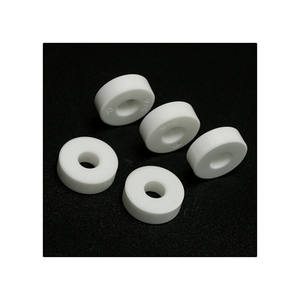
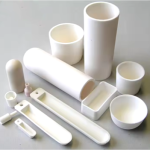
| Common Shapes | – Discs, rods, tubes, rings, spheres, plates, etc. |
| Standard Sizes | – Customizable based on application requirements |
| Color | White (natural color of alumina ceramic) |
| Applications | – Electronics (insulators, substrates)<br>- Mechanical (bearings, wear parts)<br>- Chemical (reactor linings, corrosion-resistant components)<br>- Medical (implants, dental components)<br>- Aerospace (high-temperature components) |
Applications of Alumina Ceramic Standard Parts
Due to their excellent physical, chemical, and mechanical properties, alumina ceramic standard parts are widely used in various fields:
Electronics Industry: Alumina ceramics’ good electrical insulation and high-temperature resistance make them ideal for manufacturing circuit boards, insulators, and electronic component substrates, meeting the requirements of electronic equipment under high-temperature and high-frequency conditions.
Aerospace: Alumina ceramics are extensively used in aerospace applications, such as thermal protection systems and engine components of spacecraft. Their high-temperature performance and corrosion resistance ensure normal operation in extreme environments.
Medical Devices: In medical device manufacturing, alumina ceramics are used to produce bioceramics, artificial joints, and dental implants. Their good biocompatibility and wear resistance offer potential applications in the medical field.
Refractory Materials: As refractory materials, alumina ceramics are commonly used in high-temperature furnace linings and refractory bricks in metallurgy and building materials industries, effectively resisting high temperatures and chemical corrosion.
Chemical Industry: In the chemical industry, alumina ceramics are used to manufacture chemical filler balls, inorganic microfiltration membranes, and corrosion-resistant coatings. Alumina ceramic membranes and coatings are among the most studied and applied materials.
Other Applications: Alumina ceramics are also used to manufacture transparent ceramics, semiconductor components, high-precision mechanical seals, high-voltage insulators, laser tubes, and more. Their application areas continue to expand with advancements in science and technology.
Company Profile
Alumina Technology Co., Ltd.! We focus on the research and development, production and sales of alumina products, serving the electronics, ceramics, chemical and other industries. Since its establishment in 2005, the company has been committed to providing customers with the best products and services, and has become a leader in the industry through continuous technological innovation and strict quality management.
Our products includes but not limited to Alumina Boat, Alumina Crucible, Alumina Dish, Alumina Foam Filter, Alumina Plate, Alumina Rod, Alumina Bar, Alumina Balls, Filter Alumina, Nano Alumina Powder, Spherical Alumina Powder, ect. please feel free to contact us.(nanotrun@yahoo.com)
Payment Methods
T/T, Western Union, Paypal, Credit Card etc.
Shipment Methods
By air, by sea, by express, as customers request.

5 FAQs of Alumina Ceramic Standard Parts
Q1: What is the manufacturing process of alumina ceramic standard parts?
The manufacturing process mainly includes steps such as raw material preparation, molding, sintering, and post-processing. Sintering temperatures usually range from 1400℃ to 1700℃ to enhance density and mechanical properties. Molding methods include pressing, injection molding, tape casting, etc., and post-processing involves grinding and polishing.
Q2: How difficult is the processing of alumina ceramic standard parts?
Alumina ceramics are highly hard and difficult to process. Special processing equipment and tools, such as diamond tools, are required. Common processing methods include diamond grinding, laser processing, EDM, and ultrasonic processing.
Q3: What is the cost of alumina ceramic standard parts?
Alumina ceramic raw materials are abundant, and the preparation process is mature. The cost of medium and low-purity products is relatively controllable, but high-purity, high-performance alumina ceramic products are more expensive. Costs depend on factors like purity, specifications, and processing accuracy.
Q4: How to choose the purity of alumina ceramic standard parts?
Select alumina ceramics of different purities based on specific application requirements. For applications requiring high electrical insulation and hardness, 99% pure alumina ceramics are suitable. For cost-sensitive applications with lower performance requirements, 95% pure alumina ceramics can be chosen.
Q5: What is the chemical stability of alumina ceramic standard parts?
Alumina ceramics have excellent chemical stability and can resist the corrosion of most acids and alkalis, except for hydrofluoric acid and hot concentrated alkalis. In the chemical industry, they are used to manufacture chemical filler balls, inorganic microfiltration membranes, and corrosion-resistant coatings.
REQUEST A QUOTE
RELATED PRODUCTS
Silicon Nitride Sic Beo Aluminum Nitride Zirconia Boron Nitride Alumina Ceramic Guard Tube for Protection Thermocouple
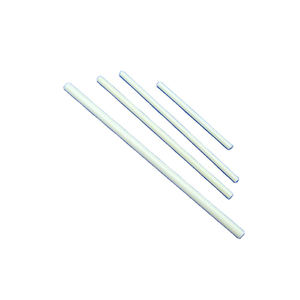
99.5% Al2O3 Alumina Industrial Ceramic Boat High Purity Ceramic Parts
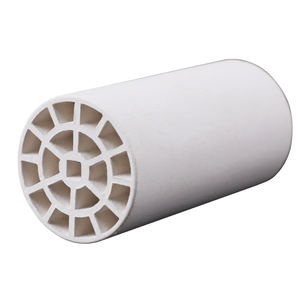
Custom Made Technical Alumina Ceramic Al2O3 Structural Machinery Precision Parts

Custom Alumina Ceramic Screws high pure Alumina Ceramic 99% al2o3 OEM
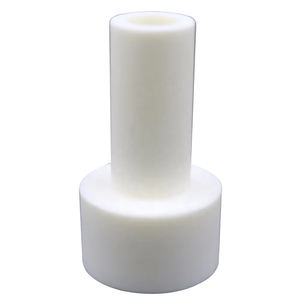
Precision 99% Alumina Ceramic Round Rod