Professional Premium Aluminum Oxide Products Supplier

PRODUCT PARAMETERS
Description
Overview of Alumina Ceramic Foam Filter For Filtering Molten Aluminium Ceramic
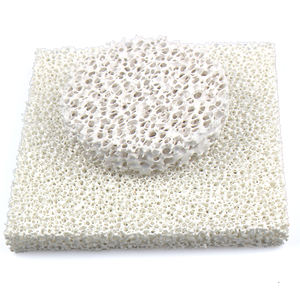
Alumina Ceramic Foam Filter For Filtering Molten Aluminium Ceramic is advanced porous structures made from high-purity aluminum oxide (Al₂O₃). Designed for molten metal filtration, they effectively remove slag, oxides, and non-metallic inclusions, ensuring cleaner and higher-quality castings in aluminum, iron, steel, and other metal alloys.
Key Features of Alumina Ceramic Foam Filter For Filtering Molten Aluminium Ceramic
High-Temperature Resistance – Stable up to 1700°C, ideal for molten metal applications.
Uniform Porosity (10-100 PPI) – Customizable pore sizes for efficient impurity removal.
Excellent Thermal Shock Resistance – Withstands rapid temperature changes without cracking.
High Mechanical Strength – Durable under extreme casting conditions.
Chemical Inertness – Resists corrosion from molten metals and fluxes.

(Alumina Ceramic Foam Filter For Filtering Molten Aluminium Ceramic)
Specification of Alumina Ceramic Foam Filter For Filtering Molten Aluminium Ceramic
Alumina ceramic foam filters clean molten aluminum before casting. They remove solid impurities like oxides and inclusions. This improves final metal quality significantly. The filters are made from high-purity aluminum oxide (Al₂O₃). This material is extremely heat-resistant. It withstands the high temperatures of molten aluminum easily.
Manufacturers produce these filters using a special method. They start with a plastic foam template. This template has an open, interconnected pore structure. They coat this plastic foam thoroughly with a ceramic slurry. The slurry contains fine alumina particles. Then they dry and fire the coated foam at very high temperatures. The plastic burns away completely. The ceramic sinters into a strong, rigid replica of the original foam structure. The result is a porous ceramic block.
This process creates a three-dimensional network of open pores. The pore size is critical for performance. Common sizes are 10 PPI, 20 PPI, and 30 PPI. PPI means pores per linear inch. A lower PPI number means larger pores. A higher PPI number means smaller pores. Choosing the right pore size depends on the specific casting needs. It depends on the level of filtration required.
The filter traps unwanted particles as the molten aluminum flows through it. The complex pore path captures inclusions effectively. This deep filtration results in cleaner metal. Cleaner metal means fewer defects in cast products. It leads to stronger, more reliable aluminum parts. Foundries place the filter in the transfer system. The molten metal passes through the filter just before entering the mold. Using these filters is standard practice for quality aluminum casting. They are essential for demanding applications.

(Alumina Ceramic Foam Filter For Filtering Molten Aluminium Ceramic)
Applications of Alumina Ceramic Foam Filter For Filtering Molten Aluminium Ceramic
Alumina ceramic foam filters clean molten aluminum before casting. Impurities cause serious problems. They make weak spots in finished parts. They also make holes or cracks. This wastes metal and time. Alumina ceramic foam filters trap these impurities effectively.
The filter is made from aluminum oxide. This material is very strong. It handles extreme heat well. Molten aluminum is very hot. The filter stays stable in this liquid metal. It won’t melt or break down. It handles sudden temperature changes well too.
The filter has a sponge-like structure. It has many connected pores. These pores form a complex network inside the filter. Molten aluminum flows through this maze. Solid impurities get caught inside. Particles like oxides, carbides, and bits of refractory material stick in the foam. Clean metal flows out the other side.
This filtration step is crucial. It improves the quality of the aluminum significantly. Cleaner metal means stronger castings. Products have fewer defects. This saves money on repairs and rejects. Production runs smoother with less downtime. Machinery lasts longer too. Clean metal doesn’t wear out components as fast.
Using these filters gives consistent results. Foundries get reliable metal quality every time. This is vital for high-performance parts. Aerospace and automotive industries demand this reliability. The filters are simple to use. They fit into existing metal transfer systems easily. Workers place them in the launder or box. Molten metal flows through them naturally. They require no extra power or complex setup.

Company Profile
Alumina Technology Co., Ltd,. We focus on the research and development, production and sales of alumina products, serving the electronics, ceramics, chemical and other industries. Since its establishment in 2005, the company has been committed to providing customers with the best products and services, and has become a leader in the industry through continuous technological innovation and strict quality management.
Our products includes but not limited to Alumina Boat, Alumina Crucible, Alumina Dish, Alumina Foam Filter, Alumina Plate, Alumina Rod, Alumina Bar, Alumina Balls, Filter Alumina, Nano Alumina Powder, Spherical Alumina Powder, ect. please feel free to contact us.(nanotrun@yahoo.com)

Payment Methods
T/T, Western Union, Paypal, Credit Card etc.
Shipment Methods
By air, by sea, by express, as customers request.
5 FAQs of Alumina Ceramic Foam Filter For Filtering Molten Aluminium Ceramic
What is an alumina ceramic foam filter?
It’s a porous ceramic block made from aluminum oxide. You place it in the molten aluminum path. It catches solid bits and dirt before the metal goes into your castings. This makes cleaner, stronger final parts.
Why use ceramic foam instead of other filters?
Ceramic foam handles extreme heat very well. Molten aluminum is incredibly hot. The foam structure gives lots of surface area inside a small space. It traps tiny particles better than simple screens or cloth filters. It lasts through the pour.
How do the pore sizes work?
Filters come in different pore sizes, like 20 or 30 pores per inch. Smaller pores catch finer dirt. You choose the pore size based on how clean your aluminum needs to be. Thicker filters also catch more dirt but slow the metal flow a bit.
What temperature can it handle?
These filters withstand very high temperatures. They work fine in molten aluminum around 700-800°C (1300-1470°F). They won’t melt or break down in the metal during normal use. They stay stable.
How do I handle and store these filters?
Handle them carefully. The ceramic is strong against heat but brittle. Dropping it can cause cracks. Store filters in a dry place. Moisture is bad. Keep them in their packaging until you are ready to use them. Cracked filters won’t work properly.

(Alumina Ceramic Foam Filter For Filtering Molten Aluminium Ceramic)
REQUEST A QUOTE
RELATED PRODUCTS
Aquarium High Surface Area Ceramic Bio Block Koi Fish Pond Filter Media Alumina Honeycomb Foam Filter Media

Sic Zirconia Alumina Honeycomb Ceramic Filter Porous Ceramic Foam Filter for Casting
Pxcsc Alumina Foundry Open Cell Foam Casting Ceramic Foam Filters
High Temperature Porous Alumina Al2O3 Ceramic Foam Filter Plate
Whole 10PPI 20Ppi 30Ppi Alumina Foam Ceramic Filter for Metal Casting