Professional Premium Aluminum Oxide Products Supplier

PRODUCT PARAMETERS
Description
Overview of Ceramics Factory High Filtering Effect/Alumina Casting Ceramic Filter Foam
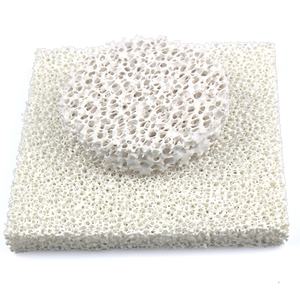
Ceramics Factory High Filtering Effect/Alumina Casting Ceramic Filter Foam is advanced porous structures made from high-purity aluminum oxide (Al₂O₃). Designed for extreme temperature (up to 1600°C) and chemical resistance, they provide efficient filtration of molten metals, gases, and aggressive fluids in industries like metallurgy, chemical processing, and environmental engineering.
Key Features of Ceramics Factory High Filtering Effect/Alumina Casting Ceramic Filter Foam
High-Temperature Stability – Withstands up to 1600°C without structural degradation
Controlled Porosity – Precise pore sizes (10-1000µm) for tailored filtration efficiency
Exceptional Chemical Resistance – Resists acids, alkalis and corrosive media
High Mechanical Strength – Maintains integrity under pressure and thermal cycling
Customizable Shapes & Sizes – Available in discs, tubes, and complex geometries

(Ceramics Factory High Filtering Effect/Alumina Casting Ceramic Filter Foam)
Specifications of Ceramics Factory High Filtering Effect/Alumina Casting Ceramic Filter Foam
Ceramic filter foam from our factory solves tough filtration problems. This alumina casting material traps tiny particles effectively. You get cleaner results in demanding industrial processes. The factory makes these filters using special ceramic foam techniques. We control the pore size carefully. This high filtering effect comes from uniform, connected pores throughout the material. Fine contaminants get caught efficiently.
These ceramic foam filters resist very high temperatures. They work well in molten metal applications without breaking down. The alumina material is also strong against chemicals. Harsh environments won’t damage the filter quickly. Tougher than many other filter options, it lasts longer. You save money on replacements.
Installation is straightforward. The foam shape fits standard filter housings easily. Air or liquid flows through the open pores smoothly. Pressure drop stays low. Energy costs stay manageable. The rigid structure keeps its shape under pressure. It won’t collapse or compact during use.
The surface area inside the foam is huge. Tiny particles stick to the ceramic walls. Filtration efficiency is high even for very fine powders or impurities. Consistent pore size means predictable performance every time. You know exactly what the filter will catch.
Durability is a key advantage. Alumina ceramic handles thermal shock well. Sudden temperature changes cause less stress cracking. The material resists wear from abrasive particles flowing through. Maintenance needs are reduced. Downtime decreases. This filter foam provides reliable, long-lasting service in tough jobs.

(Ceramics Factory High Filtering Effect/Alumina Casting Ceramic Filter Foam)
Applications of Ceramics Factory High Filtering Effect/Alumina Casting Ceramic Filter Foam
Factories need clean metal for strong castings. Alumina casting ceramic filter foam solves this problem. This special filter traps tiny impurities in molten metal. It works during the pouring stage. Melt flows through the foam’s open cells. Solid bits like slag or oxides get caught inside. Cleaner metal fills the mold. This results in better quality castings.
Aluminum foundries use these filters constantly. Aluminum easily picks up oxides. The foam filter removes these oxides effectively. Cleaner aluminum means fewer defects. Castings become stronger and look better. Surface finish improves significantly. Reject rates go down. Factories save money.
Steel plants also depend on alumina foam filters. Steel casting is demanding. High temperatures are involved. Alumina ceramic handles this heat easily. It filters out non-metallic inclusions. Cleaner steel flows into the mold. This prevents weak spots and cracks. The final steel product performs reliably.
Copper and brass alloy producers use these filters too. Molten copper alloys contain impurities. Removing these impurities is critical. The ceramic foam filter captures them efficiently. This ensures the alloy has the right properties. Castings meet strict specifications. Electrical conductivity stays high.
These filters work in investment casting. They work in sand casting. They work in die casting. The high filtering effect is consistent. It relies on the fine foam structure. Alumina material is chemically stable. It doesn’t react with the molten metal. It provides physical filtration. The metal stream stays smooth. Turbulence decreases. Air entrapment reduces. Porosity defects lessen. Yield improves. Factories get more usable parts from each pour.

Company Profile
Alumina Technology Co., Ltd,. We focus on the research and development, production and sales of alumina products, serving the electronics, ceramics, chemical and other industries. Since its establishment in 2005, the company has been committed to providing customers with the best products and services, and has become a leader in the industry through continuous technological innovation and strict quality management.
Our products includes but not limited to Alumina Boat, Alumina Crucible, Alumina Dish, Alumina Foam Filter, Alumina Plate, Alumina Rod, Alumina Bar, Alumina Balls, Filter Alumina, Nano Alumina Powder, Spherical Alumina Powder, ect. please feel free to contact us.(nanotrun@yahoo.com)

Payment Methods
T/T, Western Union, Paypal, Credit Card etc.
Shipment Methods
By air, by sea, by express, as customers request.
5 FAQs of Ceramics Factory High Filtering Effect/Alumina Casting Ceramic Filter Foam
Ceramic filter foam catches impurities in molten metal. Factories use it during casting. It makes cleaner, stronger metal parts. Here are common questions about high filtering ceramic foam.
What exactly is ceramic filter foam? It’s a porous block made from ceramic materials. Alumina ceramic is common. It looks like a sponge. Metal flows through its many tiny holes. Impurities like slag get trapped inside the foam. Clean metal comes out the other side.
How does it filter so well? The foam has millions of connected pores. These pores create a winding path for the metal. Impurities hit the ceramic walls. They stick there. The metal keeps flowing. This scrubs the metal clean. It removes tiny bits of dirt and slag you can’t see easily.
Why use alumina ceramic? Alumina handles extreme heat very well. Molten metal is incredibly hot. Alumina stays strong. It doesn’t melt or crack easily. Alumina also resists chemical attack. Hot metal is reactive. Alumina stays stable. This means reliable filtering every time.
What pore size do I need? Pore size matters a lot. Smaller pores trap finer impurities. Choose based on your metal and quality needs. Common sizes are 10, 20, or 30 pores per inch (PPI). Thicker metal needs larger pores for good flow. Thinner metal works with finer pores. Ask your supplier for the best size for your job.
Can I reuse a filter? No. Reuse is not recommended. The filter gets saturated with trapped slag and oxides. It also reacts with the heat and metal over time. Its structure weakens. Using it again risks filter failure. Failed filters mean dirty metal or even breakage causing defects. Always use a fresh filter for each casting pour. This ensures top performance.

(Ceramics Factory High Filtering Effect/Alumina Casting Ceramic Filter Foam)
REQUEST A QUOTE
RELATED PRODUCTS
40% Porosity Microporous Alumina Ceramic Filter Disc
Factory Hot ing Activated Alumina Filter element Uv Filtration Under Sink Water Filter Faucet
Reticulated Alumina Ceramic Foam Filter Plate for Aluminum Casting
Alumina Ceramic Foam Filter Plate for Filtration of Molten Aluminum
-Supplied Calcined Diatomaceous Earth Filter Aid for Wastewater Treatment Alumina Adsorption Particles Oxi
