Professional Premium Aluminum Oxide Products Supplier


(99% Al2O3 0-1mm Bauxite Ore White Fused Alumina for Ceramic Industry Raw Materials From Aluminium & SiO2 Block & Brick Patterns)
1. Why 99% Al2O3 White Fused Alumina Has Good Characteristics for Ceramic Applications
99% Al2O3 white fused alumina delivers exceptional performance in ceramic manufacturing due to its unique properties. The high alumina purity ensures minimal impurity contamination, critical for achieving consistent sintering results and predictable thermal expansion coefficients. Its monocrystalline structure, formed through electric arc fusion, provides superior mechanical strength compared to sintered alternatives, with Vickers hardness exceeding 2200 kg/mm². The controlled 0-1mm particle size distribution enables optimal packing density in ceramic bodies, reducing porosity in finished products. This material maintains structural integrity at temperatures up to 1900°C, outperforming conventional ceramics in thermal shock resistance. The low SiO2 content prevents unwanted glass phase formation during firing, preserving dimensional stability in precision components. These characteristics make it indispensable for high-performance ceramics requiring extreme durability and thermal management.
2. What Is 99% Al2O3 White Fused Alumina?
99% Al2O3 white fused alumina is a premium refractory material derived from calcined bauxite ore processed through electric arc furnace fusion at temperatures exceeding 2000°C. Unlike brown fused alumina, it undergoes additional purification to achieve ultra-low impurity levels (<1% SiO2 + Fe2O3 + TiO2). The resulting material features angular crystalline structures with self-binding properties ideal for ceramic matrices. Its characteristic white appearance stems from the absence of iron contaminants typically found in lower-grade variants. The 0-1mm particle specification provides optimal flow characteristics for pressing and casting applications. As a versatile ceramic raw material, it serves as both structural reinforcement and primary constituent in advanced ceramic formulations, offering superior chemical inertness compared to natural mineral alternatives.
3. How 99% Al2O3 White Fused Alumina Is Produced
The manufacturing of 99% Al2O3 white fused alumina follows a rigorous multi-stage process. Premium bauxite ore undergoes calcination at 1200°C to remove volatile impurities and chemically bound water. The calcined material is then blended with reducing agents and fed into a three-phase electric arc furnace where 3500A currents create temperatures above 2050°C, transforming alumina into molten corundum. After 24-36 hours of fusion, the molten mass is cooled slowly to form crystalline ingots. These ingots undergo precision crushing using jaw crushers and roller mills, followed by magnetic separation to remove iron contaminants. The material is then sieved through multiple mesh screens to achieve the exact 0-1mm granulometry. Final quality control includes XRF spectrometry to verify chemical composition and laser diffraction analysis for particle size distribution. The entire process consumes approximately 2500 kWh per ton of finished product.
4. Application Fields of 99% Al2O3 White Fused Alumina
This high-purity alumina serves critical functions across multiple ceramic sectors. In refractory production, it forms the backbone of furnace linings and kiln furniture capable of withstanding 1800°C operating temperatures. Technical ceramic applications include high-temperature laboratory ware and crucibles for precious metal processing due to its non-wetting properties. The ceramic baking dish industry utilizes it for thermal shock-resistant cookware that transitions seamlessly from freezer to oven. Advanced structural ceramics incorporate it in wear-resistant components like cutting tools and extrusion dies. Electronics manufacturers rely on its dielectric properties for substrate applications, while the abrasive industry uses it in precision grinding media. Its adoption in modern kitchens demonstrates exceptional food safety compliance and thermal efficiency.
5. How To Choose Quality 99% Al2O3 White Fused Alumina
Selecting premium material requires evaluating four critical parameters. First, verify chemical purity through certified analysis reports showing ≥99% Al2O3 content with SiO2 below 0.2%. Second, assess particle geometry – angular grains should exhibit uniform morphology without rounded edges that compromise binding strength. Third, demand size distribution certificates proving ≥90% of particles fall within 0.1-0.9mm range to prevent packing voids. Finally, evaluate physical properties: true density should exceed 3.90 g/cm³, while loose bulk density must be ≥1.75 g/cm³ for 0-1mm grades. Reputable suppliers provide comprehensive technical datasheets including crystalline phase analysis (alpha-Al2O3 content ≥95%) and thermal expansion coefficients (8.0×10⁻⁶/K at 1000°C). Always request production batch samples for comparative firing tests in your specific ceramic formulation before bulk procurement.
6. Frequently Asked Questions About 99% Al2O3 White Fused Alumina
6.1 How does white fused alumina differ from tabular alumina?
White fused alumina undergoes rapid solidification from molten state, creating interlocked monocrystalline structures, while tabular alumina is sintered at 1900°C producing larger polycrystalline aggregates with higher porosity.
6.2 Why is the 0-1mm size specification critical for ceramic applications?
This granulometry optimizes particle packing density in both dry-pressed and cast ceramics, minimizing binder requirements while ensuring uniform sintering shrinkage and dimensional stability in fired products.
6.3 Can this material be used in food-contact ceramics?
Yes, its chemical inertness and NSF compliance make it suitable for baking dishes and food preparation surfaces, though final glaze compatibility must be validated.
6.4 What makes it superior to natural bauxite in refractory applications?
The fusion process eliminates mineral impurities and creates a homogeneous crystalline structure, yielding 40% higher refractoriness under load (1750°C vs 1250°C) and 3× greater thermal shock resistance cycles.
6.5 How does particle shape affect ceramic performance?
Angular grains provide mechanical interlocking in green bodies, reducing cracking during drying, while enhancing fired strength through improved particle-to-particle bonding.
Tags: white fused alumina, 99% alumina, bauxite ore, ceramic raw materials, refractory materials, alumina ceramic, fused alumina, high purity alumina, ceramic industry, aluminum oxide

(99% Al2O3 0-1mm Bauxite Ore White Fused Alumina for Ceramic Industry Raw Materials From Aluminium & SiO2 Block & Brick Patterns)
Supplier
Alumina Technology Co., Ltd focus on the research and development, production and sales of aluminum oxide powder, aluminum oxide products, aluminum oxide crucible, etc., serving the electronics, ceramics, chemical and other industries. Since its establishment in 2005, the company has been committed to providing customers with the best products and services.
RELATED POSTS
5 Niche Applications of Alumina Ceramic Baking Dishes Beyond the Kitchen
Alumina Ceramic Baking Dishes: The Ultimate Guide to Performance, Safety, and Versatility
How to Safely Use and Maintain Your Alumina Ceramic Baking Dish: A Step-by-Step Guide
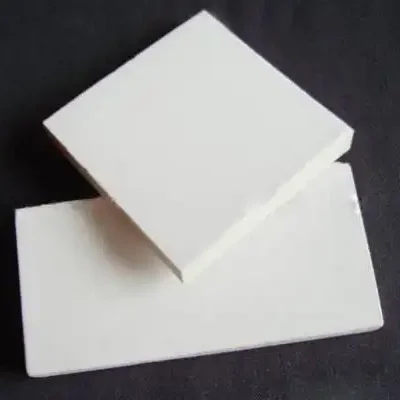
Development 2025: Alumina Porcelain Plates Dominate Worldwide Markets with Unequaled Resilience and Eco-Friendly Edge
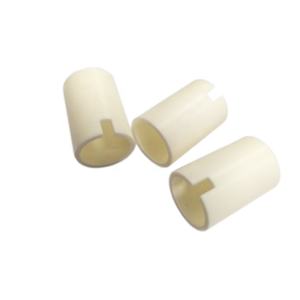
Alumina Ceramic Baking Dishes Are Revolutionizing High-Temperature Culinary Labs