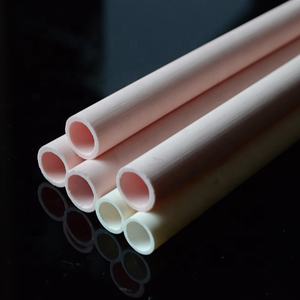
Professional Premium Aluminum Oxide Products Supplier


(Alumina Ceramic Cylinders)
1. Why Alumina Ceramic Cylinders Have Good Characteristics
1.1 High Hardness and Wear Resistance
Alumina ceramic cylinders exhibit exceptional hardness, making them highly resistant to wear and abrasion. This characteristic stems from the strong interatomic bonds within the alumina (Al2O3) crystal structure. The high hardness allows these cylinders to maintain their structural integrity even under demanding conditions involving friction, impact, or erosion. This makes them ideal for applications where components are subjected to continuous wear, such as in grinding media, nozzles, and high-performance seals. The wear resistance ensures a prolonged lifespan of the cylinder, reducing the need for frequent replacements and contributing to overall cost-effectiveness. Furthermore, the surface finish remains consistent over time, maintaining operational efficiency and precision.
1.2 Excellent Chemical Inertness
Alumina ceramic cylinders are known for their remarkable chemical inertness, meaning they do not readily react with most chemicals, acids, or alkalis. This property is crucial in applications where the cylinders come into contact with corrosive substances or harsh environments. The chemical resistance prevents degradation of the material, ensuring long-term stability and reliability. This makes alumina cylinders suitable for use in chemical processing equipment, laboratory apparatus, and medical devices. Their ability to withstand exposure to a wide range of chemicals without undergoing significant changes in composition or physical properties is a key advantage. This inertness also prevents contamination of the surrounding environment, which is particularly important in sensitive applications.
2. What Are Alumina Ceramic Cylinders
2.1 Definition and Composition
Alumina ceramic cylinders are cylindrical components made primarily from aluminum oxide (Al2O3), also known as alumina. These cylinders are characterized by their high purity, typically ranging from 90% to over 99.9%, depending on the specific application requirements. The composition influences the mechanical, thermal, and electrical properties of the cylinder. Higher purity alumina generally results in superior performance characteristics, such as increased hardness, improved thermal conductivity, and enhanced electrical insulation. Additives may be included in the alumina powder to control grain growth during sintering and to tailor specific properties. The careful control of composition and processing parameters ensures that the final product meets the stringent demands of various industries, including electronics, automotive, and aerospace.
2.2 Key Properties and Features
Alumina ceramic cylinders possess a unique combination of properties that make them valuable in numerous applications. Key features include high hardness, excellent wear resistance, exceptional chemical inertness, and good thermal stability. They also exhibit high electrical insulation properties and can withstand high temperatures without significant degradation. The hardness of alumina cylinders is typically around 15-20 GPa on the Vickers scale, making them suitable for abrasive environments. Their thermal stability allows them to operate effectively at temperatures up to 1000°C or higher, depending on the grade. These features, combined with their dimensional stability and ability to be precisely manufactured, make alumina ceramic cylinders a preferred choice for demanding engineering applications. The specific properties can be further customized by adjusting the manufacturing process and material composition.
3. How Are Alumina Ceramic Cylinders Produced?
3.1 Powder Preparation and Mixing
The production of alumina ceramic cylinders begins with the preparation of high-purity alumina powder. This powder is often sourced from the Bayer process, which extracts alumina from bauxite ore. The alumina powder typically has a controlled particle size distribution to ensure uniform sintering. To enhance the processability and final properties, additives such as binders, plasticizers, and sintering aids are mixed with the alumina powder. Binders provide green strength to the formed parts before sintering, while plasticizers improve the powder’s flexibility during shaping. Sintering aids promote densification at lower temperatures. This mixing process is crucial for achieving a homogenous mixture, which translates to consistent properties in the final product. The uniformity of the mixture significantly impacts the microstructure and performance of the ceramic cylinder.
3.2 Forming, Sintering, and Finishing
The mixed alumina powder is then formed into the desired cylindrical shape using various techniques, including extrusion, pressing, or injection molding. Extrusion is commonly used for producing long cylinders with consistent cross-sections. Pressing involves compacting the powder in a die under high pressure, while injection molding is suitable for complex shapes. After forming, the green bodies are subjected to a sintering process at high temperatures, typically between 1500°C and 1700°C. Sintering densifies the material by reducing porosity and increasing grain size, thereby enhancing its mechanical strength and density. The sintering atmosphere (e.g., air, vacuum, or inert gas) is carefully controlled to prevent unwanted reactions. Finally, the sintered cylinders may undergo finishing operations such as grinding, polishing, or lapping to achieve the desired dimensions, surface finish, and tolerances. These finishing processes are crucial for applications requiring high precision and tight dimensional control.
4. What Are The Application Fields of Alumina Ceramic Cylinders
4.1 Industrial Applications
Alumina ceramic cylinders find extensive use in various industrial applications due to their exceptional properties. They are commonly used as grinding media in ball mills for crushing and grinding materials to fine powders. Their high hardness and wear resistance ensure efficient and long-lasting performance in abrasive environments. In the textile industry, they serve as thread guides and tensioning devices, minimizing friction and wear on the threads. They are also employed in pump components, such as pistons and plungers, where their chemical inertness and wear resistance are crucial for handling corrosive fluids. Furthermore, alumina cylinders are used in high-temperature furnaces as insulating supports and spacers, leveraging their thermal stability and electrical insulation properties. These diverse applications highlight the versatility of alumina ceramic cylinders in demanding industrial settings.
4.2 Medical and Electronic Applications
The biocompatibility and chemical inertness of alumina ceramic cylinders make them suitable for various medical applications. They are used in orthopedic implants, such as hip and knee replacements, providing excellent wear resistance and long-term stability within the body. In electronic applications, alumina cylinders serve as insulators and substrates due to their high electrical resistivity and thermal conductivity. They are used in high-frequency electronic components, providing stable performance and reliable insulation. Alumina is also employed in the manufacturing of spark plugs, where its electrical insulation and thermal resistance are essential for efficient ignition. The use of alumina in these critical medical and electronic applications underscores its importance in ensuring the reliability and safety of advanced technologies. The material’s ability to perform under stringent conditions makes it a preferred choice in these specialized fields.
5. How To Choose A Good Alumina Ceramic Cylinders
5.1 Material Purity and Composition
Selecting high-quality alumina ceramic cylinders requires careful consideration of material purity and composition. Higher purity alumina, typically ranging from 90% to over 99.9%, generally translates to superior mechanical, thermal, and electrical properties. It’s important to verify the alumina content specified by the manufacturer and ensure it aligns with the application requirements. Impurities can negatively impact the material’s performance, reducing its hardness, chemical resistance, and thermal stability. The presence of additives should also be assessed, as they can influence grain growth during sintering and affect specific properties. Understanding the specific composition and its impact on performance characteristics is crucial for making an informed decision. A detailed material datasheet from the supplier should provide this information and assist in the selection process.
5.2 Dimensional Accuracy and Surface Finish
Dimensional accuracy and surface finish are critical factors when choosing alumina ceramic cylinders. Tight tolerances ensure proper fit and functionality in the intended application. Cylinders with poor dimensional accuracy can lead to assembly issues and reduced performance. The surface finish affects the frictional properties and wear resistance of the cylinder. A smooth, well-polished surface minimizes friction and reduces the likelihood of wear and abrasion. Surface roughness is typically measured using parameters like Ra (average roughness) and Rz (maximum height). The required surface finish depends on the specific application; for example, sealing applications may require a very smooth surface to ensure a tight seal. Carefully evaluating the manufacturing process and quality control measures employed by the supplier can help ensure consistent dimensional accuracy and surface finish.
6. What Does People Also Ask About Alumina Ceramic Cylinders
6.1 What Are the Advantages of Alumina Ceramic Cylinders Over Metal Cylinders?
Alumina ceramic cylinders offer several advantages over metal cylinders, primarily in terms of hardness, wear resistance, chemical inertness, and high-temperature stability. Alumina’s hardness is significantly higher than most metals, making it more resistant to abrasion and wear. Its chemical inertness ensures it won’t corrode or react with most chemicals, a common issue with many metals. Alumina can withstand much higher temperatures without significant degradation, whereas metals may soften or oxidize at elevated temperatures. Additionally, alumina is an excellent electrical insulator, which is beneficial in certain applications. However, metal cylinders typically have higher tensile strength and impact resistance compared to alumina. The choice between alumina ceramic and metal cylinders depends on the specific application requirements and the trade-offs between these properties. Cost and manufacturing considerations also play a role in the decision-making process.
6.2 How Do I Maintain Alumina Ceramic Cylinders to Maximize Their Lifespan?
To maximize the lifespan of alumina ceramic cylinders, several maintenance practices should be followed. First, avoid subjecting the cylinders to sudden thermal shocks, as rapid temperature changes can cause cracking or fracture. Gradual heating and cooling are recommended, especially when operating at high temperatures. Second, protect the cylinders from physical impacts and excessive loads, as alumina, while hard, is also brittle. Handle them carefully during installation and operation to prevent chipping or cracking. Third, regularly inspect the cylinders for signs of wear, erosion, or chemical attack. Clean them periodically to remove any contaminants that could accelerate degradation. The cleaning process should be gentle, using mild detergents and avoiding abrasive cleaners. Following these guidelines can significantly extend the service life of alumina ceramic cylinders and maintain their performance characteristics over time. Proper storage and handling practices are also essential for preventing damage during transportation and storage.
Tags: alumina ceramic, ceramic cylinders, alumina properties, technical ceramics, advanced ceramics

(Alumina Ceramic Cylinders)
Supplier
Alumina Technology Co., Ltd focus on the research and development, production and sales of aluminum oxide powder, aluminum oxide products, aluminum oxide crucible, etc., serving the electronics, ceramics, chemical and other industries. Since its establishment in 2005, the company has been committed to providing customers with the best products and services. If you are looking for high quality Alumina Ceramic Products , please feel free to contact us. (nanotrun@yahoo.com)
RELATED POSTS
Alumina Ceramic Baking Dishes: Performance, Types, and Practical Uses in Modern Kitchens

How to Use and Care for Your Alumina Ceramic Baking Dish Without Turning Dinner into a Science Experiment
Alumina Ceramic Chemical Catalyst Supports: Enhancing Efficiency and Durability in Industrial Applications
Alumina Ceramic Baking Dishes Are the Secret Weapon of Modern Kitchens—Here’s Why
What Is an Alumina Ceramic Baking Dish and Why It’s a Kitchen Game-Changer