Professional Premium Aluminum Oxide Products Supplier

1. Introduction
In the past 48 hours, researchers at Oak Ridge National Laboratory announced a new method for stabilizing ultra-pure alumina ceramics at temperatures exceeding 1,800°C—opening doors for more durable industrial components in extreme environments. While headlines focus on aerospace and nuclear applications, few realize that the same base material found in your kitchen’s alumina ceramic baking dish is engineered into mission-critical parts like thermocouple sheaths and melting crucibles. This article dives into the niche, high-stakes world where ‘alumina ceramic dishes for oven’ transform from dinnerware into indispensable industrial tools.
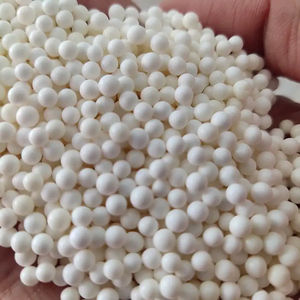
2. From Tabletop to Furnace: The Dual Life of Alumina Ceramics
Alumina (Al₂O₃) is prized not just for its aesthetic smoothness in alumina white ceramic plates or alumina black ceramic plates, but for its exceptional thermal stability, chemical inertness, and mechanical strength. These properties make it ideal not only for serving casseroles in an alumina ceramic casserole with lid but also for containing molten metals in foundries. In fact, the very composition that allows an alumina ceramic butter dish with lid to resist staining and cracking in a home oven also enables an alumina ceramic crucible to safely melt gold or steel without contamination.

2.1. Alumina Ceramic Crucibles: The Unsung Heroes of Metallurgy
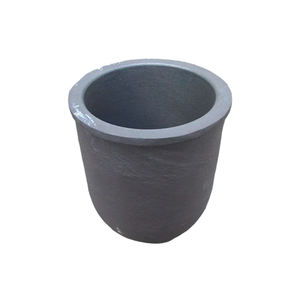
One of the most demanding applications of alumina ceramics lies in high-temperature crucibles. Unlike standard pottery, alumina ceramic crucibles can withstand repeated thermal cycling up to 1,750°C. These are essential in precious metal refining, semiconductor crystal growth, and laboratory analysis. An alumina ceramic melting dish must be non-reactive, dimensionally stable, and resistant to thermal shock—qualities shared by even the humblest alumina ceramic ramekin used for crème brûlée. The key difference? Purity and density. Industrial-grade alumina crucibles often exceed 99.5% purity, whereas tableware may use 85–95% alumina blended with other oxides for cost and workability.
2.2. Thermocouple Protection Tubes: Precision Meets Durability
Another critical niche is the use of alumina ceramic tubes as thermocouple protection sheaths. In steel mills, glass plants, and aerospace test chambers, temperature sensors must survive corrosive atmospheres and extreme heat. Alumina ceramic thermocouple protection tubes—often labeled as alumina high temperature ceramic tubes—shield delicate sensor wires while allowing accurate thermal readings. These tubes come in various forms: single-bore, threaded, or even porous designs for specific gas-permeable applications. Interestingly, the same manufacturing techniques used to produce alumina ceramic plates for painting (which require fine surface finishes) are adapted to create smooth inner bores that prevent sensor abrasion.
3. Why Alumina? Comparing Performance Across Applications
What makes alumina so versatile? Its high melting point (~2,072°C), excellent electrical insulation, and resistance to acids and alkalis allow it to function reliably whether holding salad in an alumina salad ceramic bowl or channeling reactive gases through an alumina ceramic pipe. Even alumina ceramic disc taps—used in high-end plumbing for their wear resistance—share the same foundational material science as alumina ceramic grinding discs used in precision machining. This cross-industry adaptability stems from tunable microstructures: denser for crucibles, slightly porous for filtration tubes, or glazed for dinnerware like alumina handcrafted ceramic plates.
4. Emerging Trends and Future Outlook
With the recent Oak Ridge breakthrough enabling even higher thermal stability, we’re seeing renewed interest in alumina-based components for next-gen fusion reactors and hypersonic vehicle testing. Meanwhile, artisanal markets continue to expand—think alumina ceramic Christmas plates or alumina blue white porcelain plates—but these remain surface-level expressions of a material with far deeper technical significance. Manufacturers now offer custom alumina ceramic tubes and crucibles tailored to specific thermal profiles, blurring the line between craft and engineering.
5. Conclusion
The next time you use an alumina oven ceramic dish to bake lasagna, remember: that same ceramic compound might be protecting a thermocouple inside a jet engine test rig or holding molten titanium in a lab. Far from being just another kitchenware trend, alumina ceramics bridge domestic convenience and industrial necessity—proving that sometimes, the most advanced materials start right on your dinner table.
Our Website founded on October 17, 2012, is a high-tech enterprise committed to the research and development, production, processing, sales and technical services of ceramic relative materials such as How. Our products includes but not limited to Boron Carbide Ceramic Products, Boron Nitride Ceramic Products, Silicon Carbide Ceramic Products, Silicon Nitride Ceramic Products, Zirconium Dioxide Ceramic Products, etc. If you are interested, please feel free to contact us.
RELATED POSTS
How to Choose the Right Alumina Ceramic Baking Dish for Your Kitchen
What Is an Alumina Ceramic Baking Dish? Your Complete Guide to This High-Performance Kitchen Essential
10 Surprising Truths About Alumina Ceramic Baking Dishes (and Why Your Oven Will Thank You)
What Is an Alumina Ceramic Baking Dish—and Why Is Everyone Obsessed With It?

How to Safely Use and Care for Your Alumina Ceramic Baking Dish: A Step-by-Step Guide