Professional Premium Aluminum Oxide Products Supplier


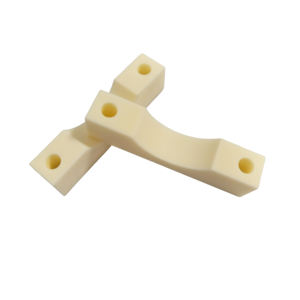
(Square 99% Alumina Ceramic Sheet Al2o3 Plate Block With Hole)
Comprehensive Guide to Square 99% Alumina Ceramic Sheet Al2O3 Plate Block With Hole
1. Why Square 99% Alumina Ceramic Sheet Al2O3 Plate Block With Hole Has Good Characteristics
1.1 Exceptional Material Properties
Square 99% alumina ceramic plates derive their superior characteristics from high-purity aluminum oxide composition. The 99% Al2O3 content creates an exceptionally dense crystalline structure, delivering outstanding mechanical strength (typically 300-400 MPa) and extreme hardness (approximately 15 GPa Vickers). This high-density microstructure minimizes porosity, significantly enhancing wear resistance compared to lower-purity ceramics. The material maintains dimensional stability under thermal stress due to its low thermal expansion coefficient (6-8 × 10⁻⁶/K), preventing distortion or cracking during rapid temperature changes.
1.2 Performance Advantages
These ceramic plates exhibit exceptional electrical insulation properties (10¹⁴-10¹⁵ Ω·cm volume resistivity), making them ideal for high-voltage applications. Their corrosion resistance surpasses metals when exposed to harsh chemicals, acids, and alkalis. The addition of precision-drilled holes maintains structural integrity while enabling functional versatility in assemblies. As documented in research on high-heat resistant alumina components, these plates withstand continuous operation at 1600°C while maintaining 90% of room-temperature strength at 1000°C.
2. What Is Square 99% Alumina Ceramic Sheet Al2O3 Plate Block With Hole
2.1 Technical Definition
A square 99% alumina ceramic plate block with hole is a precision-engineered technical ceramic component characterized by its geometric shape (square), material composition (99% aluminum oxide), and functional feature (through-holes or recessed cavities). Unlike traditional ceramics, this advanced material undergoes specialized processing to achieve near-theoretical density. The holes are typically machined using diamond tooling to maintain dimensional tolerances within ±0.1mm. These plates commonly range from 0.5mm to 50mm in thickness, with hole configurations designed for specific mounting, fluid flow, or electrical isolation requirements.
2.2 Structural Composition
The plate’s microstructure consists of alpha-alumina crystals bonded through high-temperature sintering, creating a monolithic ceramic body. The 99% purity level indicates minimal silicate glass phase content (≤1%), which directly correlates with enhanced thermal and dielectric properties. The precisely engineered holes maintain perpendicularity to surfaces and feature chamfered edges to prevent stress concentration. This structural configuration allows the component to function as an insulating barrier, thermal interface, or wear surface in complex assemblies where metallic alternatives would fail.
3. How Square 99% Alumina Ceramic Sheet Al2O3 Plate Block With Hole Was Produced
3.1 Advanced Manufacturing Process
Production begins with high-purity aluminum oxide powder mixed with organic binders and sintered using these steps:
3.1.1 Powder Processing
Submicron Al2O3 powder undergoes spray-drying to form free-flowing granules with controlled particle size distribution. This ensures uniform compaction during pressing and eliminates density gradients that could cause warping.
3.1.2 Forming and Hole Creation
Granules are uniaxially or isostatically pressed in square-shaped dies at 100-200 MPa. Holes are formed either during pressing (using core pins) or via post-sinter machining. For precision holes, diamond grinding techniques achieve surface finishes down to Ra 0.2μm after sintering.
3.1.3 High-Temperature Sintering
Components are fired at 1600-1800°C in tunnel kilns, where controlled heating rates prevent thermal shock. The sintering profile holds components at peak temperature for 2-4 hours, achieving ≥98% theoretical density through diffusion bonding.
4. What Are The Application Fields of Square 99% Alumina Ceramic Sheet Al2O3 Plate Block With Hole
4.1 Industrial Applications
These components serve critical functions across industries:
4.1.1 Electronics and Semiconductors
As insulating substrates in power electronics, the plates provide dielectric isolation for high-current busbars. Hole patterns facilitate component mounting in vacuum chambers and plasma etching systems.
4.1.2 Thermal Processing Equipment
Used as furnace linings, kiln furniture, and heat exchanger components where holes enable gas flow or sensor integration. Their thermal stability maintains dimensional accuracy during repeated thermal cycling.
4.2 Specialized Engineering Uses
In laser systems, they function as aperture plates and beam dumps. The food processing industry utilizes them as wear plates in bottling machinery, where holes accommodate guide pins. As highlighted in studies on high-temperature structural components, they’re essential in welding nozzles and cutting equipment. Proper maintenance techniques, similar to those for alumina ceramic baking dishes, extend service life in corrosive environments.
5. How To Choose A Good Square 99% Alumina Ceramic Sheet Al2O3 Plate Block With Hole
5.1 Material Specifications
Select components based on:
5.1.1 Performance Parameters
Verify alumina content (≥99%) through material certifications. Confirm thermal shock resistance (ΔT ≥ 200°C) and dielectric strength (≥15 kV/mm). For high-wear applications, ensure hardness exceeds 85 HRA.
5.1.2 Geometric Tolerances
Require flatness within 0.1mm/100mm and perpendicularity of holes ≤0.5°. Hole diameter consistency should maintain ±0.05mm tolerance. Surface finish should be specified based on application: as-fired (Ra 0.8-1.6μm) for insulation, ground (Ra 0.2-0.4μm) for sealing surfaces.
5.2 Quality Validation
Reputable manufacturers provide:
5.2.1 Inspection Documentation
Demand ultrasonic testing reports confirming absence of internal flaws. Request dimensional inspection certificates with actual measurements. For critical applications, require metallographic analysis of microstructure.
5.2.2 Application-Specific Testing
Verify performance through actual condition simulations: thermal cycling tests for furnace components, dielectric withstand tests for insulators, and wear testing for abrasive applications. Proper handling procedures, as detailed in guides for alumina ceramic care, prevent surface damage during installation.
6. What Does People Also Ask About Square 99% Alumina Ceramic Sheet Al2O3 Plate Block With Hole
6.1 Technical Performance Questions
Q: How does hole configuration affect structural integrity?
A: Properly designed holes with radiused corners and adequate edge margins maintain ≥90% of base material strength. Stress analysis should precede hole pattern design for load-bearing applications.
Q: Can these plates be metallized for brazing?
A: Yes, specialized molybdenum-manganese or active metal brazing processes create hermetic seals on alumina surfaces, enabling integration with metal assemblies.
6.2 Application and Handling Concerns
Q: What precautions prevent cracking during installation?
A: Avoid point loading on hole edges. Use compliant gaskets between ceramic and metal surfaces. Torque fasteners gradually in crisscross patterns to ≤80% of yield strength.
Q: How does performance compare to 96% alumina?
A> 99% alumina offers 20-30% higher mechanical strength, 50% better thermal conductivity, and superior corrosion resistance due to reduced glass phase content.
Tags: alumina ceramic plate, Al2O3 ceramic block, high-purity alumina, ceramic insulator plate, precision ceramic component, industrial ceramic plate, alumina spacer block, ceramic mounting plate

(Square 99% Alumina Ceramic Sheet Al2o3 Plate Block With Hole)
Supplier
Alumina Technology Co., Ltd focus on the research and development, production and sales of aluminum oxide powder, aluminum oxide products, aluminum oxide crucible, etc., serving the electronics, ceramics, chemical and other industries. Since its establishment in 2005, the company has been committed to providing customers with the best products and services.
RELATED POSTS
The Ultimate Guide to Heat-Resistant Al2O3 Ceramic Sintering Plates and Blocks
The Unstoppable Rise of Alumina: A Change in Industrial and Scientific Applications
Alumina Ceramic Baking Dishes: A Comprehensive Analysis of Performance, Variants, and Applications

10 Things You Need to Know About Alumina Ceramic Baking Dishes and More
Alumina Ceramic Baking Dishes in High-Temperature Laboratory Applications