Professional Premium Aluminum Oxide Products Supplier

What Is Spherical Alumina Powder for Plasma Spray Coating?
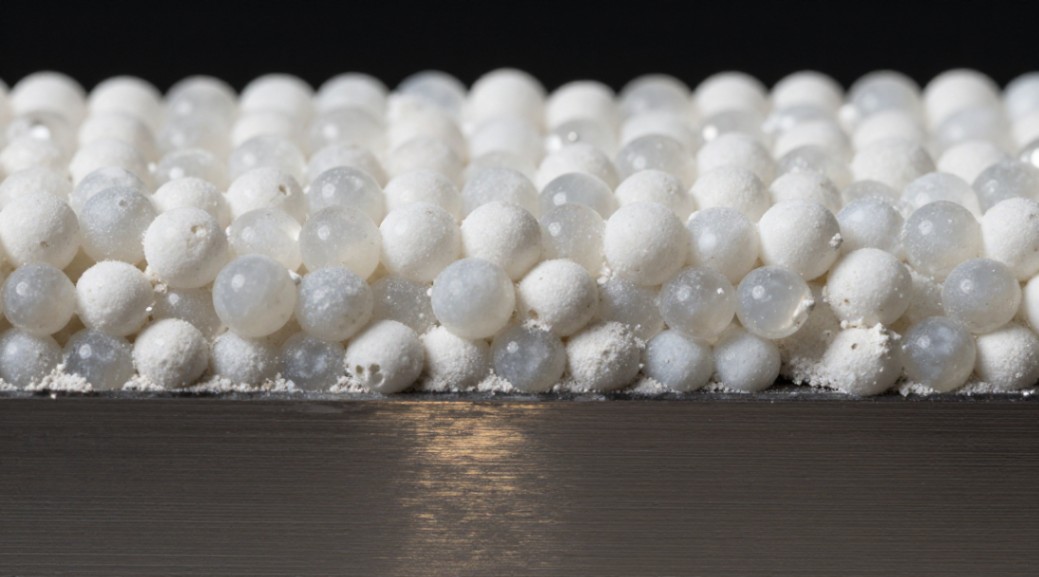
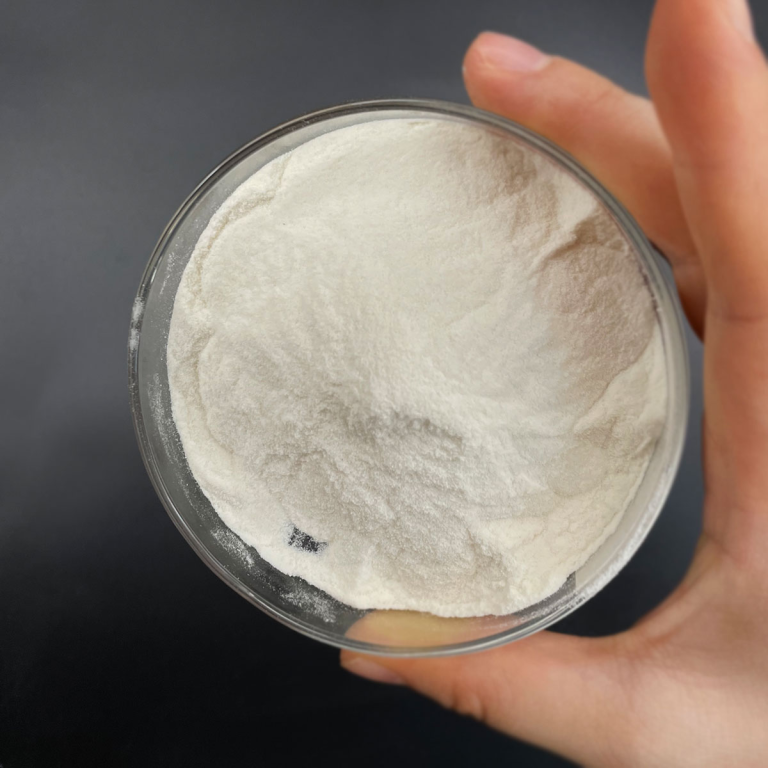
Spherical alumina powder for plasma spray coating is a high-purity, engineered ceramic feedstock where each particle is a near-perfect sphere of alpha-phase alumina (Al₂O₃). Its primary function is to be injected into a plasma torch, melted, and propelled onto a substrate to form a protective or functional coating. The spherical morphology is the key differentiator.
Why does shape matter so much? Because a sphere flows. Irregular, angular powders bridge and clog in powder feeders. Spherical particles roll past each other. This ensures a consistent, uninterrupted feed into the plasma plume. Without consistent feed, you get sputtering, inconsistent coating thickness, and rejected parts.
The spherical shape also improves heat transfer. Each particle melts uniformly. There are no sharp edges that overheat and vaporize before the core melts. The result is a fully molten droplet that flattens evenly on impact, producing a dense, low-porosity coating.
Common synonyms in the industry include: plasma-grade spherical alumina, flowable alumina powder, and spherical ceramic feedstock.
Key Characteristics of Spherical Alumina Powder
1. Phase Purity: Alpha Alumina
The powder must be >99.5% alpha phase. Transition aluminas (gamma, delta) contain lattice defects that degrade hardness and dielectric strength. A high-purity alpha phase delivers consistent melting behavior and the final coating’s mechanical and electrical properties.
- Hardness: 18–20 GPa Vickers for dense alpha coatings.
- Dielectric strength: >10 kV/mm for electrical insulation layers.
- Chemical inertness: Resists acids and alkalis in corrosive environments.
2. Particle Size Distribution (PSD)
Typical plasma spray grades use a PSD of –45+15 microns or –30+5 microns. A tight distribution is critical. Too many fines cause vaporization; too many coarse particles leave unmelted cores that weaken the coating. Quality manufacturers screen every lot and provide a certified particle size chart.
3. Sphericity and Flowability
Measured by Hall flowmeter: a good spherical alumina powder flows at less than 30 seconds per 50 grams. Irregular powders often exceed 50 seconds or do not flow at all. High sphericity also increases tap density (typically >2.2 g/cm³), which correlates directly with coating density.
4. Low Agglomeration
Agglomerates (particles stuck together) cause nozzle clogging and porosity. Producers use de-agglomeration sieving and air classification to ensure discrete particles. Moisture content must be below 0.1% – any water causes steam explosion in the plasma jet.
How Spherical Morphology Improves Plasma Spray Coating Performance
Irregular powder generates internal stresses. Sharp edges cool faster than the particle body, creating differential shrinkage. This leads to microcracks in the coating. Spherical particles shrink isotropically. Stress distribution is uniform. You get better adhesion, lower crack density, and longer service life.
Packing density is another advantage. Spheres pack more efficiently. A coating built from spherical droplets has less than 1% porosity in optimized conditions. Irregular powders typically produce coatings with 3–5% porosity. For thermal barrier coatings, that porosity difference changes thermal conductivity by a factor of two.
Spherical powder also reduces torch wear. Angular particles erode the nozzle faster. Over a shift, that means more downtime for nozzle replacement. Consistent spherical feed keeps the plasma operating at steady parameters.
Critical Plasma Spray Parameters for Alumina
Even the best powder fails with wrong settings. Here are the starting points for spherical alumina:
- Arc current: 500–600 A for a 40 kW torch. Higher for thicker coatings.
- Primary gas (Argon): 40–50 slpm. Secondary gas (Hydrogen): 5–10 slpm. Hydrogen increases enthalpy.
- Powder feed rate: 20–40 g/min. Adjust based on desired thickness per pass.
- Standoff distance: 80–120 mm. Shorter for dense coatings, longer for porous thermal barriers.
Feed rate stability is the most overlooked parameter. Monitor the feeder hopper level constantly. Use a carrier gas flow that matches the powder density. Argon at 3–5 slpm is typical for spherical alumina.
Primary Applications of Spherical Alumina Coatings
Wear-Resistant Coatings

Corrosion-Resistant Coatings
Alumina’s chemical inertness makes it ideal for process equipment in chlorinated environments. A dense coating of <1% porosity stops corrosive species from reaching the substrate. For semiconductor chamber parts, high-purity spherical alumina prevents metallic contamination.
Dielectric and Electrical Insulation
In electronics and power systems, alumina coatings insulate bus bars, heater elements, and high-voltage terminals. Dielectric strength exceeds 15 kV/mm for coatings thicker than 300 microns. Thermal conductivity (25–30 W/mK) also helps dissipate heat.
Thermal Barrier Coatings (Specialized)
While yttria-stabilized zirconia dominates TBCs, alumina is used in intermediate layers and for oxidation protection. Its high melting point (2072°C) and low thermal conductivity (compare to metals) suit moderate-temperature barriers up to 1600°C.
Comparison: Spherical vs. Irregular Alumina Powder
Let’s be direct. If you are plasma spraying, do not use irregular alumina. Irregular powder is cheaper per kilogram but costs more in torch maintenance, rejected parts, and inconsistent quality. Spherical powder costs more upfront but delivers higher first-pass yield. The total cost of ownership favors spherical powder for any production environment.
| Property | Spherical Alumina | Irregular Alumina |
|---|---|---|
| Flowability (Hall) | <30 sec/50g | >50 sec or no flow |
| Coating Porosity | <1% | 3–5% |
| Adhesion (ASTM C633) | >50 MPa | <30 MPa |
| Torch Nozzle Life | 2–3x longer | Rapid wear |
| Process Consistency | Excellent | Poor–Moderate |
Quality Control: What to Verify Before Use
Every batch of spherical alumina powder should be tested before loading into the feeder. Do not trust the certificate of analysis alone. Verify these in-house or request them upfront:
- Particle size distribution (laser diffraction). Must match the spec sheet.
- Phase purity (XRD). Reject any batch with detectable gamma or delta peaks.
- Moisture content (Karl Fischer). Must be <0.1%.
- Flow rate (Hall flowmeter). Compare to historical baseline.
- Tap density. Should be >2.0 g/cm³ for –45+15 micron grade.
Moisture is the silent killer. Even 0.2% moisture vaporizes in the plasma jet, creating violent pressure spikes that disrupt the spray stream. Dry your powder at 150°C for 2 hours before use if any doubt exists about storage conditions.
Why Choose High-Purity Spherical Alumina for Your Application
The plasma spray coating industry moved toward spherical feedstocks for one reason: repeatability. Every part must come off the line with the same coating thickness, hardness, and porosity. Spherical alumina provides that repeatability. Irregular powders cannot.
For semiconductor, aerospace, and medical device industries, contamination is unacceptable. High-purity spherical alumina ensures zero trace metals. For heavy industrial equipment, the coating density translates directly to longer wear life. The buyer’s choice is clear.
Conclusion and Recommended Action
Spherical alumina powder for plasma spray coating is the industry standard for demanding applications. Its superior flowability, uniform melting, and dense coating structure outperform irregular powders in every measurable metric: adhesion, porosity, wear resistance, and process stability.
Do not compromise on feedstock quality. The cost of a rejected coated part is always higher than the premium for spherical powder.
We stock and manufacture spherical alumina powder in standard and custom particle size distributions. Each lot is tested for phase purity, moisture, and flow rate.
Contact our engineering team today with your target coating specs. We will recommend the exact grade and provide a free 1 kg sample for qualification. Request your sample now.
Supplier
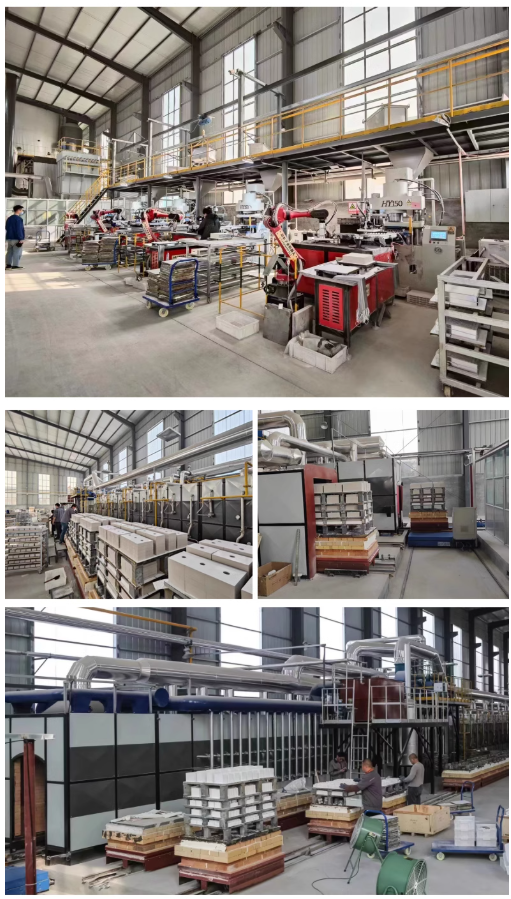
Alumina Technology Co., Ltd focus on the research and development, production and sales of aluminum oxide powder, aluminum oxide products, aluminum oxide crucible, etc., serving the electronics, ceramics, chemical and other industries. Since its establishment in 2005, the company has been committed to providing customers with the best products and services. If you are looking for high quality Alumina Ceramic Products, please feel free to contact us.
RELATED POSTS
Use an Alumina Ceramic Baking Dish for High-Temperature Laboratory Synthesis
Alumina Ceramic Baking Dishes: The Ultimate Guide to Durability, Safety, and Style in the Kitchen
Alumina Ceramic Protection Tubes: The Superior Choice for High-Temperature Applications
7 Key Differences Between Alumina Ceramic Baking Dishes and Other High-Temperature Kitchenware
7 Key Differences Between Alumina Ceramic Baking Dishes and Traditional Cookware You Need to Know