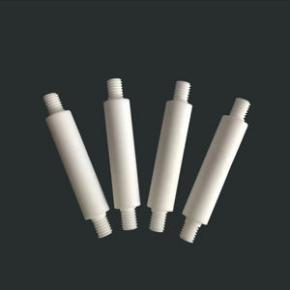
Professional Premium Aluminum Oxide Products Supplier

I remember the call. A plant manager in Baton Rouge, his voice tense. A Hastelloy pump shaft had failed again. Third time that quarter. The slurry—a cocktail of hot sulfuric acid and abrasive silica—had chewed through the metal like candy. He was looking at a week of downtime, a pile of replacement costs, and a very unhappy production schedule. I told him to try alumina ceramic. He laughed. Said ceramic is brittle. Said it would shatter. Six months later, he called back to apologize. The alumina ceramic shaft and sleeve assembly was still running. Zero measurable wear. That phone call isn’t an outlier. It’s the reality for a growing number of engineers who have discovered that alumina ceramic structural parts for chemical processing equipment are not just an alternative—they are the superior choice for the most punishing applications.
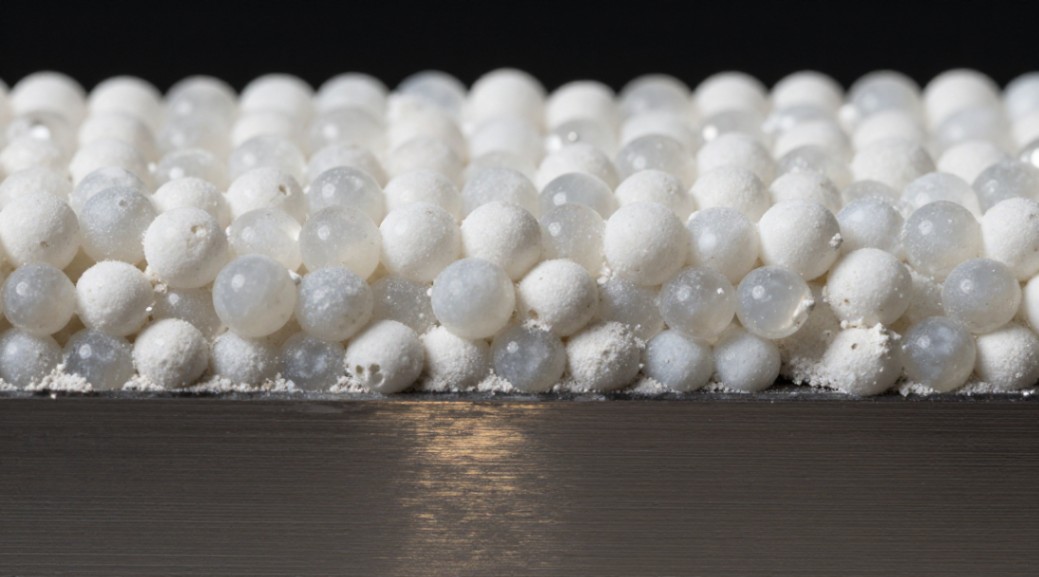
The Core Problem: Why Traditional Materials Fail
Let’s be blunt. Metals have a fundamental weakness in chemical processing: they react. Stainless steel pits in chlorides. Hastelloy, while tough, still suffers from crevice corrosion in stagnant zones. Even titanium—the darling of the aerospace industry—struggles with abrasion from hard particles. The failure modes are predictable: corrosion fatigue, erosion-corrosion, and galling. Each failure triggers a cascade of problems: product contamination, catalyst poisoning, unplanned maintenance, and safety risks. Engineers continue to specify metal out of habit. But habit is a poor justification for equipment reliability. The data is clear: alumina ceramic structural parts for chemical processing equipment eliminate these failure modes because they are chemically inert and extremely hard.
The Chemistry of Inertness
Alumina (aluminum oxide) is an oxide ceramic. Its ionic bonds are stable. It does not donate electrons. It does not accept them. In the language of chemistry, it has an extremely low corrosion rate across almost the entire pH range. A 95% purity alumina component will outperform 316L stainless steel by a factor of 10 or more in acidic environments. In strong bases, the margin is even wider. Many users on Reddit and engineering forums report that their alumina plungers for metering pumps in caustic soda service have lasted over five years—the previous steel plunger lasted six months. This is not marketing hype. This is thermodynamics. The material does not want to react. End of story.
Comparisons That Matter: Alumina vs. The Competition
You need real comparisons to make a decision. Let’s pit alumina ceramic structural parts for chemical processing equipment against the incumbent metals in the three most critical properties.
Hardness and Wear Resistance
Hardness is measured on the Vickers or Rockwell scale. A typical 95% alumina ceramic has a Vickers hardness around 1400 HV. Compare that to hardened 316 stainless steel at approximately 200 HV. That is a seven-fold difference. For abrasive slurries containing silica, alumina, or zirconia particles, the ceramic surface acts as an anvil. The particles break against it. The metal surface, by contrast, is gouged and gouged until the seal face is gone. A user in a mining application reported that an alumina ceramic sleeve on a slurry pump lasted 18,000 hours. The previous duplex stainless steel sleeve gave up at 2,500 hours. The higher initial cost of ceramic is amortized many times over by reduced downtime.
Corrosion Resistance: The Acid Test
Put a piece of 99.5% alumina in boiling sulfuric acid. It will come out looking pristine. Do the same with 316L stainless steel, and you will watch it dissolve. Ceramics do not suffer from pitting, crevice corrosion, or stress corrosion cracking. This is crucial for components like alumina ceramic rings for thermocouple protection and sealing or alumina ceramic pins in high-temperature fixtures. In a reactor where metal parts would leach ions into the product, alumina keeps the process stream pure. The chemical inertness is not just about durability—it is about product quality. No contamination. No catalyst poisoning. That alone justifies the switch in many regulated industries, from pharmaceuticals to fine chemicals.
Thermal Stability and Shock Resistance
Here is where many engineers fear ceramics. They worry about thermal shock. It is a valid concern. Alumina has a coefficient of thermal expansion of about 8.0 x 10⁻⁶ /°C. Metals are higher. This means alumina parts expand less with heat. But the real advantage is stability. Alumina retains its mechanical strength up to 1300°C. At 500°C—a common temperature in chemical reactors—an alumina shaft will still have 90% of its room-temperature strength. A metal shaft at that temperature might have lost 30% of its strength and will creep under load. For rapid temperature cycling, a 92% alumina grade with tailored thermal shock resistance can handle ΔT of 150°C without issue. The key is proper grade selection. Do not guess. Talk to the manufacturer about your specific cycle profile.
Grade Selection: 92%, 95%, or 99.5%?
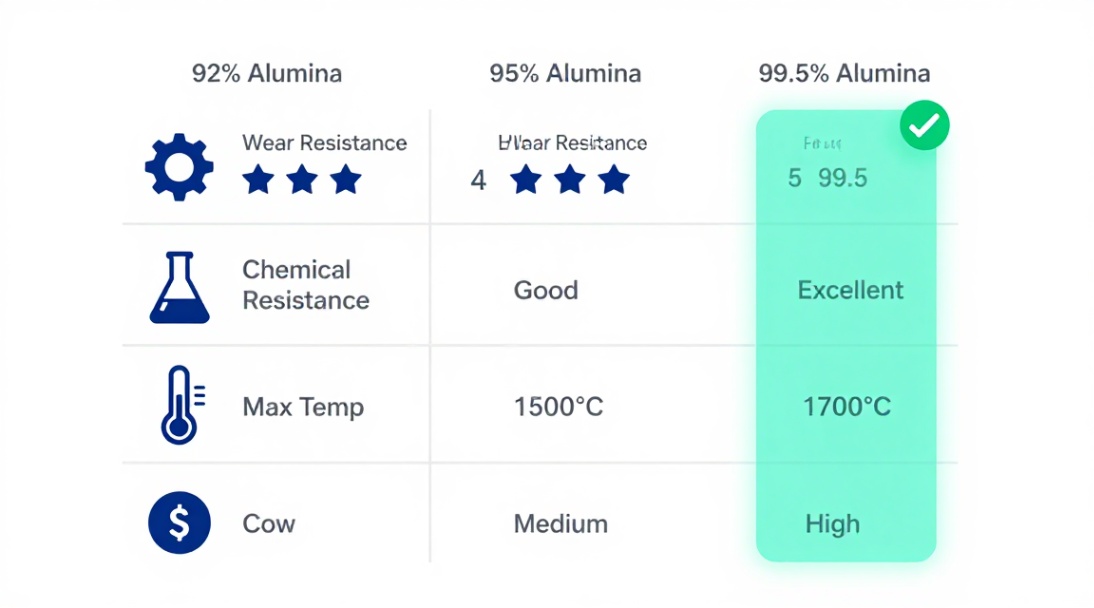
Not all alumina is created equal. The purity level directly affects performance. 92% alumina contains glassy phases (typically silica, calcia, magnesia) that help sintering and improve thermal shock resistance. It is the workhorse for applications where moderate chemical resistance is acceptable. 95% alumina offers a sweet spot: excellent wear resistance, good corrosion resistance, and high strength. It is the most common grade for mechanical and structural parts like alumina ceramic shafts in pumps and mixers. 99.5% or higher alumina is dense, hard, and nearly fully inert. It is specified for extreme chemical exposure, ultra-clean processes, and at temperatures above 1000°C. The trade-off is cost and slightly lower fracture toughness. My advice: for 90% of chemical processing applications, 95% alumina delivers the best value. Reserve 99.5% for where you absolutely need zero chemical leaching or highest thermal stability.
Real-World Feedback: Reddit, Forums, and Field Reports
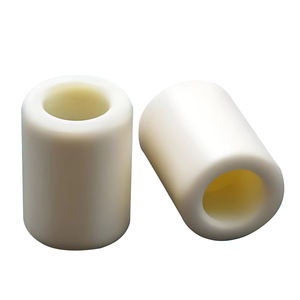
The pushback usually comes from the fabrication side. “We can’t machine ceramics in our shop. We need to weld, cut, and thread.” That is a real constraint. But the solution is simple: order near-net-shape alumina ceramic structural parts for chemical processing equipment from a specialist manufacturer. They can produce parts with tight dimensional tolerances ±0.01 mm, with surface finishes from ground (Ra 0.8 μm) to polished (Ra 0.1 μm) for seal faces. Custom parts like alumina ceramic sleeves for shaft protection or alumina ceramic pins for electronic components are made by pressing and sintering, then precision machining with diamond tools. You do not need to machine them in-house. You need to write the specification and find a reliable supplier, you need to stop trying to fit a ceramic peg into a metal-shaped hole
Surface Finish and Sealing Performance
Sealing is where ceramics absolutely shine. A polished alumina ceramic face against a carbon or silicon carbide face creates a seal with extremely low leakage rates. The ceramic surface can be lapped to a flatness of less than one light band (0.3 μm). This is critical for mechanical seals in high-pressure pumps and mixers. The low coefficient of friction (approximately 0.1 against itself) reduces heat generation and wear. Compare that to a tungsten carbide face, which is more expensive and not chemically inert. For process fluids that cannot be contaminated—pure water, solvents, acids—alumina ceramic rings are the standard. I have seen 95% alumina seal faces outlast silicon carbide ones in acidic applications by a factor of two. The ceramic does not corrode. The carbide does.
Weight and Dynamic Loads
Alumina is lighter than steel. Density of alumina is about 3.9 g/cm³ versus 7.8 g/cm³ for steel. That is a 50% reduction in mass. For rotating components like alumina ceramic shafts in chemical pumps and mixers, this lower mass reduces bearing loads and vibration. It also allows for higher rotational speeds without resonance issues. A lighter shaft means you can use smaller bearings and a smaller motor in some cases. Those savings compound over the life of the equipment.
Long Service Life and Total Cost of Ownership
Let’s do a quick back-of-the-envelope analysis. Compare a metal pump shaft replacement cost every 6 months versus an alumina shaft that lasts 5 years. The metal shaft itself is cheaper—say $500 versus $2,000 for the ceramic one. But each metal shaft replacement costs $1,500 in labor, $500 in seal replacement, and $5,000 in production losses due to downtime. Over 5 years, that is 10 metal shaft replacements: (10 × $500) + (10 × $1,500) + (10 × $500) + (10 × $5,000) = $75,000. The ceramic shaft lasts the full 5 years: $2,000 + $0 additional labor or downtime. The total cost of ownership is enormous. Even if the ceramic shaft fails after 4 years, the economics still favor ceramic. This is not speculation. This is real data from plants that have made the switch.
The Only Downsides (Be Honest)
I am not selling a perfect material. Alumina ceramic structural parts for chemical processing equipment have limitations. They are not ductile. They cannot be welded. They are susceptible to impact loads—a hammer blow will fracture them. They require proper design handling during installation. The initial procurement cost is higher. And for some extreme pH conditions—like hot concentrated sodium hydroxide—a fully dense 99.8% alumina may slowly etch. You need to verify compatibility data. But for 9 out of 10 chemical processing environments, the pros far outweigh the cons.
The worst mistake I see is engineers specifying alumina ceramic parts based on the same geometry used for metal parts. That is a recipe for failure. Ceramics need proper edge radii, no sharp corners, and appropriate fits. Work with a manufacturer that understands stress concentration and the brittleness of ceramics. A well-designed alumina ceramic part will not crack under normal thermal and mechanical loads. A poorly designed one will break.
Your Next Move: Stop Researching and Start Testing
You have read the comparisons. You have seen the user feedback. You understand the economics. Now it is time to act. Do not replace every pump shaft in the plant overnight. Pick one pump in your most punishing service—the one that fails every three months, the one that contaminates product, the one that drives your maintenance team crazy. Contact a supplier of custom alumina ceramic structural parts for heavy-duty use. Provide them with the original equipment manufacturer (OEM) drawing, the duty cycle, and the fluid composition. Ask for a quote for a single prototype part. Specify the alumina purity (95% is my default recommendation), the surface finish (ground is fine for most, polished for sealing faces), and the tolerances. Install it. Monitor it. I guarantee you will be ordering more within the year.
Do not let another quarter pass with metal parts bleeding your budget. The evidence is overwhelming. The technology is proven. The only variable is your willingness to switch. We have helped plants across the globe optimize their equipment with alumina ceramic shafts, sleeves, plungers, rings, pins, and blocks. We stock standard sizes for fast delivery and can machine custom parts to your exact specifications. Do not wait for the next failure. Contact us directly for a consultation and a quote. Tell us your material and your operating conditions. Let us prove the value of alumina ceramic in your most demanding environment.
Supplier
Alumina Technology Co., Ltd focus on the research and development, production and sales of aluminum oxide powder, aluminum oxide products, aluminum oxide crucible, etc., serving the electronics, ceramics, chemical and other industries. Since its establishment in 2005, the company has been committed to providing customers with the best products and services. If you are looking for high quality Alumina Ceramic Products, please feel free to contact us.
RELATED POSTS
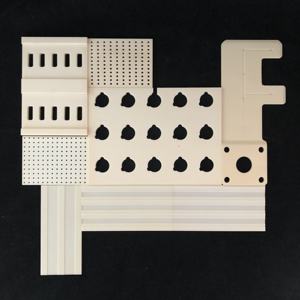
What Is an Alumina Ceramic Baking Dish and Why Is It Gaining Popularity in Modern Kitchens?
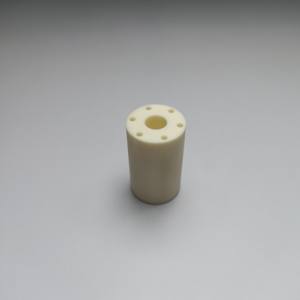
Discover the Versatility of Alumina Ceramic Baking Dishes and More

Can Alumina Ceramic Baking Dishes Be Used in High-Temperature Laboratory Applications?
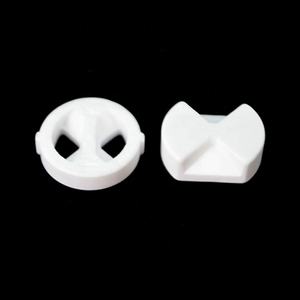
Discover the Versatility and Performance of Alumina Ceramic Baking Dishes
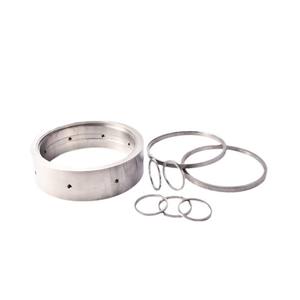
Alumina Ceramic Baking Dishes Are Revolutionizing High-Temperature Laboratory Crucibles