Professional Premium Aluminum Oxide Products Supplier

Key takeaways
- Aluminium oxide's hardness stems from strong ionic‑covalent bonding and a rigid corundum crystal structure.
- It ranks among the hardest engineered materials, making it ideal for abrasives, wear‑resistant coatings, and ceramic cutting tools.
- High purity and dense sintering further enhance alumina's hardness and wear resistance for demanding industrial applications.
- Compared to diamond and cubic boron nitride, aluminium oxide offers a cost‑effective balance of hardness and performance.
The Unique Atomic Structure Behind Aluminium Oxide's Hardness
Aluminium oxide (Al₂O₃), commonly known as alumina, is one of the hardest engineered materials. Its hardness arises from the specific atomic arrangement and bonding in its crystal lattice. In the corundum structure, each aluminium ion is surrounded by six oxygen ions in distorted octahedral coordination, forming a dense, rigid framework that strongly resists deformation.
The primary contributor to this hardness is the mixed ionic‑covalent character of the aluminium–oxygen bond, which has high cohesive energy. This means a substantial amount of force is needed to separate atoms or initiate cracks. Moreover, the corundum lattice has very few easy slip planes, hindering dislocation motion and preventing plastic deformation under load.
Aluminium oxide has been valued for its hardness since ancient times in the form of natural corundum gemstones. The modern aluminium oxide production process enables strict control over purity and grain size, producing alumina that approaches its theoretical maximum hardness. This combination of intrinsic structural strength and advanced processing makes alumina a benchmark material for wear‑resistant applications.
Key Factors Contributing to Aluminium Oxide's Hardness
Several structural and chemical factors, including the basic properties of aluminium oxide, make it one of the hardest engineered materials. The most influential is the strong ionic‑covalent bonding between aluminium and oxygen, which gives the material very high cohesive energy. Breaking or deforming the material requires significant external force, directly translating into macro‑scale hardness.
Another critical factor is the close‑packed hexagonal lattice (corundum). Oxygen ions are densely stacked, and aluminium ions occupy two‑thirds of the octahedral interstices. The resulting structure lacks weak cleavage planes and has a high coordination number, both of which contribute to extreme rigidity and compressive strength. This microstructure prevents easy fracture under concentrated loads.
Material processing also plays an important role. High‑purity alumina, free from impurities and porosity, exhibits greater hardness than lower‑grade variants. High‑temperature sintering produces a dense, fine‑grained microstructure that further enhances hardness. These atomic‑scale and manufacturing factors make aluminium oxide a top choice for applications demanding superior wear resistance.
| Factor | Explanation |
|---|---|
| Strong Ionic‑Covalent Bonding | High bond energy resists atomic separation, contributing directly to macro‑hardness |
| Rigid Corundum Crystal Lattice | Hexagonal close‑packed structure with negligible slip planes hinders dislocation motion |
| High Coordination Number | Each aluminium ion is surrounded by six oxygen ions, strengthening the overall lattice |
| High Purity and Dense Sintering | Minimizing impurities and porosity maximizes achievable hardness through controlled processing |
Applications Leveraging Aluminium Oxide's Hardness
The exceptional hardness of aluminium oxide makes it indispensable in many industrial fields. One of the most widespread uses is as an abrasive in grinding wheels, sandblasting media, and polishing compounds, where selecting the correct grit size ensures optimal efficiency. Alumina grit can efficiently cut and shape metals, ceramics, and glass because its hardness exceeds that of most materials being machined.
For wear‑resistant coatings, aluminium oxide is applied via thermal spraying or physical vapor deposition to protect components from sliding wear, erosion, and high‑temperature degradation. These coatings significantly extend the service life of parts in pumps, valves, and conveyor systems. Alumina is also used in ceramic cutting tool inserts, where its hardness enables high‑speed machining without rapid tool wear.
The biomedical sector uses alumina's hardness and biocompatibility in hip implants and dental prosthetics. In electronics, alumina substrates provide a hard, electrically insulating surface for circuit boards. All these applications rely on the hardness derived from its unique atomic structure and bonding.
Comparing Aluminium Oxide to Other Hard Engineered Materials
While aluminium oxide is one of the hardest engineered materials, it is not the hardest overall. Diamond, cubic boron nitride, and certain synthetic carbides exhibit higher hardness values. However, aluminium oxide offers a distinct balance: it is significantly less expensive than diamond and cubic boron nitride, and it is thermally stable in environments where many organic‑based materials degrade.
For many industrial tasks, the hardness of aluminium oxide is entirely sufficient to provide excellent wear resistance while remaining cost‑effective. It also possesses good chemical inertness and can operate at elevated temperatures. Consequently, for applications such as sandblasting, polishing, and producing wear‑resistant seals, alumina is often the material of choice.
Understanding the relative ranking among hard materials helps engineers select appropriate solutions. Aluminium oxide consistently ranks near the top of standard hardness scales for ceramics. Although it does not exceed the hardest superhard materials, its combination of high hardness, affordability, and versatility makes it a reliable and widely adopted choice across multiple industries.
Frequently asked questions
Is aluminium oxide harder than steel?
Yes, aluminium oxide is significantly harder than steel. This hardness difference allows alumina to be used effectively for grinding, cutting, and polishing steel surfaces without excessive wear of the abrasive.
What are the main uses of aluminium oxide hardness in industry?
Aluminium oxide's hardness is exploited in abrasive blasting, grinding wheels, wear‑resistant coatings, ceramic cutting tool inserts, and biomedical implants such as hip joints. Its ability to resist deformation and abrasion makes it valuable wherever parts face high wear.
Can aluminium oxide be made even harder?
Yes. Processing high‑purity alumina with fine‑grained sintering and advanced techniques like hot isostatic pressing can further increase its hardness. However, it will never exceed the theoretical limit imposed by its intrinsic bonding and crystal structure.
Supplier
Alumina Technology Co., Ltd focus on the research and development, production and sales of aluminum oxide powder, aluminum oxide products, aluminum oxide crucible, etc., serving the electronics, ceramics, chemical and other industries. Since its establishment in 2005, the company has been committed to providing customers with the best products and services.
RELATED POSTS
5 Niche Uses of Alumina Ceramic Baking Dishes Beyond the Kitchen
How to Use and Care for Your Alumina Ceramic Baking Dish: A Practical Guide

Can Alumina Ceramic Baking Dishes Be Used in High-Temperature Industrial Processes?
Alumina Ceramic Baking Dishes Offer Unmatched Heat Resistance and Versatility in Modern Kitchens
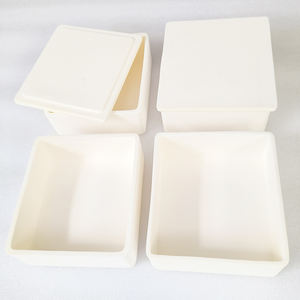
Alumina Ceramic Baking Dishes: A Deep Dive Into Performance, Types, and Kitchen Applications