Professional Premium Aluminum Oxide Products Supplier

Are Your Industrial Water Filters Costing You More Than You Think?
Have you ever experienced the frustration of a water filtration system that just can’t keep up? You know the feeling. You invest in a sand filter, but the backwash cycle takes forever. You switch to cartridge filters, but the replacement costs add up fast. You consider membranes, but the fouling and energy demands are a nightmare. For high-volume industrial water—cooling water, process water, wastewater polishing—these are real, painful problems. The industry is shifting. The question isn’t whether to filter. It’s about how to filter smarter. More and more plant operators are finding a surprising answer in the foundry world: the alumina foam filter for water filtration in industrial applications. Let’s explore why this trend is gaining momentum, based on pure logic and fundamental materials science.
1. Understanding the Alumina Foam Filter: It’s Not Just a Sponge
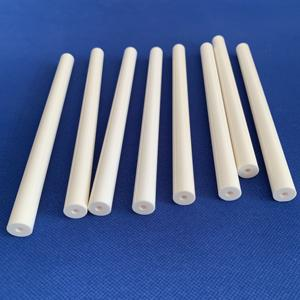
Think of it as a rigid, high-performance ceramic sponge. But that analogy only scratches the surface. An alumina foam filter for water filtration in industrial applications has a unique, interconnected pore structure. This structure is the key to its effectiveness. Unlike a simple mesh, it creates a tortuous path for water to flow through. Particles don’t just sit on top. They get trapped inside. This is the beginning of the trend away from surface-only filtration.
Pore Structure and PPI Rating: The Language of Filtration
The pore size is described by Pores Per Inch (PPI). This is the most critical specification for your application.
- Higher PPI (e.g., 30-60 PPI): Smaller pores. Excellent for removing fine suspended solids. Ideal for wastewater polishing or polishing after a primary filter.
- Lower PPI (e.g., 10-20 PPI): Larger pores. Higher flow rates. Better for high-load process water or as a pre-filter to protect downstream equipment.
You must match the PPI rating to your specific solids loading and target water quality. A 60 PPI filter will clog much faster than a 10 PPI filter. The trend is toward using a gradient: a coarser filter first, then a finer one. This is depth filtration designed with purpose.
2. Depth Filtration vs. Cake Filtration: Where the Alumina Foam Wins
Let’s get technical. Sand filters and cartridge filters primarily rely on cake filtration. Solids build up on the surface. This creates a dense layer (the cake) that restricts flow. As the cake thickens, pressure drop skyrockets. You lose flow. You must backwash or replace. It’s inefficient for high volumes.
An alumina foam filter for water filtration in industrial applications excels at depth filtration. Particles are captured throughout the three-dimensional matrix of the foam. They travel into the structure and stick to the internal surfaces. This achieves a much higher solids holding capacity before the pressure drop becomes problematic. The logic is simple: more surface area inside the filter means longer run times between cleaning cycles. Less downtime. Lower operating costs. That’s the trend: maximizing uptime and minimizing maintenance labor.
3. Chemical Resistance and Thermal Stability: The Silent Superpowers
Industrial water is aggressive. Cooling towers use biocides and corrosion inhibitors. Process water can carry acids, caustics, or organic solvents. Many polymer filters degrade. They swell, soften, or become brittle. This ruins your filtration consistency. The alumina foam filter for water filtration in industrial applications laughs at these challenges. Alumina (Al₂O₃) is a ceramic. It’s chemically inert across a wide pH range. It doesn’t react with most industrial chemicals. It also shrugs off high temperatures. If your process water spikes to 90°C (194°F) or higher, a polymer cartridge is toast. The ceramic foam keeps working. This stability is a huge trend driver for industries like chemical processing, petrochemical, and metal finishing.
4. How It Stacks Up: Comparison with Standard Industrial Filters
Let’s be direct. Here is how the alumina foam filter compares to the alternatives, based on operational logic.
Sand Filters
- Strength: Low cost, simple, high flow rate for very coarse filtration.
- Weakness: Poor solids holding capacity for fines. Requires frequent, water-intensive backwashing. Media (sand) can channel, reducing effectiveness. Not effective below 20-30 microns.
- Alumina Foam Advantage: Higher removal efficiency for sub-20 micron particles. Much denser media bed. Less backwash water per cycle.
Cartridge Filters (String-wound, Pleated)
- Strength: Good for moderate solids loads. Disposable for hygiene.
- Weakness: High consumable cost. Frequent replacements for high solids. Creates disposal waste. Pressure drop increases rapidly with cake formation.
- Alumina Foam Advantage: Cleanable and reusable. Much longer service life. No disposal waste. Lower total cost of ownership for continuous operation.
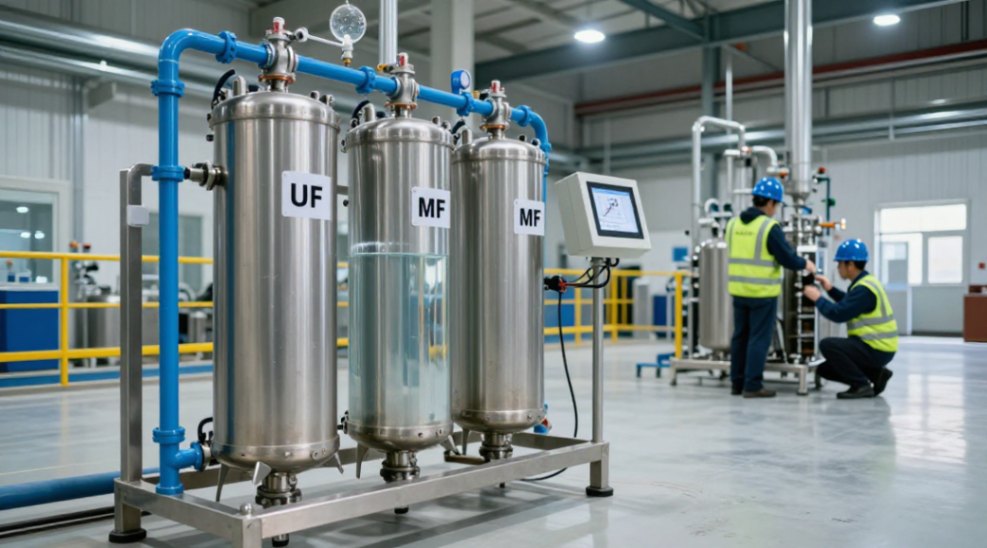
Membrane Systems (UF, MF)
- Strength: Excellent removal of fine particles and microorganisms. Produces very clean water.
- Weakness: Very high capital cost. High energy consumption (pressure pumps). Extremely sensitive to fouling. Requires extensive pre-treatment. High maintenance.
- Alumina Foam Advantage: Much lower capital cost. Tolerant to wide variations in feed water quality. Can handle high solids loads upfront—the perfect pre-filter for a delicate membrane. Lower energy consumption due to lower operating pressure.
The trend is clear: smart engineers are using the alumina foam filter for water filtration in industrial applications as a robust, cost-effective mid-range solution. It bridges the gap between the low efficiency of sand and the high cost of membranes.
5. Real-World Industrial Applications: Where You Will See This Trend
- Cooling Water Filtration: Removing scale, silt, and biological debris from cooling tower basins. The foam filter handles the high flow and thermal cycling without degradation.
- Process Water Treatment: Polishing water for washing, rinsing, or direct contact with product. The high purity of the alumina ensures no leaching of contaminants into the water. No metallic ions. No plasticizers. Just clean water.
- Wastewater Polishing: As a final step after biological treatment to catch floc carryover. The depth filtration mechanism is perfect for capturing those variable-sized floc particles.
- Boiler Feed Pretreatment: Protecting reverse osmosis membranes from large particles and fouling. A 20-30 PPI alumina foam filter is an excellent, low-maintenance pre-filter that significantly extends membrane life.
6. Mechanical Strength and Backwashing: Built for Continuous Operation
A filter is only as good as its ability to be cleaned. The alumina foam filter for water filtration in industrial applications is not a brittle ceramic. It has high mechanical strength. It can withstand the repeated stress of backwashing. This is critical.
When the pressure drop builds to a set point (typically 5-10 psi), you initiate a backwash cycle. Water flows in reverse. The trapped solids are dislodged from the depth of the foam and flushed out. The foam does not collapse. It does not channel. It maintains its original pore structure. This enables continuous operation for months or even years. Compare that to replacing a cartridge every few days or weeks. The logic is undeniable for high-volume applications.
7. Pressure Drop and Energy: What You Need to Know
Every filter creates a restriction. It consumes energy to push water through it. The alumina foam filter for water filtration in industrial applications has a clean pressure drop that is comparable to or lower than a cartridge filter of equivalent micron rating. However, because it holds more solids before requiring cleaning, the average pressure drop over the operating cycle can actually be lower. This means your pumps don’t have to work as hard for as long. The logic: less time at high pressure equals lower energy bills. Always monitor your system’s pressure differential and backwash on a schedule, not just when you see a drop in flow.
8. Regeneration Methods: Keeping It Clean, Keeping It Working
Backwashing is your primary tool, but it won’t remove everything. For heavy fouling, you need a regeneration strategy. Here are the proven methods.
- Backwashing (Routine): High flow reverse water. Removes loose and moderately attached solids. Do this daily or weekly depending on load.
- Chemical Cleaning (Periodic): For organic fouling, use a dilute caustic (NaOH) soak. For inorganic scaling (like calcium carbonate), use a dilute acid (like citric or hydrochloric). The alumina is inert. It will not be damaged by these chemicals.
- Thermal Reactivation (Occasional): For extreme fouling, you can dry the foam and heat it in an oven to 500-600°C (932-1112°F). This burns off organic residues completely. This is a true lifecycle-extending feature that no polymer filter can offer.
The trend in industrial maintenance is moving toward regenerative systems. The alumina foam filter fits this trend perfectly, offering a sustainable, long-life solution.
9. Material Purity and Leachability: The Non-Issue
If you are treating water for sensitive processes—food, pharmaceutical, semiconductor rinse—contamination is a non-negotiable issue. With many plastic filters, you worry about plasticizers, antioxidants, and monomers leaching into the water. With the alumina foam filter for water filtration in industrial applications, this worry disappears. Alumina is a simple, stable oxide. It does not leach into water under normal industrial conditions. High-purity alumina filters are available for the most demanding applications. This is a strong selling point for industries requiring zero contamination.
10. The Cost-Benefit Logic for High-Volume Industrial Water
Let’s perform the financial logic. The initial cost of an alumina foam filter element is higher than a single cartridge filter. But the alumina foam filter for water filtration in industrial applications offers a lower total cost of ownership (TCO) for continuous, high-volume filtration.
- No consumable replacement costs. You don’t buy new media every month.
- Lower labor costs. Backwashing is automated. You don’t change filters every shift.
- Lower disposal costs. No hazardous waste from spent filters.
- Reduced downtime. The system runs longer between maintenance events.
- Protection of downstream assets. Your expensive membranes, heat exchangers, and pumps last longer.
When you add it up, the economic case for the alumina foam filter becomes compelling. It is an investment in operational efficiency.
So, where does this leave you? If your industrial water filtration is a constant headache of high labor, high consumable costs, or unreliable performance, it’s time to look at the trend. The alumina foam filter for water filtration in industrial applications is not a niche product for foundries anymore. It is a robust, logical, and cost-effective solution for your toughest water challenges. Need to test this for your specific stream? Start with a pilot unit. Evaluate the pressure drop, the filtrate quality, and the backwash frequency. Trust the logic of the material. Your system will thank you.
Supplier
Alumina Technology Co., Ltd focus on the research and development, production and sales of aluminum oxide powder, aluminum oxide products, aluminum oxide crucible, etc., serving the electronics, ceramics, chemical and other industries. Since its establishment in 2005, the company has been committed to providing customers with the best products and services. If you are looking for high quality Alumina Ceramic Products, please feel free to contact us.
RELATED POSTS
How to Safely Use and Care for Your Alumina Ceramic Baking Dish: A Practical Guide
Alumina Ceramic Baking Dishes: Durable, Versatile, and Oven-Safe Kitchen Essentials
Alumina Ceramic Baking Dishes Are Powering Precision in High-Temperature Laboratory Crucibles

7 Common Problems and Practical Fixes for Your Alumina Ceramic Baking Dish
Alumina Ceramic Baking Dishes: The Ultimate Kitchen Upgrade for Heat, Style, and Durability