Professional Premium Aluminum Oxide Products Supplier

Have You Ever Burned a Sample or Contaminated Your Furnace?
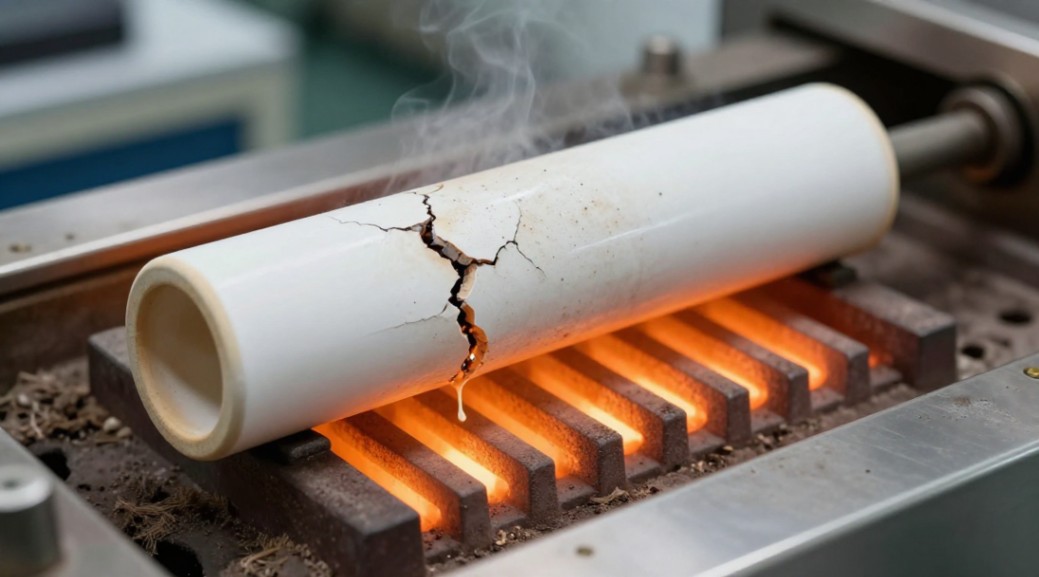
Every laboratory technician has felt that sinking feeling. You open a tube furnace, only to find melted residue dripping onto the heating elements. Or your thermocouple fails mid-experiment, ruining a week’s worth of data. The culprit is often an closed end alumina ceramic tube for laboratory use that simply does not perform as needed. This component is a workhorse, but selecting the wrong one causes leaks, contamination, and equipment damage. Let us fix that today. We will explore exactly what makes this tube reliable, so your next experiment goes smoothly.
What Is a Closed End Alumina Ceramic Tube?
Simply put, a closed end alumina ceramic tube for laboratory use is a hollow cylindrical component made from high-purity alumina (Al₂O₃). One end is sealed shut. The other end remains open. This design creates a sealed chamber inside the tube. The closed end acts as a barrier. It prevents solid samples, powders, or liquids from leaking out of the tube during processing. It also stops gases from escaping or entering the tube uncontrolled. This tube is not a pipe; it is a miniature containment vessel for extreme conditions.
Closed End vs. Open End: What Is the Difference?
This is a common point of confusion. An open-end tube allows flow-through. Gases or liquids enter one end and exit the other. A closed end tube is designed for batch processing or containment. You place a sample inside, seal the open end with a fitting or cap (if needed), and heat the entire assembly. The closed end ensures nothing falls out into the furnace chamber. If you need a continuous gas flow over a sample, choose an open-end tube. For sintering a powder, melting a small metal piece, or protecting a thermocouple junction, the closed end tube is your best choice.
Why Does High-Purity Alumina Materials Matter So Much?
The material defines performance. Standard tubes might contain impurities that cause problems. A closed end alumina ceramic tube for laboratory use should be made from alumina with a purity of 99.6% or higher. Why does this matter? High purity gives you two critical properties. First, it provides thermal stability up to 1800°C. Impurities lower the melting point. A tube with 99.6% alumina withstands repeated exposure to extreme heat without deforming or sagging. Second, it guarantees chemical inertness. The tube will not react with acids, alkalis, or even molten metals. This prevents contamination of your sample and protects the tube itself from corrosion.
How Does This Tube Survive Repeated Heating and Cooling?
Laboratory work is not gentle. You heat a tube to 1600°C, cool it down, then heat it again the next day. This thermal cycling destroys most materials. Alumina ceramic survives because of its fine-grain microstructure. Think of it like a tightly packed brick wall. There are very few voids or large crystals. This structure resists the formation of micro-cracks during expansion and contraction. The result is excellent thermal shock resistance. You can insert the tube into a preheated furnace (within reasonable limits) without it shattering. This mechanical strength also helps the tube endure the physical stresses of being held in a furnace fixture.
What Are the Main Laboratory Applications?
You will find this tube in several critical roles. Understanding these use cases helps you choose the right product for your work.
Thermocouple Protection
The single most common application. A thermocouple wire senses temperature. But exposed wires fail quickly in harsh atmospheres. The closed end alumina ceramic tube for laboratory use slides over the thermocouple junction. The sealed end protects the wire from corrosive gases, molten splashes, and physical damage. The open end connects to the instrumentation. This setup allows accurate temperature measurement in furnaces, kilns, and reactors without sacrificing sensor life.
Combustion Tube and Sample Sintering
When you need to heat a sample in a controlled atmosphere, this tube acts as the reaction chamber. Place the sample inside the closed end. Purge the tube with inert gas (like argon or nitrogen) from the open end. Heat the entire assembly. The closed end prevents sample spillage. It also stops the purge gas from blowing the sample away. This setup is common for ceramic sintering, catalyst testing, and ash content determination.
What Dimensions and Tolerances Affect Your Experiment?
Fit is everything. A tube that is too loose or too tight causes problems. Let us break down the key measurements.
Outer Diameter (OD)
The OD determines if the tube fits through your furnace port or sealing gland. Standard ODs range from 4 mm to over 50 mm. For thermocouple protection, match the OD to the fitting on your vacuum feedthrough or compression fitting.
Inner Diameter (ID)
The ID dictates the sample volume or the size of the thermocouple wire you can insert. A generous ID (relative to the sample) allows easy loading. A tight ID might cause jamming. Tolerances on the ID are typically ±0.5 mm for as-fired tubes. Ground tubes offer tighter tolerances, which is critical for vacuum applications.
Length
Standard lengths range from 100 mm to 1000 mm. The tube must extend beyond the hot zone of your furnace at both ends (if the open end exits the furnace). This ensures the seal or cap remains cool enough to function. Always order a tube 50 to 100 mm longer than your furnace hot zone length.
Wall Thickness
Thicker walls provide greater mechanical strength and thermal insulation. Thinner walls heat up and cool down faster. A wall thickness of 2 mm to 4 mm is a good general-purpose choice. For high-pressure applications (like combustion analysis), choose a thicker wall.
Which Surface Finish Should You Request?
The standard finish is as-fired. This surface is smooth enough for most uses. However, if you need a gas-tight seal at the open end, ask for a ground finish on the outer diameter near the open end. This provides a precise surface for O-rings or compression fittings to grip. A ground finish also helps if you must insert the tube into a tight-fitting metal sleeve.
How Do You Handle and Clean This Tube Without Breaking It?
Even a strong ceramic tube can break if treated poorly. Mishandling costs time and money.
Handling Protocol
- Always store the tube horizontally on a soft surface (like a foam pad). Never lean it vertically against a hard wall.
- When inserting the tube into a furnace, use a steady, gentle push. Do not force it. If it sticks, check for alignment issues or debris.
- Never drop the tube. Alumina is hard but brittle. A drop can create invisible micro-cracks that lead to failure during heating.
Cleaning Protocol
- For loose powder inside the tube, use a clean, dry brush (like a test tube brush) or compressed air.
- For baked-on residues, soak the tube in dilute acid (like 10% hydrochloric acid) overnight. Rinse thoroughly with distilled water.
- Do not use metal scrapers. They will scratch the interior surface, creating stress points for future cracking.
- Dry the tube completely at 150°C before reuse. Trapped moisture can cause spalling when heated rapidly.
Compatibility: Will This Tube Work with My Existing Equipment?
Check your equipment before ordering. This tube is compatible with most tube furnaces, muffle furnaces (as a sample holder), and gas lines. However, verify the following:
- The furnace ID is larger than the tube OD by at least 2 mm for air circulation.
- The tube material can withstand your maximum furnace temperature. Standard 99.6% alumina is safe up to 1750°C continuous use. For very high temperatures (1800°C to 1900°C), specify 99.8% alumina.
- The gas fittings at the tube end match your system. Common connections include Swagelok-type compression fittings and O-ring seals.
Your Next Step: Choose a Tube That Fits Your Process
You now understand the fundamentals of a closed end alumina ceramic tube for laboratory use. You know it prevents leakage, withstands extreme heat, and resists chemicals. You know how to measure it, handle it, and clean it. Do not settle for a tube that might fail. Review your application: Is it thermocouple protection? Sintering? Combustion? Then select the correct dimensions and purity. When you install a well-chosen tube, you save experiments, protect equipment, and produce reliable data. If you are ready to upgrade your lab supplies, look for a supplier who can provide tubes with documented purity, tight tolerances, and consistent quality. Your furnace—and your data—will thank you.
Supplier
Alumina Technology Co., Ltd focus on the research and development, production and sales of aluminum oxide powder, aluminum oxide products, aluminum oxide crucible, etc., serving the electronics, ceramics, chemical and other industries. Since its establishment in 2005, the company has been committed to providing customers with the best products and services. If you are looking for high quality Alumina Ceramic Products, please feel free to contact us.
RELATED POSTS
How to Safely Use and Maintain an Alumina Ceramic Baking Dish?
Alumina Ceramic Baking Dishes: The Ultimate Kitchen Upgrade for Durability and Performance

10 Things You Need to Know About Alumina Ceramic Baking Dishes and More
What Is an Alumina Ceramic Baking Dish and Why Is It Gaining Popularity in Modern Kitchens?