Professional Premium Aluminum Oxide Products Supplier

Introduction: The Silent Killer of Machine Uptime
Have you been replacing the same shaft sleeve or pump plunger every six months? Do your bearings seize up in abrasive slurry, or do your thermocouple tubes crack under thermal shock? You are not alone. Many engineers on Reddit and industry forums complain that standard metal and polymer parts just cannot handle the aggressive conditions of modern manufacturing. The root cause is often a fundamental misunderstanding of material limits. You stop treating the symptom and start replacing the component. But what if you could skip the cycle entirely?
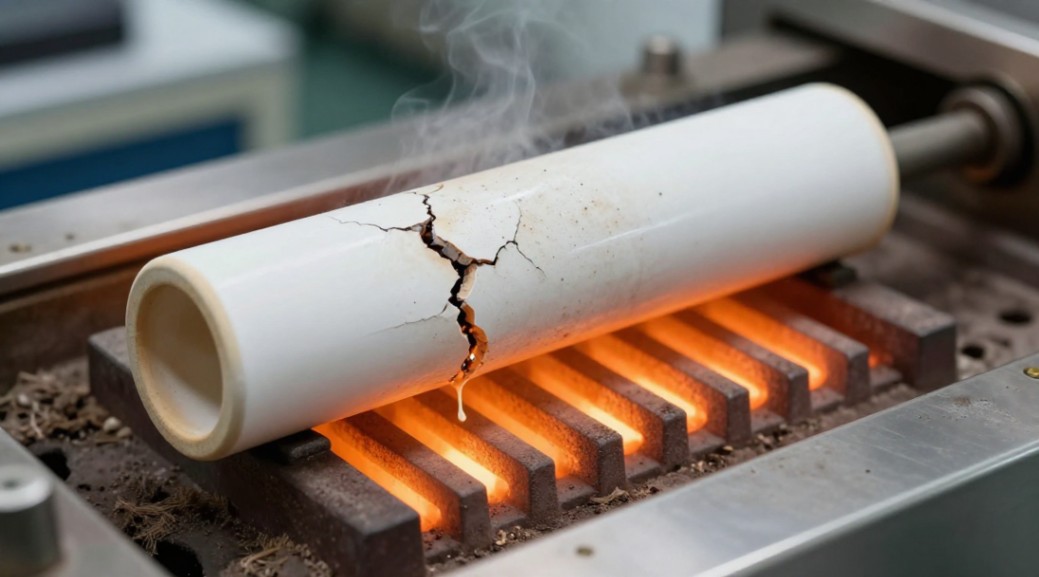
The silent killer of machine uptime is not poor maintenance. It is the inherent weakness of your standard materials. Steel corrodes. Polymers creep. Rubber swells. The answer is a shift to alumina ceramic standard parts for machine components. This is not a niche solution for exotic labs. It is a proven, cost-effective upgrade for pumps, conveyors, furnaces, and mixers. Let’s cut through the hype and answer the real questions.
1. What Makes Alumina Ceramics Superior to Steel in Machine Parts?
Hardness. Plain and simple. Steel is tough, but it deforms. Alumina ceramic is the second hardest material on earth, beaten only by diamond. When you need a component to resist abrasive wear for years instead of months, alumina ceramic standard parts for machine components win every time.
Consider a slurry pump plunger. A standard stainless steel plunger can wear down within a few hundred hours of pumping silica slurry. A high-purity alumina plunger shows almost negligible wear after 5,000 hours. The reason is the microstructure. Alumina has a hardness of 9 on the Mohs scale. Steel is usually a 5 or 6. This is not a minor difference. It is an order of magnitude in lifespan.
But hardness is only part of the story. Alumina is also chemically inert. It resists acids, alkalis, and molten salts. Steel rusts. Polymers swell. Alumina sits there, unchanged. For alumina ceramic standard parts for machine components used in chemical processing, this chemical resistance is the primary selection criteria.
2. What Are the Most Common Alumina Standard Part Geometries?
Engineers often ask: “Can I get a standard part shape?” Yes. The industry produces a wide range of standard geometries. The key is knowing what is available off-the-shelf versus what needs custom tooling.
Common standard shapes include:
- Balls: For grinding media, check valves, and bearing assemblies.
- Rods & Shafts: For precision guides, mixer shafts, and insulation rods.
- Tubes: For thermocouple protection, heater sheaths, and fluid handling.
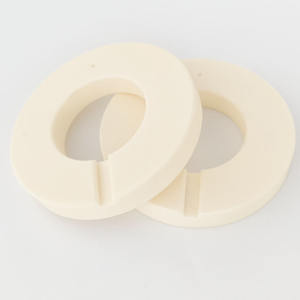
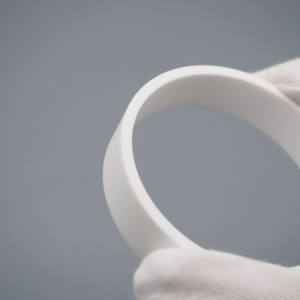
- Rings & Sleeves: For shaft protection, seal faces, and bearing spacers.
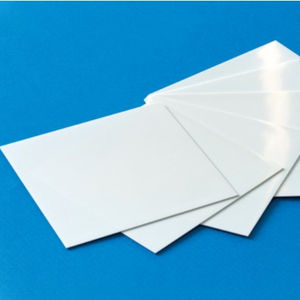
- Plates & Blocks: For wear liners, kiln furniture, and furnace insulation.
- Plungers: For metering pumps and dispensing systems.
- Pins: For high-temperature fixturing and electronic components.
- Boats & Crucibles: For sintering and melting operations.
These alumina ceramic standard parts for machine components follow specific dimensional tolerances (typically ISO f6 to h7 for shafts, or G6 to H7 for bores). You can often replace a steel component directly without redesigning the housing.
3. How Does the Manufacturing Process Affect Part Performance?
The word “ceramic” sounds simple. It is not. The performance of alumina ceramic standard parts for machine components is 100% dependent on the manufacturing process. A poorly made alumina part is brittle and porous. A well-made one is nearly indestructible.
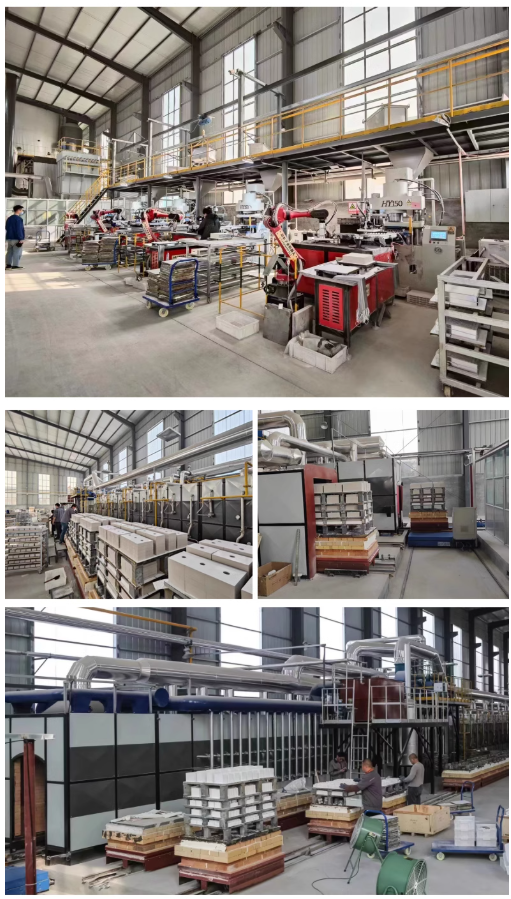
Most standard parts are made by isostatic pressing followed by sintering. Isostatic pressing applies uniform pressure to the powder, eliminating voids. Sintering at high temperatures (1600-1800°C) bonds the particles into a dense, hard mass. This is not like firing pottery. This is controlled grain growth.
After sintering, precision grinding and lapping bring the part to final dimensions. This is where the magic happens. Grinding corrects the shrinkage that occurs during firing. A 10% shrinkage is common. Without precise grinding, the part will not fit. That is why tolerances like ±0.005 mm are achievable only with diamond grinding wheels.
4. When Should You Choose Standard Parts Over Custom Solutions?
This is the $64,000 question. Many engineers assume they need a custom ceramic part for their unique machine. They are wrong. Standard parts can handle 80% of industrial applications.
Choose alumina ceramic standard parts for machine components when:
- Your operating temperature is below 1600°C.
- You need chemical resistance to most acids and bases.
- Your mechanical load is compressive, not tensile.
- You need fast replacement (standard parts ship in days, not weeks).
Choose custom parts only when:
- You need complex internal geometries (e.g., multi-hole rods).
- Your part must mate with a non-standard housing.
- You are operating at the edge of alumina’s thermal limit (above 1700°C).
The trade-off is simple: lead time versus fit. Standard parts are available immediately. Custom parts require a drawing, tooling, and a longer wait. For machine downtime, speed is critical. Reddit users often report that waiting for a custom ceramic part killed their production schedule. A standard alumina ceramic ring or sleeve saved their quarterly numbers.
5. What Are the Critical Selection Criteria for Alumina Grade?
Not all alumina is the same. You must specify the correct grade. The industry standard is high-purity alumina (≥95% Al₂O₃). But there are nuances.
The most common grades are:
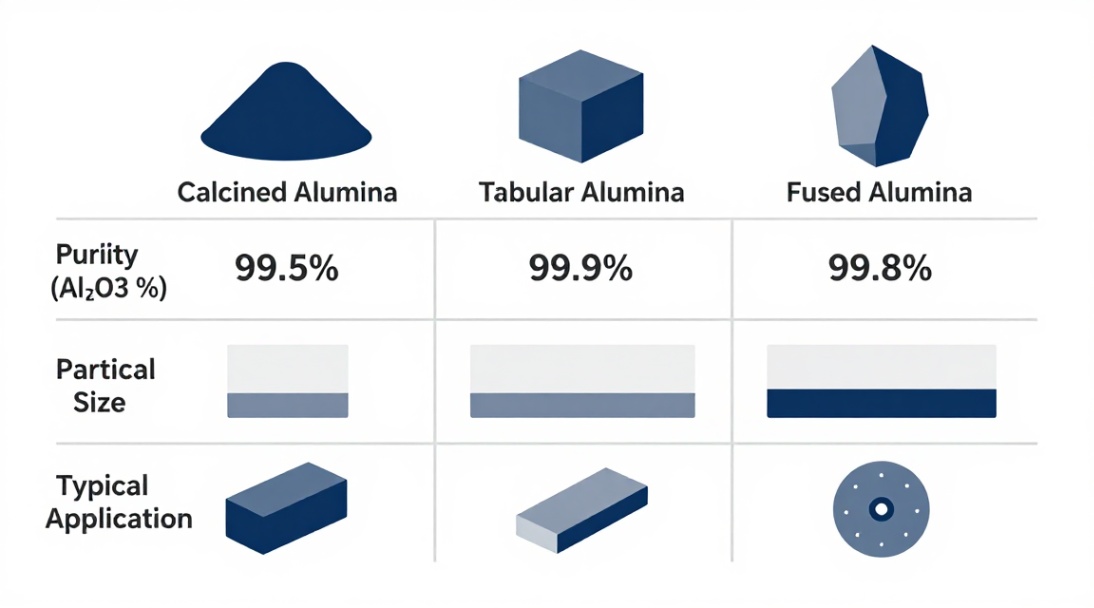
- 95% Al₂O₃: Good balance of strength, hardness, and cost. Best for general wear parts.
- 99% Al₂O₃: Higher purity, better corrosion resistance, and better electrical insulation. Used in semiconductor and chemical applications.
- 99.7% Al₂O₃: Maximum performance. Best for extreme thermal shock resistance and vacuum applications.
Do not over-specify. A 99.7% part costs significantly more than a 95% part. If you are just protecting a shaft in a muddy pump, 95% is fine. If you are handling hydrofluoric acid, you need 99.7%.
Density is another key metric. A dense part has fewer pores. Pores are stress concentrators. Look for parts with a density >3.8 g/cm³. This indicates a fully sintered, high-quality component. Ask your supplier for a density certification. Most reputable manufacturers provide it.
6. How Do You Integrate Alumina Parts Without Cracking Them?
This is the number one concern from engineers: “Ceramic is brittle. It will crack under load.” This is true only if you design the interface incorrectly. Alumina has high compressive strength but low tensile strength. You must avoid tensile stresses.
For alumina ceramic standard parts for machine components, follow these integration rules:
- Clearance fits are mandatory. Do not press-fit an alumina ring into a steel housing unless you calculate the thermal expansion mismatch. Alumina expands less than steel. A press-fit at room temperature becomes a loose fit at high temperature, or it cracks the ring during assembly. Use a sliding fit (H7/g6) with an elastomeric O-ring for sealing.
- Avoid point loads. Always distribute the load over a large area. Use a compliant gasket or a soft metal washer between the ceramic and the metal housing.
- Thermal shock is real. Do not plunge a hot ceramic tube into cold water. The temperature gradient causes cracking. Heat or cool the assembly gradually. A rule of thumb: maximum temperature change is 100°C per minute for standard parts.
Many users on Reddit report cracked thermocouple tubes. The cause is almost always rapid cooling. The solution is simple: follow the manufacturer’s recommended heating and cooling rates.
7. What Quality Benchmarks Should You Demand?
You need a way to verify you are getting a quality alumina ceramic standard part. Do not rely on marketing claims. Demand specific data.
Your checklist:
- Purity: ≥95% Al₂O₃ for standard parts. Ask for a certificate of analysis (CoA).
- Density: >3.8 g/cm³.
- Hardness: Rockwell 45N > 80, or HRA > 85.
- Surface Finish: Ground finish is typically 0.4 Ra. Lapped finish is 0.1 Ra. Polished finish is 0.02 Ra. Specify based on your sealing or sliding requirement.
- Dimensional Tolerance: Standard parts follow ISO/ANSI fits. Ask for the tolerance on the datasheet.
If a supplier cannot provide these numbers, walk away. You are buying a piece of rock, not an engineered component.
8. How Do Alumina Parts Perform in High-Temperature Applications?
This is where alumina ceramic shines. Steel loses half its strength at 400°C. Polymers decompose. Alumina retains most of its strength up to 1200°C. For kiln furniture, furnace liners, and thermocouple protection, alumina ceramic standard parts for machine components are the default choice.
Consider a furnace liner made of alumina block. It can operate continuously at 1600°C. A steel liner would melt. The thermal conductivity of alumina is low, which means it acts as an insulator. This reduces heat loss and energy costs.
But there is a catch. At high temperatures, alumina can react with certain metal oxides. For example, it reacts with molten aluminum. If you are casting aluminum, you need a special non-wetting additive in the ceramic, or you risk slag build-up. Always match the ceramic grade to the process chemistry.
9. Is There a Cost Benefit to Switching to Alumina?
This is a delicate topic. Yes, an alumina ceramic plunger costs more upfront than a steel plunger. But the total cost of ownership is lower. Factor in the downtime for replacement, the cost of labor, and the production loss. A steel plunger that fails every 3 months costs more than an alumina plunger that lasts 3 years. The math is simple.
Industry data from mining operations shows a 60-70% reduction in maintenance costs when switching to alumina wear liners. The initial investment is higher, but the payback period is usually less than 12 months.
The real cost killer is not the price of the part. It is the price of the unplanned stoppage. Standard alumina ceramic standard parts for machine components are an insurance policy against unplanned downtime.
Conclusion: Stop Replacing. Start Upgrading.
You now have the facts. You know why steel and polymer parts are failing in your machines. You know what geometries are available, how to select the grade, and how to integrate them without cracking. The next time you need a shaft sleeve, a pump plunger, or a thermocouple tube, do not order the same steel part. Order an alumina ceramic standard part. The data supports it. The industry is moving in this direction. Don’t get left behind.
Before you buy, get the spec sheet. Demand density and hardness data. Verify the tolerance. A good supplier will provide this without hesitation. If they hesitate, find another supplier. Your machines deserve better. Your bottom line deserves better.
Supplier
Alumina Technology Co., Ltd focus on the research and development, production and sales of aluminum oxide powder, aluminum oxide products, aluminum oxide crucible, etc., serving the electronics, ceramics, chemical and other industries. Since its establishment in 2005, the company has been committed to providing customers with the best products and services. If you are looking for high quality Alumina Ceramic Products, please feel free to contact us.
RELATED POSTS
5 Niche Applications of Alumina Ceramic Baking Dishes Beyond the Kitchen
How Is Alumina Ceramic Used Beyond the Kitchen—Like in High-Temperature Industrial Baking?
7 Key Differences Between Alumina Ceramic Baking Dishes and Traditional Cookware You Need to Know
Use an Alumina Ceramic Baking Dish for High-Temperature Lab Synthesis