Professional Premium Aluminum Oxide Products Supplier

In the global industrial landscape, alumina has long acted as a cornerstone material, serving as the primary feedstock for aluminum production and underpinning countless traditional industries. However, as we enter the period 2025–2030, this critical material is no longer confined to its conventional role. A sweeping high-end transformation, powered by the exponential growth of new energy and semiconductor sectors, is changing the global alumina market—creating unprecedented opportunities for exporters, manufacturers, and industrial partners worldwide. This outlook considers the market’s developing dynamics, unpacks the driving forces behind its shift, and highlights how firms can capitalize on the new era of alumina demand.
1. Market Overview: From Commodity to High-Value Material
To understand the upcoming transformation, it is first important to grasp the current state of the global alumina market and its trajectory until 2030. In 2025, the global alumina market is valued at approximately USD 50.6 billion, with traditional smelter-grade alumina accounting for over 90% of total supply. This segment, tied closely to primary aluminum production for construction, automotive (conventional vehicles), and packaging, will remain stable but slow-growing, with a compound annual growth rate (CAGR) of 4.7% through 2030—reaching USD 63.8 billion by the end of the period.
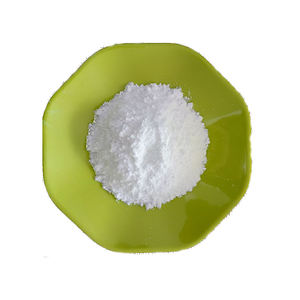
The true game-changer, however, lies in the high-purity alumina (HPA) segment—defined as alumina with a purity of 99.99% (4N) or higher. Unlike standard-grade alumina, HPA is a high-value, specialized material with unique thermal, electrical, and mechanical properties that make it irreplaceable in high-tech applications. In 2025, the HPA market is estimated at USD 3.7 billion, but it is projected to surge at a remarkable CAGR of 17.9%, hitting USD 9.9 billion by 2030. This sharp contrast between the two segments illustrates a clear market trend: the future of alumina lies in high-end, application-specific products, not commodity-grade volume.
2. Core Drivers: New Energy and Semiconductors Rewrite Demand Rules
The shift toward high-end alumina is not accidental—it is driven by two transformative industries that are changing the global economy: new energy (electric vehicles and energy storage) and semiconductors. These sectors are not just increasing demand for alumina; they are changing what the market values, pushing producers to stress quality, purity, and customization instead of sheer volume.
2.1 New Energy: The Primary Growth Engine
The global transition to clean energy and electric mobility is the single largest driver of HPA demand. As countries commit to carbon neutrality and consumers embrace electric vehicles (EVs), the need for high-performance battery technologies has skyrocketed—and alumina is key to this revolution.
For EV batteries, HPA plays three critical roles: first, as a coating for lithium-ion battery separators, it enhances thermal stability, prevents thermal runaway, and suppresses lithium dendrite formation—key factors for battery protection and lifespan. Demand for HPA in this application is projected to grow at a CAGR of 26.7% through 2033, outpacing all other segments. Second, HPA is used to modify cathode materials (such as NMC and LFP), improving their internal stability at high voltages and temperatures, which directly boosts battery energy density and cycle life. Third, as the industry moves toward solid-state batteries—seen as the next breakthrough in EV energy storage—ultra-thin HPA layers are being tested as solid electrolytes, providing the potential for even higher energy densities and more rapid charging times.
Beyond EVs, grid-scale energy storage systems—essential for absorbing renewable energy sources including solar and wind—also rely on HPA-enhanced batteries, further amplifying demand.

2.2 Semiconductors: A High-Purity Imperative
The global semiconductor industry, still recovering from supply supply disturbances and heading toward advanced chip technologies, is another major driver of high-end alumina demand. Semiconductors require materials of exceptional purity to ensure performance and yield—and HPA (especially 5N and 6N grades) meets this critical requirement.
HPA’s key applications in semiconductors include: thermal control in electronic packaging, where spherical HPA powders act as thermal fillers to dissipate heat from high-power 5G chips, AI processors, and data center hardware; Chemical Mechanical Planarization (CMP) slurries, where ultra-high-purity alumina serves as an abrasive to achieve atomic-level flatness on silicon wafers; and LED manufacturing, where HPA is the primary raw material for sapphire substrates—essential for high-brightness LEDs and emerging Micro-LED technologies used in displays and automotive lighting. Demand for HPA in semiconductors is expected to grow at a CAGR of approximately 21.5% between 2025 and 2030.
3. Market Segmentation: Comparing Growth Trajectories (2025–2030)
The divergence between traditional and high-end alumina segments is best illustrated by their growth metrics. The following table breaks down key market data, presenting the disproportionate potential of specialty alumina—and serving as a guide for businesses intending to align companies’ strategies with high-growth areas.
| Total Global Alumina Market | USD 50.6 Billion | USD 63.8 Billion | 4.7% | Aluminum smelting, construction, conventional automotive |
| High-Purity Alumina (HPA) Market | USD 3.7 Billion | USD 9.9 Billion | 17.9% | EV batteries, semiconductors, LEDs |
| HPA for Battery Separators | USD 1.2 Billion | USD 4.8 Billion | 26.7% | EVs, energy storage systems |
| HPA for Semiconductors | USD 0.9 Billion | USD 2.9 Billion | 21.5% | Advanced chips, 5G, data centers, LEDs |
4. Regional Patterns: Where Opportunities Lie
The global alumina market’s transformation isn’t uniform throughout regions—some areas are emerging as demand hubs, while others are positioning themselves as key suppliers of high-end products. Knowing these regional conditions is critical for businesses hoping to expand their footprint.
Asia-Pacific is the epicenter of the high-end alumina transformation, accounting for over 55% of global HPA demand in 2025. China, the world’s largest EV and electronics manufacturer, is both the top consumer and a rapidly growing producer of HPA—though it still relies on imports for ultra-high-purity (5N/6N) grades. Japan and South Korea, major semiconductor and EV manufacturing hubs, are also significant consumers, driving demand for customized HPA solutions.
Beyond Asia-Pacific, North America and Europe are emerging as key growth regions. With massive investments in chip manufacturing (e.g., the U.S. CHIPS Act, EU Chips Act) and EV adoption, these regions are seeking diversified HPA supply chains to reduce dependence on a single source. This provides a considerable opportunity for exporters in other regions to tap into high-value markets.
Indonesia, traditionally a commodity alumina producer, is also shifting toward high-end production, targeting HPA for the battery sector. This variation reflects a global trend: countries with access to bauxite (alumina’s raw material) are moving up the value chain to capture more profit from the alumina market.
5. Obstacles and Prospects for Market Players
While the high-end alumina market offers enormous potential, it also creates unique challenges—especially for traditional producers accustomed to commodity-grade manufacturing. Handling these challenges is key to unlocking growth.
5.1 Key Challenges
The main challenge is the high barrier to entry for HPA production. Achieving 4N+ purity requires advanced technologies (such as hydrolysis, advanced HCl leaching, and purification processes) and significant capital investment. Additionally, the high-end market calls for strict quality control and consistency—any deviation in purity or particle size can render the product unusable for semiconductor or battery applications. Supply chain complexity, including access to high-quality bauxite and rare earth additives, also constitutes a challenge for new entrants.
5.2 Unmissable Opportunities
For businesses disposed to adapt, the opportunities are considerable. First, customization is essential: partnering closely with EV and semiconductor manufacturers to develop tailored HPA solutions (e.g., particular particle morphologies, surface treatments) creates long-term, high-margin partnerships. Second, sustainability is becoming a differentiator—tech companies are progressively prioritizing low-carbon materials, so producers that can offer green HPA (made with renewable energy or recycled materials) will obtain a competitive edge. Third, supply chain diversification is in high demand: as global tech giants seek to reduce risk, exporters that can provide reliable, high-quality HPA will be well-positioned to secure long-term contracts.
6. Partner with High-End Alumina Suppliers in 2025–2030
For businesses, manufacturers, and tech companies, the 2025–2030 period is a critical window to match the alumina market’s transformation. High-end alumina is no longer a niche product—it acts as a strategic material that enables growth in the world’s fastest-growing industries. By partnering with suppliers that specialize in HPA, firms can:
- Secure access to a high-growth, high-margin product segment, insulating themselves from the volatility of commodity alumina markets.
- Meet the developing demands of their own customers (e.g., EV manufacturers, semiconductor fabs) by offering products enhanced with high-quality alumina.
- Position themselves as innovators in their respective industries, making use of the technological advantages of HPA to differentiate their offerings.
The global alumina market is at a key crossroads. Between 2025 and 2030, it will transition from a volume-driven commodity market to a value-driven, high-tech sector—powered by new energy and semiconductors. While traditional alumina will remain important, the real growth and profitability will come from high-purity, specialized products.
For forward-thinking businesses, this transformation isn’t a challenge—it is an opportunity. Through understanding the market’s new dynamics, working with high-growth applications, and partnering with the right suppliers, companies can capitalize on the high-end alumina revolution and secure ongoing success in the global market. The future of alumina is high-end, and the time to move is now.
Supplier
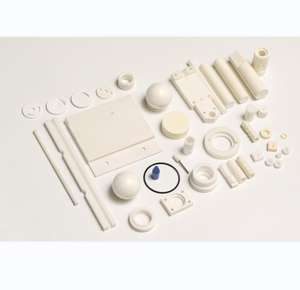
Alumina Technology Co., Ltd focus on the research and development, production and sales of aluminum oxide powder, aluminum oxide products, aluminum oxide crucible, etc., serving the electronics, ceramics, chemical and other industries. Since its establishment in 2005, the company has been committed to providing customers with the best products and services. If you are looking for high quality High-End Alumina, please feel free to contact us.