Professional Premium Aluminum Oxide Products Supplier

Industrial fluid systems need parts that hold up, last long, and take a beating. What do you use for key moving parts? That’s what sets how well it runs and how much it costs over time. Metal plungers? They’re done. Corrosion, wear, high heat—they can’t handle it anymore. Alumina ceramic plungers are high-purity Al₂O₃. Everyone’s using them now in the best pumps: precision metering, high-pressure plunger, chemical transfer. This is what’s making the switch to better materials for the important parts.
I. Alumina Ceramic Plunger Core Performance Advantages
1. Excellent wear resistance: This is the most prominent advantage of alumina ceramics. Its Rockwell hardness (HRA) can reach 80-90, far exceeding that of quenched steel and most alloys. Under continuous high-speed friction of sealing components, the surface wear rate of ceramic plungers is extremely low. This directly extends the service life of the equipment, makes the output flow more stable, and extends the seal replacement interval, thereby significantly reducing maintenance frequency and costs.
2. Excellent Corrosion Resistance: High-purity alumina is an inert ceramic material with strong resistance to most chemical media, including acids, alkalis, and salts (except aqua regia). Unlike metals, it does not suffer from electrochemical corrosion or rusting. This makes it particularly suitable for handling corrosive fluids such as acid/alkali solutions, organic solvents, and seawater, ensuring the long-term integrity of the component in aggressive chemical environments.
3. Handles Heat with Ease: These ceramics hold their shape and strength even when things heat up to 1600°C. You won’t have to worry about them oxidizing, slowly deforming under stress (creep), or warping from the temperature. That’s why they’re the go-to choice for equipment dealing with hot fluids or just running in a very warm environment.
4. Pressure-Resistant Precision:High rigidity means these plungers won’t bend or flex—even under extreme pressure. For precision metering pumps, that’s a total game-changer: flow stays consistent, accurate, and reliable. No more annoying pulsations or performance dips when line pressure fluctuates.
5 . Smooth Operation, Minimal Drag: Top alumina ceramic plungers get a mirror-smooth polish. Stick that with the right polymer seal, and friction’s basically gone. What do you get? Smoother running gear, less heat from rubbing, and way less energy wasted just pushing through resistance.
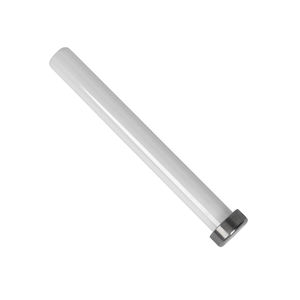
II. Analysis Application Areas of Alumina Ceramic Plunger
Leveraging this combination of properties, alumina ceramic plungers have become the preferred solution in industrial sectors with stringent requirements for reliability and precision:
1.Precision Metering and Dosing Equipment is used in industries like water treatment, petrochemicals, pharmaceuticals, and food & beverage, where precise injection of additives, reagents, or chemicals is required. The zero-corrosion and low-wear characteristics of ceramic plungers ensure long-term high metering accuracy and consistency, eliminating the risk of product contamination from metal ions.
2. High-Pressure Cleaning and Waterjet Equipment: Ceramic plungers can bear high-pressure pumps. They handle nonstop high-velocity flow, extreme pressure—100MPa+.They last way longer than metal plungers—multiple times longer, in fact. That means less downtime, more continuous run time for your equipment.
3. Chemical Process Pumps: Used for transferring various corrosive, abrasive, or high-temperature media, protecting other pump components, and extending the safe operational cycle of the entire system.
4. Laboratory and Analytical Instruments: In research and analytical equipment requiring micro or ultra-micro fluid control, ceramic plungers provide a contamination-free, high-resolution actuation solution.
| Parameter | Typical Range/Grade | Explanation & Selection Impact |
|---|---|---|
| Alumina Content | 95%, 99%, 99.5% | Higher purity generally leads to better wear resistance, corrosion resistance, and high-temperature performance, but at a correspondingly higher cost. 95% Al₂O₃ is suitable for general wear applications; 99%+ is for strong corrosion or ultra-high-demand scenarios. |
| Density | 3.6 – 3.9 g/cm³ | Reflects the sintering density of the material. Higher density means fewer internal pores, higher mechanical strength, and better media isolation. |
| Hardness | HRA 80-90, HV 1200-1600 | Directly determines wear resistance. In applications with severe abrasive wear, products with higher hardness values should be prioritized. |
| Flexural Strength | 300 – 400 MPa | Measures the material’s resistance to fracture. This value should be considered for installations or working conditions involving lateral forces or potential impact. |
| Surface Roughness (Ra) | ≤ 0.1μm (Mirror), 0.2-0.4μm (Fine Ground) | Directly affects sealing effectiveness, frictional resistance, and wear rate. Mirror polish is suitable for applications with extremely high demands on seal life and low friction. |
| Diameter Tolerance | h5, h6 (GB) or equivalent | Precise tolerance is fundamental for ensuring good fit with seals, preventing leakage, and maintaining efficiency. Should be selected according to pump design requirements. |
| Straightness | ≤ 0.01mm/100mm | High straightness ensures uniform force distribution during reciprocating motion, avoiding eccentric wear and abnormal loss. |
IⅢ. Benefit Comparison vs. Metal Plungers
An alumina ceramic plunger doesn’t just last a bit longer. It outlives a standard metal plunger by 3 to 10 times. No more shelling out for constant replacements — that cuts your long-term costs big time. Inventory management gets a whole lot simpler, too.
And the perks don’t stop there. Ceramic wears down so slowly, the seals around it last way longer as well. Fewer maintenance shutdowns. Fewer surprise breakdowns. Your equipment runs when you need it — no downtime, no hassle. That’s productivity you can count on, plain and simple. And for jobs where precision can’t be compromised? Consistency is everything. This plunger holds its exact size and smooth finish, year after year. Measurements stay dead-on, every single time. No more costly off-spec batches ruining your end product, more wasted materials eating into your profits.
One more thing: that ultra-smooth finish means less drag inside the pump. Less friction = the motor doesn’t have to work overtime. You’ll see lower energy use right away — and smaller power bills every month after that.
Ⅳ. Usage and Installation Precautions
To fully utilize the performance advantages of alumina ceramic plungers, their material properties must be considered during installation and use:
Avoid Impact & Improper Clamping: Ceramic is hard—but far more brittle than metal. Don’t slam it during installation, and never use clamps that create spot stress. Both will cause cracks.
Align Properly & Keep Everything Clean: Line up the plunger and seal chamber perfectly when installing. And make sure the area is spotless—hard particles getting into the friction pair will cause bad scratches.
Use the Right Seal Material: Stick with soft, self-lubricating high-performance polymers (PTFE, PEEK, UPE work great). They’ll seal tight and break in smoothly. Skip hard metal seal rings entirely.
Break In New Plungers First:Run new plungers at lower pressure and load for a short time when you first start them up. This lets the seal and ceramic surface form a perfect, matched fit.

Ⅴ. Market Development Trends and Comparison Outlook with New Materials
Currently, the industrial sector’s ever-increasing demands for equipment efficiency, reliability, and intelligence directly drive the continuous growth of the high-end ceramic components market. As the market mainstream, alumina ceramic plunger development shows two main trends: first, high-performance and precision, achieved through increased raw material purity, nanotechnology applications, and ultra-precision machining to meet the needs of ultra-pure fluid handling in semiconductors and biopharmaceuticals; second, cost optimization and scale, through improved sintering processes and automated production to reduce costs while maintaining core performance, penetrating broader industrial fields.
Simultaneously, advanced engineering ceramics represented by zirconia (ZrO₂) and silicon nitride (Si₃N₄) complement and compete with alumina in specific properties, forming a more complete high-end ceramic solution matrix.
Zirconia Ceramic Plungers: Their greatest advantage lies in extremely high fracture toughness (2-4 times that of alumina) and flexural strength. This allows them to better withstand impact loads and mechanical stress, demonstrating higher reliability in applications with vibrations or less-than-perfect installation precision control. Their hardness and wear resistance are to high-purity alumina, with an even lower coefficient of friction. The main drawbacks are a higher cost than alumina and potential slight aging issues (phase transformation) during long-term use in high-temperature, humid environments. They are suitable for high-pressure, high-impact applications requiring additional toughness.
Silicon Nitride Ceramic Plungers: This is one of the most outstanding ceramic materials in terms of comprehensive mechanical properties. It combines high hardness, high toughness, excellent thermal shock resistance (withstanding drastic temperature changes), low density, and self-lubrication. Its fatigue strength and fracture toughness far surpass those of alumina, offering the greatest potential lifespan under extreme conditions (e.g., high-temperature, high-pressure alternating loads). However, it has the highest manufacturing cost, and its resistance to strong alkalis is slightly inferior to alumina and zirconia. It is the ideal choice for ultimate performance, high-cost applications (e.g., aerospace, top-tier racing fuel systems).
For nearly all industrial applications, high-purity alumina ceramic plungers strike the perfect balance of wear resistance, corrosion resistance, and cost. They’re easily the most versatile, cost-effective choice out there. When significant impact or vibration risks exist in the application, zirconia ceramic plungers should be prioritized for evaluation. Silicon nitride ceramic plungers become a necessary consideration only when operating conditions are extremely harsh (e.g., ultra-high temperature cycles, extreme lightweight requirements) and the budget is sufficient.
Supplier
Alumina Technology Co., Ltd focuses on the research and development, production, and sales of aluminum oxide powder, aluminum oxide products, aluminum oxide crucibles, etc., serving the electronics, ceramics, chemical, and other industries. Since its establishment in 2005, the company has been committed to providing customers with the best products and services. If you are looking for high quality Alumina Ceramic Plunger, please feel free to contact us.