Professional Premium Aluminum Oxide Products Supplier

Driven by the global trend of industrial electrification, automation, and high-precision manufacturing, high-voltage glazed alumina ceramic tubes have developed into core basic components in the fields of power transmission, electronic equipment, and special industries. This material combines excellent electrical insulation performance, high temperature resistance, corrosion resistance, and mechanical stability, and can maintain reliable operation in extreme environments that traditional materials cannot adapt to. At the same time, metalized ceramic components effectively solve the technical bottleneck of the difficult connection between ceramics and metals, achieving a high-reliability connection between ceramics and metals while retaining the inherent advantages of ceramics.
1. Core Characteristics of High-Voltage Glazed Alumina Ceramic Tubes
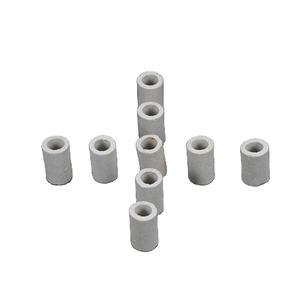
High-voltage glazed alumina ceramic tubes are specialized products made from high-purity alumina (Al₂O₃) via molding, high-temperature sintering, and surface glazing.
1.1 The Core Foundation of High-Voltage Adaptability
The purity of alumina and the quality of glaze treatment are the core factors determining the comprehensive performance of such ceramic tubes, directly affecting the mechanical strength, insulation properties, and high-temperature stability of the product. At present, mainstream products in the market can be divided into two categories based on the purity of alumina:95% alumina ceramic tube (density 3.6 g/cm ³, flexural strength 300 MPa) – mainly suitable for medium voltage application scenarios, such as power distribution systems, low-voltage switchgear, and conventional industrial kiln insulation.99% and above high-purity alumina ceramic tube (sintered at high temperature above 1600 ℃, density can reach 3.8 g/cm ³, bending strength exceeds 350 MPa, compressive strength reaches 2800 MPa) – specially designed for extreme working conditions, suitable for ultra-high voltage, high temperature, and high mechanical load environments with strict requirements for material properties such as vacuum arc extinguishing chambers, aerospace electronic devices, and nuclear power equipment insulation.
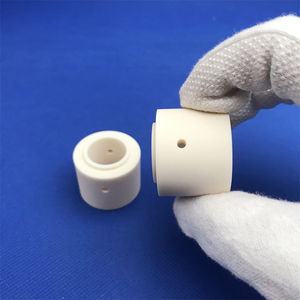
Surface glazing treatment is the core process that distinguishes glazed insulation pipes from ordinary unglazed products. By melting and solidifying the glaze with a special formula at high temperatures, a dense and smooth enamel protective layer can be formed on the surface of the ceramic substrate, significantly reducing its surface roughness to below Ra0.2 μ m. This glaze layer not only significantly improves the dielectric strength of the material, reaching 15-20 kV/mm (20% -30% higher than similar unglazed products), effectively suppressing partial discharge and leakage phenomena under high voltage environments, but also has good chemical inertness, which can isolate the corrosion of acid, alkali salts, and corrosive gases on the ceramic substrate.
1.2 Core Advantages of High-Voltage
Compared with glass, plastics, and metals, these ceramic tubes have irreplaceable advantages. They operate continuously at 1400-1700℃ with ΔT ≥140℃ thermal shock resistance, outperforming plastics (≤150℃) and glass (poor thermal shock resistance) in high-temperature scenarios like metallurgical furnaces and vacuum equipment.
They offer stable insulation (dielectric constant 9.0-9.5, loss tangent <0.0002) in high-frequency/high-voltage environments, cutting energy loss. With HRA85+ hardness, they resist wear and impact, reducing maintenance from mechanical vibration and friction. Their chemical inertness avoids reactions with most media, solving short service life issues of traditional insulators in chemical, metallurgical,l and marine fields. Third, they exhibit excellent chemical inertness. High-voltage glazed alumina ceramic tubes are chemically stable and do not react with most chemical media, including corrosive gases, liquids, and arc erosion. This characteristic makes them widely applicable in chemical, metallurgical, and marine industrial scenarios with strong corrosiveness, solving the problem of the short service life of traditional insulating materials in such environments.
2. Key Technologies of High-Voltage Glazed Alumina Ceramic Tubes
Ceramics excel in insulation and high-temperature resistance but are hard to connect with metals. Metallization solves this by forming a dense metal layer, endowing conductivity while retaining ceramic advantages. Metallized glazed alumina tubes are key in aerospace, precision electronics, and ultra-high voltage equipment.
2.1 Core Principles and Classification of Ceramic Metallization Technology
The core of ceramic metallization technology is to form a stable chemical bond and physical combination between the metal layer and the ceramic matrix, ensuring the reliability of bonding strength and electrical conductivity. According to different process principles and application scenarios, mainstream ceramic metallization technologies include molybdenum-manganese (Mo-Mn) metallization, thin film metallization, and electroless plating metallization. Among them, Mo-Mn metallization technology is the most widely used in high-voltage glazed alumina ceramic tubes due to its high bonding strength, stable performance, and good adaptability to high-voltage and high-temperature environments.
Mo-Mn metallization is widely used for high-voltage tubes. Mo-Mn paste is screen-printed on ceramics and sintered at 1400-1450℃ in nitrogen. Manganese reacts with alumina’s glass phase to form a transition layer, achieving 50-55MPa bonding strength. Post-nickel plating (5-10μm) enhances brazing performance and corrosion resistance. Mo-Mn metal layers withstand 1500℃ and 20 thermal cycles (-50℃ to 1200℃) with minimal attenuation. Thin film metallization (PVD/CVD) forms 0.1-1μm uniform layers for precision electronics, but has high cost and low bonding strength. Electroless plating is low-cost but poor in bonding and high-temperature resistance, unsuitable for high-voltage use.
Electroless plating metallization technology uses redox reactions in the plating solution to deposit metal layers (such as nickel, copper) on the ceramic surface without an external power supply. This technology has the advantages of low production cost, simple process, and good applicability to complex shapes. However, the metal layer prepared by this technology has poor bonding strength with the ceramic matrix, and is easy to oxidize and peel off in high-temperature environments, which limits its application in high-voltage, high-temperature, and harsh industrial scenarios.
| Product Type | Alumina Purity | Key Specifications | Metallization Technology (Optional) |
|---|---|---|---|
| High-Voltage Glazed Alumina Ceramic Tube (Non-Metallized) | 95% | Density: 3.6 g/cm³; Flexural strength: 300 MPa; Dielectric strength: 15 kV/mm; Surface roughness: ≤Ra0.2μm; Thermal shock resistance ΔT≥140℃ | None |
| High-Voltage Glazed Alumina Ceramic Tube (Non-Metallized) | 99%+ High-Purity | Density: 3.8 g/cm³; Flexural strength: 350 MPa; Compressive strength: 2800 MPa; Dielectric strength: ≥18 kV/mm; Surface roughness: ≤Ra0.2μm; Thermal shock resistance ΔT≥150℃ | None |
| Metallized High-Voltage Glazed Alumina Ceramic Tube | 99%+ High-Purity | Same as 99%+ non-metallized; Bonding strength: ≥50 MPa; Contact resistance: ≤5mΩ; Nickel plating thickness: 5-10μm | Mo-Mn Metallization (Sintering temp: 1400-1450℃ in nitrogen atmosphere) |
| Custom Metallized Ceramic Component | 95% / 99%+ | Customizable dimensions (tolerance ±0.02-0.05mm); Flatness ≤0.02mm/m; Insulation resistance ≥10¹⁴Ω | Mo-Mn Metallization (mainstream); Thin Film Metallization (for precision electronics) |
2.2 Key Process Control of Metallized High-Voltage Glazed Alumina Ceramic Tubes
Strict process control is the fundamental guarantee for achieving high-quality products. The process mainly includes the following key steps:
Firstly, the substrate surface is pre-treated through cleaning and activation processes (such as chemical etching or sandblasting) to effectively enhance the adhesion strength of the subsequent slurry. Secondly, precise control of the slurry ratio and coating thickness (within the range of 28-32 μ m) is required to ensure the uniformity and consistency of the coating. Thirdly, high-purity nitrogen gas is used throughout the sintering process, and the heating rate (4-10 ℃/min) and cooling rate are strictly controlled to optimize the material structure and reduce internal stress. Finally, after completing the metallization, a nickel layer with a thickness of 5-10 μ m is formed throughan electroplating process to ensure its density and integrity, without obvious pore defects.
Excessive manganese content will reduce the electrical conductivity of the metal layer, while insufficient manganese content will affect the formation of the transition layer, resulting in low bonding strength. During the application process, the thickness of the paste (usually controlled at 28-32μm) must be uniform to avoid uneven thickness of the metal layer after sintering, which will affect the electrical performance and structural stability of the product.
Thirdly, strictly control the sintering process parameters. The temperature control, heating and cooling rate, and atmosphere environment during the sintering process are the core factors that affect the final performance of the product. During the heating stage, the rate should be precisely controlled within the range of 4-10 ° C/min to avoid microcracks in the ceramic matrix caused by thermal stress concentration. The sintering atmosphere must use high-purity nitrogen gas to prevent oxidation of active metal elements such as molybdenum and manganese in the slurry, ensuring stable formation of the metallization layer and transition layer. After sintering, it is necessary to strictly control the cooling rate to effectively release and reduce internal stress, thereby ensuring the structural integrity and bonding reliability between the ceramic tube body and the metal layer.
The fourth key control link is post-metallization treatment. Nickel plating after metallization can effectively improve the wettability of the metal layer during brazing and enhance the corrosion resistance of the metal layer. The thickness of the nickel layer should be controlled at 5-10μm, and the plating process must ensure that the nickel layer is dense, uniform, free of pores, and free of peeling, to avoid affecting subsequent brazing operations and the service life of the product.
3. Industrial Applications of High-Voltage Glazed Alumina Ceramic Tubes
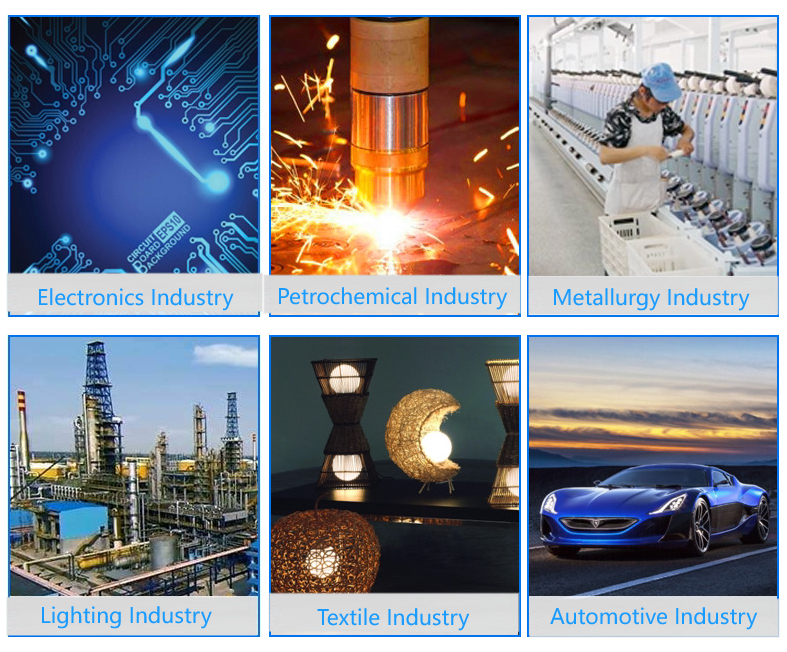
These ceramic tubes are widely used in power systems, electronics, new energy, aerospace, and military fields, supporting industrial innovation and green development.
3.1 Power System
In the power system, such components are important components for ensuring stable insulation of key equipment such as high-voltage switches, transformers, and vacuum arc extinguishing chambers. For example, as the shell of a vacuum arc extinguishing chamber, the use of molybdenum manganese metallization technology can form a highly reliable airtight seal, allowing it to withstand electrical stress for a long time in high voltage environments of 10-50kV, thereby significantly reducing the overall failure rate by more than 42%. In addition, high-performance ceramic tubes with a purity of over 99% are widely used as insulation components for 220kV to 500kV ultra-high voltage transmission lines. Their dense structure and high mechanical strength can effectively resist extreme weather conditions, ensuring the safety and stability of power grid operation.
3.2 Electronic & Semiconductor Industry
In the field of electronics and electrical appliances, related components also play a crucial role. For example, they are used as high-temperature insulation components in semiconductor manufacturing equipment such as plasma etching machines and chemical vapor deposition equipment, capable of withstanding long-term operating temperatures up to 1200 ℃ and effectively resisting strong plasma erosion, ensuring the stability of the process. Meanwhile, in the antenna system of communication base stations, insulators made of such materials can maintain signal transmission reliability even in complex electromagnetic environments due to their excellent dielectric properties. The overall failure rate is controlled below 0.003%, significantly improving the operational quality and stability of communication networks.
3.3 New Energy Field
In the field of new energy, this material plays an important role in improving system safety and efficiency. In the field of electric vehicles, it is used as a key insulation component for battery management system (BMS) relays, which can withstand instantaneous pulse voltage surges up to 5000V. This not only improves the overall charging efficiency by about 8%, but also reduces the failure rate of related modules by 60%, significantly enhancing the reliability and safety of the vehicle’s high-voltage electrical system.
In the field of wind power generation, this material is applied to the high-performance insulation system of the stator and rotor of the generator, which can effectively resist the severe vibration and high temperature environment during long-term operation of the unit, significantly delay insulation aging, thereby extending the overall service life of the generator and ensuring the stability and efficient output of the clean energy system.
3.4 Aerospace & Military Industry
In the fields of aerospace and military, this material has become one of the core materials to ensure the reliable operation of key equipment. It is widely used in high-performance insulation and packaging components of aircraft avionics systems, with excellent temperature stability that can adapt to extreme temperature differences ranging from -60 ℃ to 1500 ℃, ensuring stable operation of electronic devices under high-speed and alternating high and low temperature conditions.
At the same time, in the ignition devices of weapons such as tanks and missiles, the insulation components made of them can effectively resist harsh battlefield conditions such as vibration, impact, and complex electromagnetic interference, significantly improving the transient response capability and long-term reliability of the ignition system, providing solid guarantees for the practical effectiveness and operational safety of the equipment.
4. Procurement Suggestions and Cooperation Advantages
Global demand for these components is rising with industrial upgrading. Choosing quality products and reliable suppliers is key to improving efficiency and competitiveness.
4.1 Key Considerations for Global Procurement
Prioritize ISO9001/14001/IATF16949-certified suppliers. Confirm customization capabilities for non-standard scenarios. Ensure global logistics (DHL/FedEx) and 24/7 technical support to avoid delays and resolve usage issues. Third, evaluate logistics and after-sales service capabilities. Ensure that suppliers have mature global logistics channels and cooperate with well-known international logistics companies such as DHL and FedEx to ensure the timely delivery of products and avoid project delays due to logistics problems. At the same time, suppliers should provide professional after-sales services, including 24-hour technical consultation, product quality assurance, and on-site maintenance support, to solve problems encountered by customers in product usepromptlyr.
4.2 Our Cooperation Advantages: Creating Value for Global Customers
With 10+ years of experience, we offer one-stop solutions. We use imported isostatic pressing and pressureless sintering, producing 99.7% high-purity tubes with ≥53MPa Mo-Mn bonding strength, exceeding industry standards. Our testing center is equipped with advanced equipment; each product undergoes 12 strict tests, achieving 99.8% qualification. Our senior R&D team delivers custom samples in 2-3 weeks, meeting prototype and small-batch needs. Third, efficient customization capability. Our R&D team is composed of senior engineers with more than 10 years of experience in the ceramic industry, who can customize products according to customers’ specific working conditions and requirements, including alumina content, product dimensions, glaze layer performance, and metallization process. The sample lead time is only 2-3 weeks, which can quickly meet customers’ prototype testing and small-batch trial production needs.
High-voltage glazed alumina tubes and metallized components are pivotal for industrial upgrading. Scientific selection, understanding metallization technologies,s and choosing reliable suppliers maximize product value and ensure system stability. Adhering to “quality first, customer-centric”, we strive to provide premium products and services. We look forward to cooperating globally to drive industrial innovation and build an efficient, safe,fe and green future.
Supplier
Alumina Technology Co., Ltd focuses on the research and development, production, and sales of aluminum oxide powder, aluminum oxide products, aluminum oxide crucible, etc., serving the electronics, ceramicschemicalca,l and other industries. Since its establishment in 2005, the company has been committed to providing customers with the best products and services. If you are looking for high-quality High-Voltage Glazed Alumina Ceramic Tubes, please feel free to contact us.