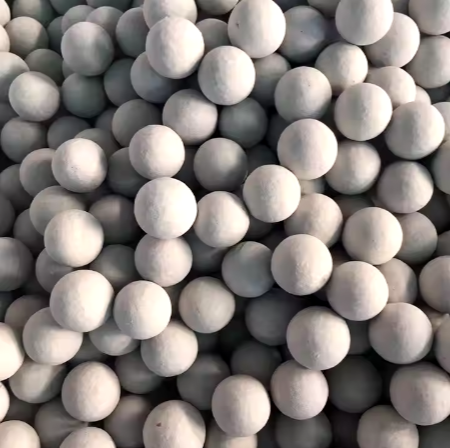
Professional Premium Aluminum Oxide Products Supplier

With the rapid development of electronic devices towards high power density, miniaturization, and intelligence, thermal management has become a critical bottleneck restricting their performance and service life. Thermally conductive silicone gaskets, as core thermal interface materials (TIMs), are widely used in new energy vehicles, AI servers, 5G communication equipment, and other fields due to their excellent flexibility, insulation, and heat resistance. Among various thermal conductive fillers, high-thermal-conductivity alumina (Al₂O₃) stands out with its advantages of high thermal conductivity (about 30 W/(m·K)), good insulation, low cost, and stable chemical properties, making it the most commonly used filler in the industrial production of thermally conductive silicone gaskets. However, in the actual preparation process, achieving the balanced performance of high thermal conductivity, good mechanical properties, and stable processability is not easy. This blog will deeply explore the key technical challenges in preparing thermally conductive silicone gaskets using high-thermal-conductivity alumina, analyze the root causes of the challenges, and briefly discuss potential solutions, hoping to provide reference for researchers and practitioners in the field.
1. Introduction: The Significance of High-Thermal-Conductivity Alumina in Thermally Conductive Silicone Gaskets
Thermally conductive silicone gaskets are composed of a silicone rubber matrix (such as polydimethylsiloxane, PDMS) and thermal conductive fillers. The silicone matrix provides flexibility, insulation, and processability, while the thermal conductive filler is responsible for constructing heat transfer channels to improve the overall thermal conductivity of the gasket. Compared with other fillers such as boron nitride (BN), silicon carbide (SiC), and metal powders, high-thermal-conductivity alumina has obvious comprehensive advantages: it not only has a thermal conductivity much higher than that of the silicone matrix (usually less than 0.5 W/(m·K)), but also has excellent electrical insulation, which can avoid short circuits in electronic equipment; its cost is only 1/5 to 1/10 of that of high-purity BN and other fillers, which is suitable for large-scale industrial production; at the same time, it has good compatibility with the silicone matrix and stable chemical properties, which can ensure the long-term service reliability of the gasket.
According to the data from the 2025 China High Thermal Conductivity Soft Silicone Pad Market Analysis Report, the global market size of thermally conductive silicone gaskets will reach 48.7 billion yuan in 2025, and it is expected to grow at a compound annual growth rate of 19.3% in the next five years, exceeding 118 billion yuan by 2030. Among them, alumina-based thermally conductive silicone gaskets account for more than 60% of the market share, widely used in consumer electronics, automotive electronics, industrial control, and other fields. However, with the increasing demand for thermal management performance of electronic devices—for example, the thermal conductivity of gaskets required for AI server liquid cooling systems and new energy vehicle power control modules has reached 5-12 W/(m·K), and the compression set rate needs to be less than 18%—the technical challenges in the preparation of alumina-based thermally conductive silicone gaskets have become increasingly prominent. Below, we will focus on several core technical challenges.
2. Key Technical Challenges in Preparation
2.1 Poor Dispersion of High-Thermal-Conductivity Alumina in Silicone Matrix
The dispersion uniformity of high-thermal-conductivity alumina in the silicone matrix is the primary challenge affecting the thermal conductivity and mechanical properties of the gasket. Alumina particles have strong surface polarity and high specific surface energy, which easily cause agglomeration through van der Waals forces and hydrogen bonds, especially when the filling amount is high (usually more than 50% by volume). The agglomerated alumina particles cannot form a continuous thermal conductive network, and even form “thermal resistance centers” in the matrix, which not only fails to improve the thermal conductivity but also reduces the flexibility and tensile strength of the gasket, leading to brittle fracture during use.
The root causes of poor dispersion are mainly reflected in two aspects: on the one hand, the surface of alumina is hydrophilic, while the silicone matrix is hydrophobic, resulting in poor compatibility between the two, and the alumina particles are difficult to be uniformly wetted and dispersed by the silicone matrix; on the other hand, in the mixing process, if the mixing speed, temperature, and time are not properly controlled, the agglomerated alumina particles cannot be fully broken, and the uniform dispersion state cannot be maintained. For example, in the experiment, when unmodified alumina is directly added to the silicone matrix with a filling amount of 60% by volume, the thermal conductivity of the prepared gasket is only 1.8-2.5 W/(m·K), which is far lower than the theoretical value (about 4-5 W/(m·K)), mainly due to the serious agglomeration of alumina particles.
In addition, the particle size and particle size distribution of alumina also affect its dispersion. If the particle size is too large (more than 50 μm), it is easy to precipitate during mixing and curing; if the particle size is too small (less than 1 μm), the specific surface energy is higher, and the agglomeration tendency is more obvious. Therefore, how to realize the uniform dispersion of high-thermal-conductivity alumina in the silicone matrix under high filling amount is the first problem to be solved in the preparation process.
2.2 High Interface Thermal Resistance Between Alumina and Silicone Matrix
Even if alumina particles are uniformly dispersed in the silicone matrix, the interface thermal resistance between alumina and the silicone matrix will seriously affect the heat transfer efficiency of the gasket. Interface thermal resistance (also known as Kapitza thermal resistance) refers to the resistance of heat transfer at the contact interface between the filler and the matrix, which is mainly caused by the mismatch of phonon vibration modes, the presence of interface defects, and weak chemical bonding between the two materials. Studies have shown that the interface thermal resistance can account for 40%-70% of the total thermal resistance of the composite material, which is the key factor restricting the further improvement of the thermal conductivity of the gasket.
The main reasons for the high interface thermal resistance between alumina and silicone matrix are as follows: first, the chemical properties of the two materials are quite different—alumina is an inorganic oxide with strong polarity, while the silicone matrix is an organic polymer with non-polarity, and there is no strong chemical bond between them, only weak van der Waals forces, resulting in poor interface bonding; second, there are micro-voids and gaps at the interface between alumina and the silicone matrix, and the thermal conductivity of air in the gaps is only 0.024 W/(m·K), which forms a “thermal insulation layer” and seriously hinders heat transfer; third, the phonon vibration frequency of alumina and silicone matrix is quite different, and the phonon scattering at the interface is serious, which reduces the efficiency of heat transfer between the two materials.
For example, the thermal conductivity of pure alumina is about 30 W/(m·K), and the thermal conductivity of pure silicone rubber is about 0.2-0.3 W/(m·K). When the filling amount of alumina is 70% by volume, the theoretical thermal conductivity of the composite material should be about 8-10 W/(m·K), but the actual thermal conductivity of the prepared gasket is usually only 3-5 W/(m·K), and the main reason is the high interface thermal resistance. Therefore, reducing the interface thermal resistance between alumina and the silicone matrix is another core technical challenge in the preparation process.
2.3 Balance Between High Filling Amount and Mechanical Properties
To improve the thermal conductivity of the silicone gasket, it is necessary to increase the filling amount of high-thermal-conductivity alumina, because the higher the filling amount, the easier it is to form a continuous thermal conductive network. However, with the increase of the filling amount of alumina, the mechanical properties of the gasket (such as tensile strength, elongation at break, flexibility, and compression set) will be significantly reduced, forming a “trade-off” relationship between thermal conductivity and mechanical properties, which is a key technical difficulty that plagues the industry.
When the filling amount of alumina is less than 40% by volume, the mechanical properties of the gasket are good, but the thermal conductivity is low (usually less than 1.5 W/(m·K)), which cannot meet the needs of high-power electronic devices; when the filling amount exceeds 60% by volume, the thermal conductivity of the gasket is significantly improved, but the alumina particles will occupy the space of the silicone matrix, destroy the cross-linking structure of the silicone rubber, and lead to the decrease of tensile strength and elongation at break—even the gasket becomes brittle and easy to break, and the compression set rate increases, which cannot adapt to the assembly and use requirements of electronic devices (such as the need for repeated compression and rebound in the assembly process).
According to the Pareto frontier analysis of commercial products, only a few enterprises (such as Shin-Etsu, Dow Corning, Jiangsu Tiannai Technology, and Shenzhen Boen New Materials) can simultaneously achieve thermal conductivity ≥8 W/(m·K) and compression set rate ≤18%, which shows the difficulty of balancing high filling amount and mechanical properties. In addition, the increase of the filling amount will also increase the viscosity of the silicone composite system, making it difficult to mix, coat, and cure, and affecting the production efficiency and product yield.
2.4 Stability of Thermal Conductivity and Mechanical Properties Under Harsh Service Conditions
Thermally conductive silicone gaskets are often used in harsh service environments, such as high temperature (80-150℃ for automotive electronics), low temperature (-40℃ for outdoor equipment), humidity, and vibration. In these environments, the thermal conductivity and mechanical properties of alumina-based thermally conductive silicone gaskets are prone to attenuation, which affects the long-term service reliability of the gasket.
On the one hand, under high-temperature conditions, the silicone matrix will undergo thermal oxidation aging, leading to the breakage of siloxane bonds, the hardening of the matrix, and the decrease of flexibility; at the same time, the interface bonding between alumina and the silicone matrix will weaken, the interface thermal resistance will increase, and the thermal conductivity will decrease. For example, when the gasket is used at 150℃ for a long time, the thermal conductivity may decrease by 10%-20%, and the compression set rate may exceed 20%. On the other hand, under the action of low temperature, the silicone matrix will become brittle, and the alumina particles may fall off from the matrix, leading to the damage of the thermal conductive network and the loss of thermal conductivity. In addition, in a humid environment, the surface of alumina is easy to absorb moisture, which not only increases the interface thermal resistance but also may affect the insulation performance of the gasket, bringing potential safety hazards to electronic equipment.
For special application scenarios such as new energy vehicle power control modules and AI server liquid cooling systems, the requirements for the stability of the gasket are higher: it needs to maintain stable performance under the coupling of high temperature (150℃), high pressure (0.7MPa), and high electric field (2.5kV/mm) for more than 20,000 hours, which puts forward more stringent requirements for the preparation technology of the gasket.
2.5 Difficulty in Industrial Scale Production and Process Control
The laboratory preparation of alumina-based thermally conductive silicone gaskets can achieve better performance through precise control of process parameters (such as mixing speed, curing temperature, and filling amount), but it is difficult to replicate the laboratory results in industrial scale production, and there are great challenges in process control and product consistency.
First, in large-scale mixing, it is difficult to achieve uniform dispersion of alumina particles in the silicone matrix. The mixing equipment (such as internal mixer, open mill) has limited shearing force, and the agglomerated alumina particles cannot be fully broken, leading to uneven performance of the prepared gaskets (the difference in thermal conductivity between different batches or even the same batch of products can reach 20%-30%). Second, the curing process is difficult to control. In large-scale production, the temperature distribution in the curing oven is uneven, and the curing time is difficult to be accurately controlled, which will lead to incomplete curing of the gasket or excessive curing, resulting in the decrease of mechanical properties and thermal conductivity. Third, the cost control is difficult. In order to improve the dispersion and interface bonding of alumina, it is necessary to use surface modifiers, high-performance mixing equipment, and precise process control, which will increase the production cost; if the cost is reduced by reducing the amount of modifiers or using low-performance equipment, the product performance will be affected, forming a contradiction between cost and performance.
3. Typical Products of Alumina-Based Thermally Conductive Silicone Gaskets and Performance Comparison
To better understand the performance level and existing gaps of alumina-based thermally conductive silicone gaskets, the following table lists the key performance parameters of typical commercial products at home and abroad, including thermal conductivity, filling amount of alumina, mechanical properties, and application scenarios, which can intuitively reflect the technical differences between different products.
| Product Model | Alumina Filling Amount (Volume %) | Thermal Conductivity (W/(m·K)) | Tensile Strength (MPa) | Elongation at Break (%) | Compression Set Rate (%) | Application Scenario | Manufacturer |
|---|---|---|---|---|---|---|---|
| TC-5000 | 65 | 5.0 | ≥0.15 | ≥60 | ≤18 | Consumer electronics, power modules | NFION |
| SE-9100 | 70 | 8.2 | ≥0.20 | ≥50 | ≤15 | AI servers, 5G base stations | Shin-Etsu |
| DC-740 | 68 | 7.5 | ≥0.18 | ≥55 | ≤16 | Automotive electronics, industrial control | Dow Corning |
| TN-800 | 72 | 8.5 | ≥0.22 | ≥48 | ≤14 | New energy vehicle power control modules | Jiangsu Tiannai Technology |
| BN-600 | 60 | 4.8 | ≥0.16 | ≥65 | ≤19 | Home appliances, low-power electronic devices | Shenzhen Boen New Materials |
It can be seen from the table that the thermal conductivity of international high-end products (such as Shin-Etsu SE-9100 and Dow Corning DC-740) can reach 7.5-8.2 W/(m·K), and the compression set rate is less than 16%, which can meet the needs of high-end application scenarios such as AI servers and automotive electronics. Domestic products (such as Jiangsu Tiannai TN-800) have achieved certain breakthroughs, but there is still a gap in comprehensive performance compared with international giants. Most domestic mid-range products have thermal conductivity of 4.8-5.0 W/(m·K), which is mainly limited by the technical bottlenecks such as dispersion, interface thermal resistance, and balance between filling amount and mechanical properties.
4. Potential Solutions and Development Trends
Aiming at the above technical challenges, researchers and enterprises in the industry have carried out a lot of research and exploration, and formed a series of potential solutions, which also point out the development trends of alumina-based thermally conductive silicone gaskets.
For the problem of poor dispersion of alumina, the main solution is to modify the surface of alumina. By using silane coupling agents (such as KH-550, KH-560), titanate coupling agents, or other modifiers, the surface of alumina is converted from hydrophilic to hydrophobic, which improves the compatibility with the silicone matrix; at the same time, the surface modifier can form a “bridge” between alumina and the silicone matrix, reducing the agglomeration of alumina particles. For example, after modifying alumina with γ-aminopropyltriethoxysilane (KH-550), the dispersion of alumina in the silicone matrix is significantly improved, and the thermal conductivity of the gasket can be increased by 30%-50% under the same filling amount. In addition, the use of multi-scale particle size matching (such as mixing large-particle alumina (50-70 μm) as the “thermal conductive skeleton” and small-particle alumina (1-7 μm) to fill the gaps) can also improve the packing density of alumina, reduce agglomeration, and form a more continuous thermal conductive network.
To reduce the interface thermal resistance, on the one hand, surface modification can be used to enhance the chemical bonding between alumina and the silicone matrix—for example, the use of epoxy-based silane coupling agents can form covalent bonds between alumina and the silicone matrix, improve the interface bonding strength, and reduce the interface gap; on the other hand, the use of in-situ polymerization, plasma treatment, or atomic layer deposition and other technologies can optimize the interface structure, reduce the phonon scattering at the interface, and improve the interface thermal conductivity. Studies have shown that after plasma treatment of alumina, the interface thermal conductivity between alumina and the silicone matrix can be increased by 2-3 times.
For the balance between high filling amount and mechanical properties, the key is to optimize the formula and process. On the one hand, the cross-linking density of the silicone matrix can be adjusted by adding cross-linking agents, plasticizers, and other additives to improve the mechanical properties of the matrix and enhance its ability to wrap alumina particles; on the other hand, the use of composite fillers (such as mixing alumina with a small amount of BN, carbon nanotubes, etc.) can reduce the filling amount of alumina while ensuring high thermal conductivity, and avoid the excessive decrease of mechanical properties. In addition, optimizing the mixing and curing process (such as using high-shear mixing equipment, controlling the curing temperature and time) can also improve the bonding between alumina and the matrix, and balance the thermal conductivity and mechanical properties.
To improve the stability of the gasket under harsh conditions, it is necessary to select high-performance silicone matrix materials (such as methyl vinyl silicone rubber with good thermal stability) and add anti-aging agents (such as antioxidant, anti-ultraviolet agent) to slow down the thermal oxidation aging of the matrix; at the same time, the surface modification of alumina can be strengthened to improve the interface bonding stability, and avoid the separation of alumina and the matrix under high temperature and low temperature. For special application scenarios, the formula can be customized—for example, adding flame retardants (such as aluminum hydroxide) to meet the flame retardant requirements of automotive electronics and energy storage systems.
In terms of industrial scale production, the key is to realize the automation and precision of the process. The use of high-efficiency mixing equipment (such as planetary mixer, internal mixer with high shearing force) can improve the dispersion uniformity of alumina; the use of continuous curing equipment and intelligent temperature control system can ensure the uniformity of the curing process and improve the product consistency; at the same time, the development of low-cost surface modification technology and composite filler technology can reduce the production cost and promote the large-scale application of alumina-based thermally conductive silicone gaskets.
With the continuous development of electronic devices towards higher power density and miniaturization, the demand for the performance of thermally conductive silicone gaskets will be further improved, and the technical challenges will also be more prominent. In the future, the research focus will be on the high-efficiency surface modification of alumina, the design of composite filler systems, the optimization of interface structure, and the intelligence of industrial production. By breaking through these technical bottlenecks, we can prepare alumina-based thermally conductive silicone gaskets with high thermal conductivity, good mechanical properties, stable performance, and low cost, which can better meet the thermal management needs of various electronic devices and promote the development of the thermal interface material industry.
Supplier
Alumina Technology Co., Ltd focus on the research and development, production and sales of aluminum oxide powder, aluminum oxide products, aluminum oxide crucible, etc., serving the electronics, ceramics, chemical and other industries. Since its establishment in 2005, the company has been committed to providing customers with the best products and services. If you are looking for high quality Silicone Gaskets, please feel free to contact us.
RELATED POSTS
The Born Haber Cycle For Aluminium Oxide