Professional Premium Aluminum Oxide Products Supplier

Introduction
In the quest for high-quality materials in new industries, the design and structure of raw materials frequently are the determining factor in innovative breakthroughs. One of these is Spherical alumina powder, which has become a pivotal material that is driving advances for thermal and composite materials and even surface engineering. Contrary to the irregular, angular particles of alumina, spherical Alumina provides a unique blend of properties due to its perfect geometry, including the highest density of packing, superior flowability, and uniform stress distribution.
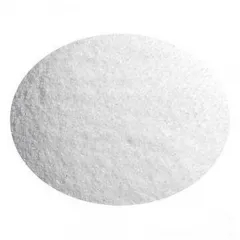
For formulators, engineers, and product developers working in fields that span from electronic vehicles and electric vehicles to 5G aerospace and communications, knowing the capabilities of spherical Alumina is crucial. This innovative ceramic filler is more than part of the product; it’s an efficiency multiplier that improves the mechanical strength, thermal conductivity, and processing efficiency in the final product.
This complete guide delves deep into the realm of spherical alumina powder, investigating its manufacturing processes, the fundamental properties of the material, and the tangible benefits it offers. We will review the detailed product information and highlight its revolutionary function in tackling modern engineering issues.
The Science and Manufacture of Spherical Alumina Powder
Spherical alumina powder can be made by specialized processes that convert rough, irregular Alumina (Al2O3) particles into spherical granules. The most commonly used and efficient methods are:
High-Temperature Flame Melting: Insanely shaped Alumina powder is injected into a flame with high temperatures (e.g., plasma, the plasma, or acetylene-oxygen fire) in which the particles melt immediately. The surface tension forces the melt droplets into perfectly formed crystals that are quickly cooled and then taken away. This process produces powders that have the highest crystallinity and sphericity (typically totally one-phase). ).
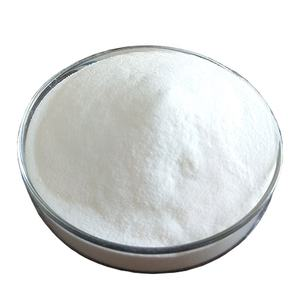
Chemical Synthesis: Techniques such as the hydrolysis of aluminum alkoxides could be controlled to make small particles of spherical shape. While they offer precise control of size, this method is usually more complicated and costly.
Sphericity, the extent to which a particle is shaped like an ideal sphere, is the most important morphological attribute. High sphericity can lead to:
Lower Internal Friction: The particles are able to roll over each other easily.
HDD:The spheres can compact more securely than angular particles, leaving less space for voids within composites.
Lower Viscosity suspensions: Enable more filler loads in pastes, resins, or polymers, without compromising the processability.
Isotropic Property: uniform behavior in all directions, unlike flaky or elongated fillers.
Spherical Alumina Powder Data Specifications
The performance of spherical alumina in an application depends on several key parameters. The following table outlines the specifications for a typical range of high-purity spherical alumina products designed for thermal interface materials (TIMs) and advanced composites.
| Property | Unit | SPA-01 (Fine Grade) | SPA-02 (Standard Grade) | SPA-03 (Coarse Grade) | SPA-04 (High-Purity α-phase) | Test Method |
|---|---|---|---|---|---|---|
| Chemical Composition | ICP-OES | |||||
| • Al₂O₃ Content | wt% | ≥ 99.5 | ≥ 99.5 | ≥ 99.5 | ≥ 99.9 | |
| • Na₂O Content | ppm | < 200 | < 200 | < 200 | < 50 | |
| Physical Properties | ||||||
| • Crystal Phase | – | α-phase | α-phase | α-phase | α-phase (≥99%) | XRD |
| • True Density | g/cm³ | 3.95 | 3.95 | 3.95 | 3.98 | Pycnometer |
| • Tap Density | g/cm³ | ≥ 2.0 | ≥ 2.1 | ≥ 2.2 | ≥ 2.15 | ASTM B527 |
| • Sphericity** | % | ≥ 95 | ≥ 98 | ≥ 95 | ≥ 99 | SEM Image Analysis |
| Particle Size Distribution | Laser Diffraction | |||||
| • D50 | μm | 2 ± 0.5 | 15 ± 2 | 45 ± 5 | 25 ± 3 | |
| • D90 | μm | ≤ 5 | ≤ 25 | ≤ 65 | ≤ 35 | |
| Thermal & Electrical | ||||||
| • Thermal Conductivity* | W/m·K | ~ 30 | ~ 30 | ~ 30 | ~ 35 | Hot Disk / Theoretical |
| • Dielectric Constant (1MHz) | – | 9 – 10 | 9 – 10 | 9 – 10 | 9 – 10 | ASTM D150 |
| • Volume Resistivity | Ω·cm | > 10¹⁴ | > 10¹⁴ | > 10¹⁴ | > 10¹⁵ | ASTM D257 |
| Key Application Notes | High-Fill TIMs, Precision Coatings | General TIMs, Encapsulants, Composites | Polymer Filler for Heat Sinks | High-End Electronics, Ceramic Substrates |
Data Interpretation and Selection Guide:
Dimension of the particle (D50). Powders that are fine (SPA-01) are used to fill tiny gaps on smooth surfaces, and the coarser powders (SPA-03) make efficient thermal pathways, but with less viscosity and impact. Blending sizes frequently ensures the highest density of packing.
Quality (Al2O3 Content) A higher purity (SPA-04) reduces the risk of Ionic contamination, which is crucial for semiconductor packaging and high-reliability Electronic applications.
Tap Density The higher value signifies greater packing efficiency, directly indicating the possibility of a greater thermal conductivity in composites.
Spherical Alumina Powder Drives Cross-industry Innovation
1. Thermal Management Solutions (The Core Application)
thermal Interface Materials (TIMs) Spherical alumina is the primary filler used in the thermal greases and gap fillers, Phase change substances, as well as thermal pads. Its thermal conductivity is high, and its outstanding flowability allows for filler load that is greater than 85 percent in weight, drastically reducing resistance to heat sources (e.g., GPU, CPU) along with heat-sinks. This is essential for laptops, smartphones, as well as 5G base stations, and high-performance computing.
Thermally Conductive Polymers & Adhesives are incorporated into polymers like epoxy, silicone, or PPS to produce lightweight, moldable components with improved heat dissipation to lighting housings, power modules, and automotive parts.
2. Advanced Composites & Engineering Plastics
Functional Fillers: Beyond thermal conductivity, it enhances the mechanical properties of composites–increasing hardness, wear resistance, and dimensional stability. It is used in special bearings, insulators, and parts that are resistant to abrasion.
Polymer and Ceramic Substrates for applications with high frequency, the low dielectric loss, as well as their excellent thermal performance, make them a good choice for high-end circuits.
3. Surface Engineering & Additive Manufacturing
Plasma Spray Coatings Spherical powder with great flowability is ideal for plasma spraying to make wear-resistant, corrosion-resistant, and thermal barrier layers for metal components for aerospace and industrial equipment.
Binder Jetting and Slurry-Based 3D printing: The high density of packing and its fluid flow are essential for producing high-strength, dense ceramic parts using additive manufacturing methods.
4. Other Precision Applications
Polishing and Abrasives Pure spherical alumina with controlled size is used to ensure precision. Polishing optical lenses, semiconductor wafers, and the hard disk’s surface. It provides an impervious polishing.
Support for Catalysts’ huge volume and chemical resistance makes it a useful material for support in a variety of catalytic procedures.
Partnering for Performance
The selection of the correct grade of spherical-shaped alumina is just the beginning. To achieve the best performance, you need the technical cooperation of an alumina supplier who is aware of the integration issues. The most important considerations are:
Surface treatment: It is possible to treat alumina using silane, or any other coupling agent in order to improve the chemical bonding between polymer matrices, decreasing resistance at the interface, and enhancing mechanical and thermal properties of g.
Custom blends: Providerscano creates custom blends with various particle sizes in order to get the ideal balance between viscosity, filler loading, and performance for your particular formulation.
Consistency and Reliability: Consistency from batch to batch in purity, size distribution, and sphericity is non-negotiable in industrial-scale production. Data Interpretation and Selection Guide:
Conclusion
Spherical alumina has proven to be more than just a basic material. It is an essential enabler of functional and thermal performance in the 21st century’s most complex technologies. The unique spherical shape of the powder opens possibilities that non-spherical powders can’t provide, from packing more electrical conductivity into a less TIM layer, to flowing smoothly through the automated production process.
Since thermal management is becoming the most critical bottleneck for miniaturization, and the power density grows, the importance of engineered fillers, such as spherical aluminum, will only increase. With the help of detailed data and working with a knowledgeable supplier, engineers can tap the full potential of spherical alumina to make more efficient, cooler, lighter, more robust, future-oriented products.
Supplier
Alumina Technology Co., Ltd focuses on the research and development, production, and sales of aluminum oxide powder, aluminum oxide products, aluminum oxide crucibles, etc., serving the electronics, ceramics, chemical, and other industries. Since its establishment in 2005, the company has been committed to providing customers with the best products and services. If you are looking for high-quality spherical alumina powder, please feel free to contact us.