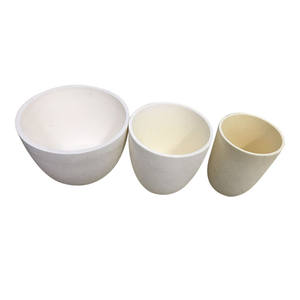
Professional Premium Aluminum Oxide Products Supplier


(High Temperature Wear Resistant Al2O3 96% Alumina Ceramic Solid Plate Brick Block)
High Temperature Wear Resistant Al2O3 96% Alumina Ceramic Solid Plate Brick Block: A Comprehensive Guide
1. Why High Temperature Wear Resistant Al2O3 96% Alumina Ceramic Solid Plate Brick Block Has Good Characteristics
1.1 Exceptional Material Properties
High-temperature wear-resistant Al2O3 96% alumina ceramic solid plates, bricks, and blocks derive their superior characteristics from the inherent properties of alumina (Al2O3). With 96% alumina content, these ceramics achieve an optimal balance between hardness (Mohs 9), compressive strength (≥2200 MPa), and thermal stability. The high purity minimizes grain boundary weaknesses, resulting in exceptional resistance to abrasion, corrosion, and thermal shock (withstanding temperatures up to 1600°C). This dense microstructure prevents crack propagation and maintains dimensional stability under extreme conditions, making it ideal for demanding industrial applications.
1.2 Engineered Performance Advantages
The material’s outstanding wear resistance stems from its extreme hardness, which significantly outperforms steel and most alloys. Its low thermal expansion coefficient ensures minimal dimensional change during rapid heating/cooling cycles, while chemical inertness prevents degradation from acids, alkalis, and molten metals. These characteristics synergistically create a product with unparalleled service life in abrasive environments. Unlike metallic alternatives, alumina ceramic maintains its properties at elevated temperatures without softening or oxidizing, providing consistent protection in high-heat processes.
2. What Is High Temperature Wear Resistant Al2O3 96% Alumina Ceramic Solid Plate Brick Block
2.1 Definition and Composition
High-temperature wear-resistant Al2O3 96% alumina ceramic refers to engineered components composed of 96% aluminum oxide (Al2O3) with trace sintering additives. These monolithic ceramics are manufactured as solid plates, bricks, or blocks in standardized and custom geometries. Unlike lower-purity alumina ceramics, the 96% grade offers superior mechanical properties, including a density of 3.7 g/cm³, Vickers hardness of 15-18 GPa, and flexural strength exceeding 300 MPa. The “solid” designation indicates non-porous, fully dense structures that maximize erosion and impact resistance.
2.2 Functional Design Specifications
These components are characterized by precise dimensional tolerances (typically ±0.5% to ±1%) and specialized surface finishes tailored to application requirements. Plates are commonly used as liners, while bricks and blocks serve as structural elements in high-wear zones. Key specifications include thermal conductivity of 20-30 W/mK, dielectric strength >15 kV/mm, and zero porosity to prevent material ingress. The alumina content directly correlates with performance: 96% purity ensures optimal cost-to-durability ratio for severe industrial environments.
3. How High Temperature Wear Resistant Al2O3 96% Alumina Ceramic Solid Plate Brick Block Was Produced?
3.1 Advanced Forming Processes
Production begins with high-purity α-alumina powder milled to submicron particle sizes, mixed with organic binders, and homogenized. The material undergoes isostatic pressing at 100-200 MPa to form near-net-shape plates, bricks, or blocks with uniform density. This method eliminates internal voids and ensures consistent shrinkage during sintering. Alternative forming techniques include extrusion for complex profiles and injection molding for intricate geometries. Green machining may be employed before sintering to achieve precise dimensions, demonstrating the versatility of alumina ceramic manufacturing for diverse industrial needs.
3.2 Precision Sintering and Finishing
Sintering occurs in high-temperature kilns at 1600-1800°C for 24-48 hours, facilitating diffusion bonding that achieves >99% theoretical density. The controlled heating/cooling cycle prevents thermal stress cracking while developing the final crystalline structure. Post-sintering, components undergo diamond grinding to achieve tolerances within ±0.1 mm and specific surface roughness (Ra 0.2-0.4 μm). Quality verification includes ultrasonic testing for internal defects, dimensional metrology, and performance testing of hardness and wear resistance. This rigorous process ensures reliability in extreme operating conditions across industries. Similar production principles apply to diverse alumina products, including specialized kitchenware that leverages the material’s non-toxic properties.
4. What Are The Application Fields of High Temperature Wear Resistant Al2O3 96% Alumina Ceramic Solid Plate Brick Block
4.1 Heavy Industrial Wear Protection
These components excel in abrasive material handling systems, including mining chute liners, cement plant cyclone cones, and power plant pneumatic conveying pipelines. Their wear resistance extends equipment service life 5-10 times longer than steel in applications involving silica sand, iron ore, and coal. In steel manufacturing, they line torpedo ladles, tundishes, and blast furnace troughs, resisting molten metal erosion at 1500°C. Chemical plants utilize them for acid-resistant reactor linings and grinding media, leveraging their corrosion immunity to harsh chemicals.
4.2 Specialized High-Temperature Environments
Beyond traditional industries, alumina ceramics serve in specialized high-heat applications such as furnace hearth plates, kiln furniture, and burner nozzles. In energy production, they insulate thermocouple sheaths in gas turbines and shield components in waste incineration plants. Their electrical insulation properties make them ideal for semiconductor wafer processing equipment. Interestingly, the same material properties enable innovative applications beyond industry, including specialized kitchenware requiring thermal stability and chemical inertness.
5. How To Choose A Good High Temperature Wear Resistant Al2O3 96% Alumina Ceramic Solid Plate Brick Block
5.1 Critical Selection Parameters
Selecting optimal alumina ceramic components requires evaluating operational parameters: temperature range, abrasive type, impact energy, and chemical exposure. For high-impact zones, prioritize flexural strength (>300 MPa) and fracture toughness (≥3.5 MPa·m¹/²). In thermal cycling applications, verify thermal shock resistance through standardized testing (e.g., water quenching cycles). Chemical compatibility must match process media, particularly for acidic/alkaline environments. Dimensionally critical installations demand components with <0.1% dimensional deviation post-sintering and precision-ground surfaces for proper fitment.
5.2 Verification and Quality Assurance
Reputable suppliers provide certified material test reports validating alumina content (96±0.5%), density (≥3.7 g/cm³), and hardness (≥85 HRA). Request evidence of product consistency through batch testing statistics. For large installations, conduct trial installations with performance monitoring. Verify manufacturing standards compliance (ISO 9001, ASTM C773 for compressive strength). Crucially, inspect surface finish uniformity and edge integrity – microscopic chipping indicates poor process control. Quality components should exhibit uniform coloration and zero visible porosity.
6. What Does People Also Ask About High Temperature Wear Resistant Al2O3 96% Alumina Ceramic Solid Plate Brick Block
6.1 Frequently Asked Questions
Q: What temperature limits apply to 96% alumina ceramics?
A: Continuous service temperatures reach 1600°C in oxidizing atmospheres, with intermittent peaks to 1750°C. Thermal cycling capability depends on wall thickness and heating/cooling rates.
Q: Can alumina ceramic withstand impact loading?
A: While brittle compared to metals, optimized designs with compressive pre-stressing or rubber-backed installations significantly improve impact resistance. Edge chamfering reduces fracture risk.
Q: How do installation methods affect performance?
A: Proper installation is critical. Use high-temperature adhesives for plates or interlocking designs for bricks. Allow for thermal expansion (8-9×10⁻⁶/K) through expansion joints.
Q: Are there food-safe applications?
A: Yes, alumina ceramic is non-toxic and FDA-compliant. For food-related applications, specific surface finishes and care protocols apply to maintain material integrity.
Tags: alumina ceramic plate, 96% alumina brick, high temperature ceramic block, wear resistant alumina, Al2O3 ceramic liner, alumina wear plate, industrial ceramic brick, alumina ceramic block

(High Temperature Wear Resistant Al2O3 96% Alumina Ceramic Solid Plate Brick Block)
Supplier
Alumina Technology Co., Ltd focus on the research and development, production and sales of aluminum oxide powder, aluminum oxide products, aluminum oxide crucible, etc., serving the electronics, ceramics, chemical and other industries. Since its establishment in 2005, the company has been committed to providing customers with the best products and services.
RELATED POSTS
Alumina Ceramic Baking Dishes: A Deep Dive into Performance, Types, and Kitchen Applications

What Is an Alumina Ceramic Baking Dish and Why It’s a Kitchen Game-Changer
What Makes Alumina Ceramic Baking Dishes Different From Regular Ceramic Cookware?
Alumina Ceramic Baking Dishes Are the Secret Weapon of Modern Kitchens—Here’s Why
What Makes Alumina Ceramic Baking Dishes Superior for Oven Use?