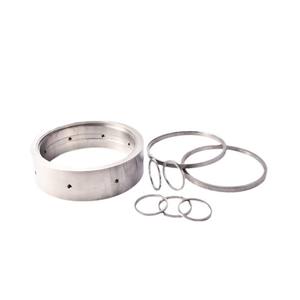
Professional Premium Aluminum Oxide Products Supplier


(Customized High Purity 99% 96% 99.5% 99.7% Grooved Al2O3 Alumina Ceramic Plate Block Chunk)
Comprehensive Guide to Customized High Purity Grooved Al₂O₃ Alumina Ceramic Plates, Blocks, and Chunks
1. Why Customized High Purity Grooved Alumina Ceramic Products Have Excellent Characteristics
1.1 Exceptional Material Properties
Customized high-purity alumina ceramics (99%, 96%, 99.5%, 99.7% Al₂O₃) exhibit superior characteristics due to their dense crystalline structure. The elevated alumina content directly correlates with enhanced mechanical strength, with 99.7% purity grades achieving Vickers hardness up to 1,600 HV. These ceramics maintain dimensional stability at temperatures exceeding 1,600°C, demonstrating less than 0.1% thermal expansion. Their grooved surface design further amplifies functionality by providing precise particle flow channels, increasing surface area for thermal transfer, and creating mechanical interlock points for secure installations in demanding environments.
1.2 Performance Advantages of Grooved Designs
The precisely engineered grooves on these alumina components significantly enhance functional performance. Grooves improve wear resistance by directing abrasive forces along controlled pathways, extending service life by 3-5× compared to flat surfaces. In thermal applications, grooves increase effective surface area by 25-40%, optimizing heat distribution in sintering processes. The channels also facilitate precise alignment in assembly systems and prevent material slippage in conveying applications. These design features, combined with alumina’s inherent corrosion resistance, make grooved ceramics ideal for harsh chemical processing environments.
2. What Are Customized High Purity Alumina Ceramic Plates, Blocks, and Chunks?
2.1 Composition and Purity Levels
These specialized ceramic components consist of aluminum oxide (Al₂O₃) with purity grades ranging from 96% to 99.7%, where the percentage indicates alumina content by mass. The 99.7% grade contains minimal sintering additives (0.3%), yielding superior density (>3.9 g/cm³) and dielectric strength (>15 kV/mm). Grooved variants feature precisely machined surface channels with customizable geometries—including V-shaped, rectangular, or radial patterns—with groove depths typically ranging from 0.5mm to 5mm. These components serve as specialized industrial solutions where standard ceramics cannot meet specific mechanical, thermal, or electrical requirements.
2.2 Customization Parameters
Customization encompasses dimensional specifications (thickness: 3-100mm, surface area up to 500×500mm), groove configuration (pattern, depth, spacing), and edge treatments. The high-purity alumina matrix allows for specialized surface finishes, including precision polishing to Ra ≤ 0.2μm for low-friction applications. Material properties can be engineered through controlled grain sizing (typically 3-20μm), with finer grains enhancing mechanical strength while coarser grains improving thermal shock resistance. These ceramics maintain stable performance across extreme temperatures (-200°C to +1750°C), making them suitable for aerospace, semiconductor, and metallurgical applications.
3. Production Process of Customized Grooved Alumina Ceramics
3.1 Material Processing and Forming
Manufacturing begins with high-purity α-alumina powder precisely blended with sintering aids. The mixture undergoes spray drying to achieve uniform granule size before forming. Advanced techniques like isostatic pressing (at 100-200 MPa) create near-net-shape blocks with density uniformity >98%. For complex groove patterns, manufacturers employ either CNC-machined green bodies or specialty molds. The sintering process occurs in high-temperature kilns (1600-1800°C) with precisely controlled heating/cooling rates (typically 2-5°C/minute) to achieve target densities while minimizing internal stresses.
3.2 Precision Machining and Quality Control
Post-sintering, components undergo diamond grinding to achieve dimensional tolerances within ±0.1mm. Grooves are machined using diamond-tipped tools with CNC precision, maintaining groove depth consistency within 0.05mm. Each batch undergoes rigorous quality verification, including density measurements (Archimedes method), hardness testing (Vickers scale), and surface finish analysis. High-purity grades receive additional inspection via XRF spectroscopy to confirm alumina content. Final products are precision-polished when required, achieving optical-grade surfaces with roughness below 0.4μm Ra for specialized applications.
4. Industrial Applications of Grooved High-Purity Alumina Ceramics
4.1 High-Temperature Processing Systems
In thermal applications, grooved alumina plates serve as sintering setters for electronic components, providing uniform heat distribution while preventing part adhesion. Their grooves facilitate gas flow during atmosphere-controlled firing processes. These ceramics withstand continuous operation at 1650°C in furnace linings, kiln furniture, and heat treatment fixtures. The thermal stability (±0.05% dimensional change at 1500°C) ensures precise positioning of manufactured components in semiconductor wafer processing and LED production.
4.2 Mechanical and Wear Solutions
Grooved alumina blocks function as wear-resistant components in material handling systems, where their surface channels guide abrasive materials while reducing friction by 40-60% compared to metals. In pump systems, grooved ceramic chunks provide erosion-resistant sealing surfaces, extending maintenance intervals by 3×. The electrical insulation properties (volume resistivity >10¹⁴ Ω·cm) make them ideal for semiconductor wafer handling and plasma process components. Additional applications include textile guides, cutting tool inserts, and precision measurement equipment where dimensional stability is critical.
5. Selecting Quality Customized Alumina Ceramic Components
5.1 Material Specification Criteria
Prioritize alumina content based on application requirements: 96% for cost-effective thermal insulation, 99% for mechanical wear applications, and 99.5-99.7% for semiconductor or high-frequency electrical uses. Verify density specifications—high-performance applications require >3.85 g/cm³. Evaluate thermal shock resistance through manufacturer-provided data on retained strength after rapid temperature cycling (typically 800°C to room temperature). For grooved components, confirm groove geometry tolerances (±0.05mm) and surface finish requirements. Always request certified material test reports validating chemical composition and physical properties.
5.2 Manufacturing Quality Assessment
Select suppliers with ISO 9001-certified manufacturing processes and ask about their sintering atmosphere control capabilities. For precision grooved components, verify their CNC machining accuracy (≤0.01mm repeatability). Examine edge quality—chamfered edges (minimum 0.2mm) prevent chipping during installation. Request samples for dimensional verification and performance testing under simulated operating conditions. Evaluate surface integrity: high-quality components exhibit uniform microstructure without laminations or voids. For critical applications, consider suppliers offering non-destructive testing like ultrasonic inspection to detect subsurface flaws.
6. Frequently Asked Questions About Customized Alumina Ceramics
6.1 Material Performance Queries
Q: How does purity affect alumina ceramic performance?
A: Higher purity (99.5-99.7%) enhances dielectric strength (>25 kV/mm), corrosion resistance, and operating temperature limits but increases brittleness. Lower purity (96%) offers better thermal shock resistance and cost efficiency for non-critical applications.
Q: What groove patterns are most effective for wear resistance?
A: Herringbone patterns provide optimal material flow direction control, while concentric grooves excel in rotational applications. Chevron patterns with 45-60° angles offer balanced wear distribution. The ideal pattern depends on specific abrasion vectors in the application.
6.2 Application and Handling Questions
Q: Can grooved alumina ceramics withstand thermal cycling?
A: Properly formulated high-purity alumina survives 500+ cycles between 1500°C and room temperature when heating/cooling rates are controlled below 5°C/minute. Thermal shock resistance improves with coarser grain structure but reduces mechanical strength.
Q: How should grooved ceramic components be installed?
A: Use compliant epoxy adhesives (0.5-1mm thickness) with thermal expansion matching. For mechanical fastening, employ oversized holes with flexible sleeves to accommodate thermal expansion. Avoid point loading during installation—distribute pressure evenly across the component surface.
Tags: alumina ceramic plate, grooved alumina block, Al2O3 ceramic chunk, high purity alumina, 99.7% alumina ceramic, custom ceramic components, industrial alumina plates, wear-resistant ceramics

(Customized High Purity 99% 96% 99.5% 99.7% Grooved Al2O3 Alumina Ceramic Plate Block Chunk)
Supplier
Alumina Technology Co., Ltd focus on the research and development, production and sales of aluminum oxide powder, aluminum oxide products, aluminum oxide crucible, etc., serving the electronics, ceramics, chemical and other industries. Since its establishment in 2005, the company has been committed to providing customers with the best products and services. If you are looking for high quality Alumina Ceramic Products , please feel free to contact us.([email protected])
RELATED POSTS
Alumina Ceramic Baking Dishes: The Ultimate Guide to Performance, Safety, and Versatility
What Is an Alumina Ceramic Baking Dish and Why Is It Gaining Popularity in Modern Kitchens?
Alumina Ceramic Baking Dishes Are Revolutionizing High-Temperature Artisanal Glaze Firing

7 Common Problems and Practical Fixes for Your Alumina Ceramic Baking Dish